


If your locomotive turbo soak back pump 40182032 is starting to fail, the most frustrating issue is usually what happens right after shutdown or during the next startup: the turbo does not receive proper post-shutdown oil circulation, heat remains trapped in the turbocharger, and crews or maintenance teams begin seeing rising wear, delayed spool-up, abnormal turbo noise, and inconsistent lubrication-related alarms.
In locomotive service, catching these symptoms early is critical because a weak soak back pump can quickly turn a manageable maintenance issue into expensive turbocharger damage and unwanted locomotive downtime.
- Slower-than-normal turbocharger spool-up after restart
- Extended turbo lag under locomotive load
- Reduced or irregular oil circulation during post-shutdown cooling
- Whining, grinding, or sputtering noise from the soak back pump
- Low oil pressure below expected range during pump operation
- Erratic pressure fluctuation instead of steady flow
- Zero or unusually low current draw at the pump leads
- Intermittent pump operation after locomotive shutdown
- Signs of overheating or oil coking around the turbocharger
- Increased risk of premature turbo bearing wear
| Symptom | What It Usually Means | Immediate Locomotive Maintenance Action |
|---|---|---|
| Slow turbo spool-up | Inadequate oil flow or weak pump performance | Inspect pump output and oil line restriction |
| Pump whining or grinding | Internal wear, cavitation, or bearing damage | Remove and inspect pump condition |
| Low pressure reading | Failing pump, leakage, or blocked suction | Check pressure, fittings, and oil supply path |
| Erratic pressure spikes | Electrical instability or internal pump fault | Test voltage supply and pump response |
| Zero current draw | Open circuit, failed motor, or disconnected lead | Inspect wiring, fuse, relay, and terminals |
| Intermittent post-shutdown operation | Faulty control signal or failing motor | Verify control logic and shutdown-cycle activation |
| Excess turbo heat soak | Insufficient post-shutdown lubrication/cooling | Inspect soak back system before next locomotive run |
When your locomotive turbo soak back pump 40182032 starts failing, common symptoms include degraded turbocharger spool-up, extended turbo lag, and inconsistent oil flow during post-shutdown cycles.
The pump may also produce high-pitched whining, grinding, or sputtering sounds, all of which can indicate internal wear or oil delivery problems within the locomotive’s turbo support system.
A failing pump often shows up in pressure behavior as well.
Pressure readings may drop below 10 PSI or fluctuate erratically above 35 PSI, pointing to unstable pump performance, blockage, leakage, or internal component damage.
From the electrical side, maintenance personnel may observe zero or reduced current draw at the pump leads, which usually suggests wiring faults, motor failure, poor connections, or a defective control circuit.
Each of these symptoms is an important warning sign in locomotive turbocharger protection and post-shutdown lubrication management.
Identifying the symptom early and linking it to the correct root cause can help prevent accelerated turbo wear, avoid unscheduled locomotive downtime, and reduce the risk of a much more costly turbocharger replacement.
Key Takeaways
- Post-shutdown oil pressure drops below 10 PSI on the gauge, indicating pump failure, blocked lines, or relief valve faults.
- Frothy, air-filled oil at the outlet confirms cavitation, collapsing the oil film and starving turbocharger bearings.
- Zero current draw at pump leads signals open DC supply wiring or blown fuses in the 40–90 VDC circuit.
- Intermittent or absent pre-lube flow at the turbo inlet indicates a failing pump or compromised suction line integrity.
- Rising high-pitched whine or grinding during soak cycles points to bearing fatigue, rotor imbalance, or internal mechanical wear.
What the Locomotive Turbo Soak Back Pump 40182032 Actually Does
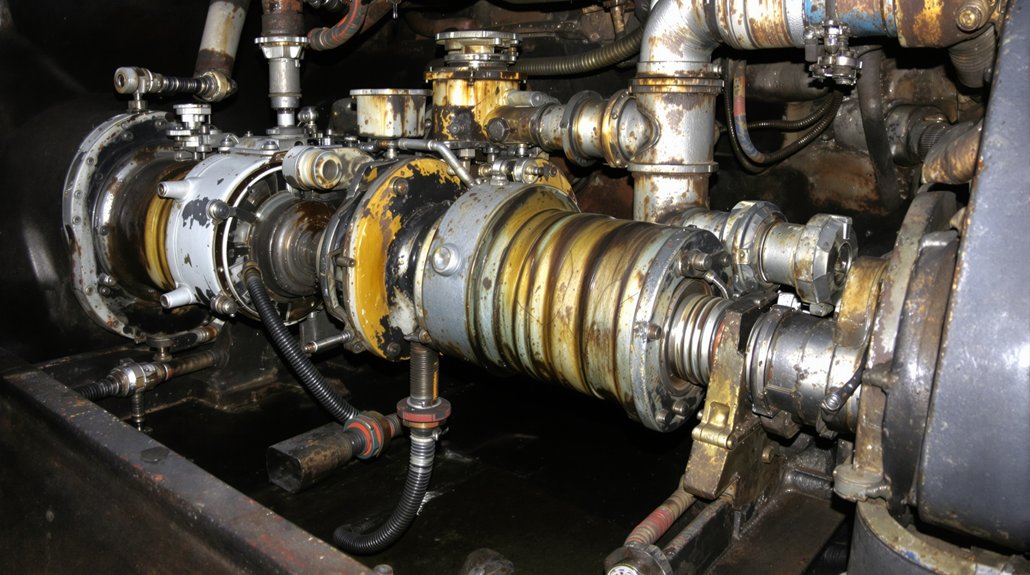
The turbo soak back pump 40182032 is an electric auxiliary pump that keeps engine oil circulating through the turbocharger bearing cavity after shutdown and before startup—two critical windows when the main lube pump isn’t running.
After shutdown, residual heat migrates from the turbine into the bearing housing, a phenomenon called heat soakback. Without active oil flow, that heat cooks residual oil into carbonaceous deposits that degrade bearing surfaces. The pump runs for roughly 30–35 minutes post-shutdown, continuously removing that heat and preventing coke formation.
Before startup, the pump handles turbo prelubrication by circulating filtered oil through the bearings for several minutes before fuel injection begins. It keeps running until main lube pressure reaches approximately 20 PSI, at which point a pressure-operated check valve blocks soak-back flow and the main system takes over. Oil supply pressure during pump operation stays within a nominal 10–35 PSI range.
The First Signs Your 40182032 Is Starting to Fail
When your 40182032 begins to fail, you’ll likely notice reduced turbocharger spool-up first—the turbo takes longer to reach operating speed because oil pressure delivered during pre-lube or post-shutdown cycles is insufficient to maintain proper bearing lubrication. You may also hear unusual whining or grinding noises from the pump assembly, signaling early bearing wear or rotor imbalance that will worsen without intervention. Fluctuating boost pressure follows as a direct consequence, since inconsistent lubrication degrades turbo bearing integrity and disrupts the stable rotor speeds needed to maintain steady airflow to the engine.
Reduced Turbo Spool-Up
Sluggish turbocharger response during acceleration is often the earliest indicator that your 40182032 soak back pump is beginning to fail. When the pump isn’t pre-lubricating bearings before fuel injection, you’ll notice pronounced turbo lag and compromised spool dynamics during initial RPM rise. Monitor your compressor bearing oil pressure closely—readings below 10 PSI during pre-lube cycles signal inadequate pump flow before the pressure stabilizes within the expected 10–35 PSI range. You should also track whether the pump energizes during its required 30–35 minute post-shutdown sequence. Skipped or intermittent cycles directly degrade subsequent spool-up performance. Listen for cavitation or unusual humming during pump operation, as these sounds indicate restricted suction or a failing drive mechanism that’ll worsen spool dynamics over time.
Unusual Whining Noises
Beyond sluggish spool-up, your 40182032 will often announce deeper mechanical trouble through sound before any pressure gauge confirms a problem. A rising high-pitched whine during shutdown or pre-lube cycles typically signals bearing fatigue or rotor imbalance developing inside the pump. If that whine intensifies proportionally with pump voltage, suspect motor winding degradation or voltage harmonics driving higher current draw toward the 12 A peak threshold.
A sudden shift from a soft whirr to harsh metallic noise within the 30–35 minute post-shutdown soak cycle frequently precedes total oil flow loss, often caused by suction-line cavitation. When the whining stops upon de-energizing the pump but returns immediately on restart, you’re likely dealing with an electrical fault in the motor or inverter drive rather than a transient oil condition.
Fluctuating Boost Pressure
Watch for these warning indicators:
- Post-shutdown oil pressure dropping below 10 PSI on your 0–100 PSI gauge during the soak cycle
- Erratic spikes above 35 PSI suggesting relief valve malfunction or internal blockage
- Inconsistent pre-lube flow at the turbo inlet after pump energization
- Air entrainment or foaming visible in the filter housing during operation
- Repeated manual restarts required to re-prime the soak-back system
Each symptom compounds the next—address them before bearing failure forces a full turbocharger replacement.
What Strange Pump Noises Are Really Telling You
Strange noises from your soak back pump 40182032 often carry specific diagnostic information you shouldn’t ignore. A grinding or rumbling during the 30–35 minute post-shutdown run points directly to bearing wear or rotor rubbing—don’t let it continue operating under those conditions. Intermittent clicking on start or stop suggests failing motor brushes or a deteriorating AC motor rotor; check continuity and winding resistance immediately.
High-pitched whining that shifts with voltage typically signals cavitation from air ingestion caused by a restricted suction line. Verify your inlet tubing measures at least 5/8″ and remains fully unobstructed to sustain the required 10–35 PSI output. A sputtering sound during priming confirms air in the line—disconnect the outlet at the turbo filter head and run the pump until you see continuous oil flow.
A loud hum approaching the 12 A maximum at 74 VDC means shut it down and inspect the motor and bypass valves immediately.
Wiring and Sensor Failures That Kill the 40182032 Pump

Once you’ve ruled out mechanical noise sources in the 40182032, shift your attention to the electrical and sensor circuits that control it—because a perfectly functional pump motor still won’t run if its supply wiring, control signals, or feedback sensors are compromised.
Start sensor diagnostics and control wiring inspections by targeting these five critical failure points:
- Zero current draw at pump leads — open DC supply wiring or blown fuses in the 40–90 VDC circuit
- Voltage drop under load — corroded grounds or chafed harnesses causing the pump to stall despite nominal battery voltage
- Abnormal winding resistance — failed motor windings reading open or shorted against factory specs
- No automatic activation — burned relay contacts or faulty computer enable signals blocking post-shutdown sequencing
- Forced inhibit faults — bad pressure/flow sensors or stuck check valves feeding false fault data to control logic
Measure methodically. Each failure point narrows your diagnosis.
Oil Starvation and Flow Problems in a Failing 40182032
Behind every 40182032 failure mode you’ve diagnosed so far—noise, wiring faults, sensor errors—oil starvation is the consequence that destroys turbocharger bearings if you don’t catch it fast.
When the pump’s running but compressor bearing oil passage pressure reads below 10 PSI, you’ve got either pump failure or inlet blockage restricting flow before it reaches critical lubrication points. Disconnect the outlet and watch for continuous, steady oil flow during priming—slow or intermittent delivery signals air cavitation from a restricted suction line or a leaking inlet fitting drawing air instead of oil.
Frothy, air-filled oil at the outlet confirms cavitation is collapsing your oil film across turbo bearings. Check the suction line for kinks, collapsed sections, or loose pickup connections immediately. Internal pump wear also drops outlet pressure below the 10–35 PSI operating threshold, so always verify pressure with a gauge before condemning external plumbing alone.
What 40182032 Pump Failure Does to Your Turbocharger After Shutdown
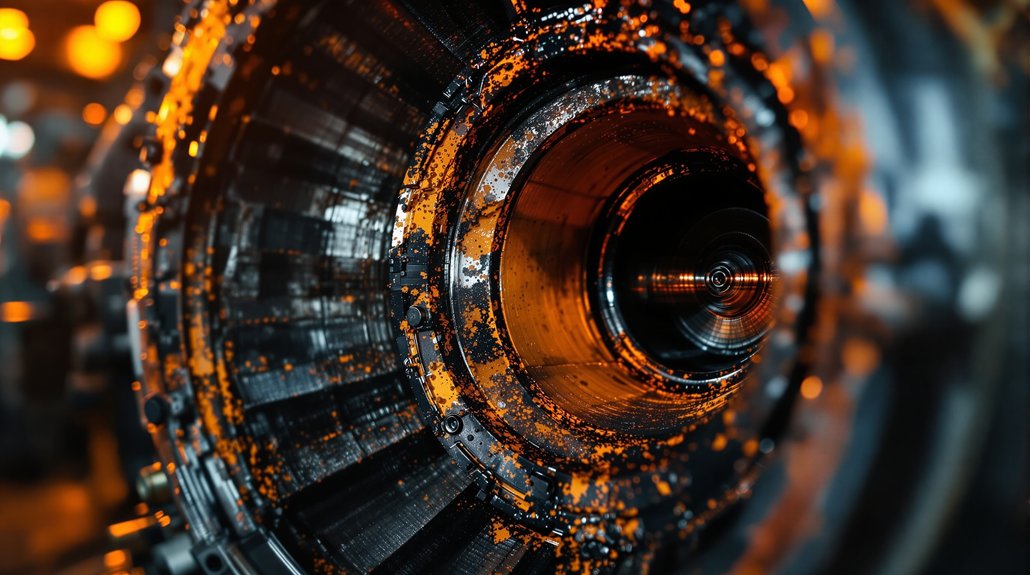
When the 40182032 fails and post-shutdown circulation stops, your turbocharger enters a heat-soak condition it can’t recover from on its own. Turbine temperatures near 1,000°F remain trapped in the bearing cavity while oil flow stops completely, triggering turbo bearing-coking that hardens residual lubricant into tar-like deposits.
Every failed cooldown cycle compounds the damage:
- Coked oil clogs passages, starving bearings of the film thickness they need to survive
- Blocked relief valves accelerate pressure loss during the next start cycle
- Start-up wear intensifies as dry bearings absorb full rotor load at 100,000+ RPM
- Shaft surfaces develop bluish-yellow heat tinting, signaling irreversible metallurgical damage
- Scored bearing surfaces appear within hundreds of operating hours instead of full service intervals
You’re not just shortening turbo life — you’re forcing premature replacement or major overhaul on a timeline the manufacturer never intended.
How to Confirm the 40182032 Pump Is the Root Cause
Confirming the 40182032 as the root cause requires isolating it systematically before condemning the turbocharger or surrounding components. Start with electrical isolation: clamp a meter around the pump leads and verify it draws up to 12 A at 74 VDC during post-shutdown cycles. No current or markedly reduced draw points directly to motor failure or an open circuit.
Next, perform flow visualization by disconnecting the outlet at the turbocharger filter head with fuel disabled. Continuous, bubble-free oil flow confirms suction integrity; intermittent flow or air entrainment signals pump or suction-line leakage. Follow that with a pressure test—install a 0–100 PSI gauge at the compressor bearing oil passage and confirm 10–35 PSI while the pump runs engine-off. Pressures outside that range indicate pump or relief valve faults. Finally, bypass the filter and compare flow; restored output confirms a blockage rather than pump failure.
Replace or Repair Your Soak Back Pump 40182032?
Once you’ve isolated the 40182032 as the root cause, your next decision is whether to replace or repair it—and that choice hinges on what the diagnostics actually revealed.
Before committing to either path, run your cost analysis against these findings:
- No supply voltage or blown fuses? Repair wiring first—don’t replace prematurely.
- Current approaching 12 A @74 VDC with abnormal noise? Replace immediately; bearing or winding failure isn’t field-repairable.
- Output pressure below 10 PSI? Clear blocked lines and inspect the strainer before condemning the pump.
- Pressure exceeding 35 PSI? Repair the relief valve assembly—the pump itself may be serviceable.
- Seized rotor, corrosion, or failed insulation tests? Replace without hesitation; refurbishment isn’t viable.
Always review your warranty options before purchasing a replacement unit—valid coverage may eliminate out-of-pocket costs entirely. Let diagnostics drive the decision, not assumption.
Frequently Asked Questions
What Are the First Signs of Turbo Failure?
You’ll first notice boost lag during spool-up, signaling inadequate pre-lubrication from a failing soak-back pump. Listen for unusual whining or grinding—that’s shaft play from metal-to-metal contact caused by oil starvation. You’ll also detect excessive smoke, fluctuating boost pressure, and poor fuel efficiency. Post-shutdown overheating and coke deposits in the bearing cavity confirm the pump’s 30–35 minute cooling cycle has failed.
What Is the Most Common Reason for Turbo Failure?
The most common reason for turbo failure is oil coking in the bearing cavity. When you operate at high turbine temperatures exceeding 300°C, thermal degradation transforms lubricating oil into carbonaceous deposits that restrict flow and starve bearings. Oil contamination from fuel dilution, soot, or metallic particles accelerates this process. Foreign debris entering oil passages further blocks lubrication channels, causing metal-to-metal contact at rotor speeds exceeding 100,000 RPM, ultimately producing bearing seizure and catastrophic failure.
Can Low Oil Cause Turbo Failure?
Yes, low oil can cause turbo failure. Imagine this: you’re operating at full throttle when low pressure silently starves your bearings. Metal contacts metal. You’ll notice rising vibration, sudden power loss, then catastrophic seizure. Oil degradation accelerates this—thermally decomposed oil coats bearing surfaces with hardened deposits, restricting clearances. Even brief pressure drops below 10–20 PSI during start/stop transients trigger irreversible damage, demanding immediate turbocharger replacement.
How Do I Know if My Turbo Is Clogged?
You’ll know your turbo’s clogged by checking these indicators: reduced oil flow (below 10 PSI) during pre-lube, dark tar-like deposits signaling charger contamination on filter elements, and relief valve actuation from downstream turbine blockage. Disconnect the outlet line briefly while energizing the soak back pump—absent continuous flow confirms internal obstruction. Abnormally low bearing pressure (0–10 PSI) combined with elevated turbo temperatures solidifies the diagnosis.