

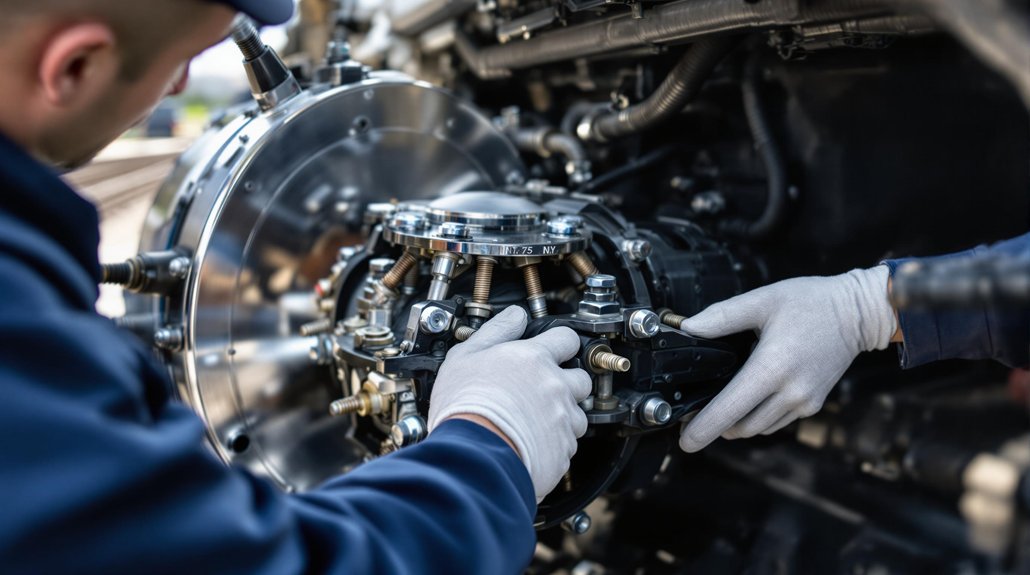
To guarantee top performance and safety, always maintain diaphragm system air pressure between 90–110 psi and promptly address any fluctuations. Inspect metal components for early signs of corrosion or wear using visual and ultrasonic checks. Detect and prevent leaks by regularly servicing seals and inspecting piping. Use non-abrasive techniques for cleaning critical parts. Set and calibrate pressure thresholds accurately, and follow best practices for gasket replacement. Strict inspection protocols and thorough documentation keep your maintenance program reliable—discover next-level strategies ahead.
Key Takeaways
- Regularly inspect diaphragm assemblies for signs of corrosion, cracks, and wear to prevent unexpected failures.
- Maintain optimal air pressure between 90–110 psi and calibrate gauges every 92 days for reliable operation.
- Perform thorough leak checks on seals and piping interfaces, using acoustic monitoring and scheduled seal maintenance.
- Follow strict cleaning procedures using non-abrasive tools and mild solvents, documenting every session for trend analysis.
- Replace gaskets and seals with OEM-grade materials, ensuring proper alignment and compatibility with operating fluids and temperatures.
Maintaining Optimal Air Pressure for Diaphragm Longevity

To maximize diaphragm longevity and secure reliable brake operation, you must maintain air pressure within prescribed limits at all times. Operate the system between 90–110 psi (or 7–10 bar), keeping brake pipe pressure above 55 psi to prevent unintentional brake releases and secure safety alerts function. Watch for pressure fluctuations—rapid drops or surges compromise diaphragm responsiveness and increase the risk of fatigue. During braking, always reduce pressure gradually; avoid abrupt reductions below the 20 psi service threshold, as this can shock the diaphragm and degrade material performance.
Calibrate pressure gauges to ±3 psi every 92 days and perform build-up tests, securing compressors restore pressure from 80 to 100 psi within two minutes. Verify quick service valves maintain proportional braking and that auxiliary reservoirs stay charged at 6 kg/cm² (≈85 psi). Systematic documentation of all maintenance activities is essential to ensure regulatory compliance and to facilitate tracking for trend analysis and early detection of abnormal pressure loss. Document all readings systematically to track trends, identify abnormal pressure loss, and preempt potential diaphragm failures before they escalate.
Inspecting Metal Components for Corrosion and Structural Wear

You need to identify early signs of corrosion on all exposed metal surfaces, focusing on pitting, discoloration, or flaking. Assess structural integrity risks by closely examining for cracks, deformation, or compromised welds that could threaten safe operation. Ultrasonic testing (UT) is the preferred NDT method in the railroad industry, making it an essential tool for detecting subsurface flaws that may not be visible during routine visual inspections. Prioritize these inspections to prevent unexpected failures and guarantee continued reliability of the diaphragm assembly.
Identifying Early Corrosion Signs
How can maintenance teams detect corrosion before it threatens diaphragm reliability? Start by using targeted inspection techniques to spot corrosion indicators early. Examine diaphragm contact points, threaded joints, gasket interfaces, and valve actuators for surface discoloration—look for greenish or reddish hues that signal oxidation. Use endoscopic inspection to access hidden cavities, and employ tactile checks to detect roughness deviations from baseline metal textures.
Micro-pitting, hairline cracks near stress zones, and metal flaking are clear signs of progressive corrosion. Don’t overlook warped or uneven surfaces in load-bearing segments, especially in high-pressure or high-contaminant areas. Leak-rate and temperature mapping can also reveal internal corrosion sites. Corrosion and contamination are among the leading causes of sensor failure, so early detection and immediate corrective actions are critical for ensuring long-term diaphragm reliability. Early identification guarantees immediate corrective actions, ultimately maintaining operational safety and extending component service life.
Assessing Structural Integrity Risks
Although diaphragms are designed to withstand demanding operational stresses, their metal components remain susceptible to corrosion and structural wear, which can compromise overall system reliability. To guarantee safety, you must conduct a thorough risk assessment and structural evaluation using advanced inspection techniques. Apply ultrasonic testing (UT) to detect internal flaws, or use eddy current (EC) and magnetic flux leakage (MFL) for surface and near-surface defect identification.
Acoustic emission (AE) and EMATs allow real-time and non-contact monitoring, critical for dynamic environments. Defect severity is classified using standardized codes, and structural redundancy is assessed for failure tolerance. Prioritize components under cyclic loads for frequent evaluation to maintain operational integrity. For optimal results, combine numerical, experimental, and operational approaches to ensure a comprehensive assessment of the diaphragm’s structural health.
- Use ultrasonic testing (UT) for hidden crack detection
- Apply MFL to identify near-surface corrosion
- Classify defects under section loss codes
- Prioritize cyclically loaded components
Detecting and Preventing Fluid Leaks Around Seals and Valves

You need to identify typical leak sources such as seals, valves, and piping interfaces during both hot and cold inspections. Prioritize regular seal maintenance by replacing worn components with OEM-grade materials and verifying installation integrity after pressure testing. Consistent attention to these areas minimizes fluid loss, protects system performance, and guarantees operational safety. Implementing improved detection methods—such as automated acoustic monitoring—can further enhance safety and efficiency by identifying leaks that may be missed during manual inspections.
Identifying Common Leak Sources
Because undetected fluid leaks around seals and valves can compromise engine reliability and safety, it is vital to apply advanced detection methods tailored to each system. To guarantee peak diaphragm functionality and robust leak prevention, you must understand where leaks are most likely to occur. Focus on important areas such as fuel circuits, water/oil lines, hydraulic components, air brakes, and lubrication systems. Each system requires specific detection techniques—such as helium sniffing for fuel lines and hydrogen sniffing for water/oil circuits—to pinpoint leaks quickly and accurately. Thorough inspections enable you to identify micro-leaks before they escalate into failures.
- Use helium mass spectrometer detection for fuel circuit micro-leaks
- Apply hydrogen sniffing for water/oil circuit leak identification
- Deploy acoustic sensors on air brake diaphragms
- Monitor lubrication systems with hot oil detectors
Proper management of hydraulic system leakage leads to reduced energy consumption and waste, so integrating these detection strategies not only prevents failures but also contributes to long-term operational efficiency.
Seal Maintenance Best Practices
A rigorous seal maintenance program relies on four key practices: regular inspection, proper lubrication, correct installation, and material compatibility. Begin by scheduling systematic seal inspection intervals, following manufacturer recommendations. During inspections, check for fluid residue, corrosion, or abnormal wear—these are early indicators of seal degradation. Evaluate pump/motor alignment and monitor vibration, as misalignment or excessive vibration accelerates seal failure.
Implement robust lubrication techniques: select lubricants compatible with seal materials and apply them precisely using calibrated tools. Avoid over- or under-lubrication; both reduce seal life and increase leak risk. Prior to installation, clean surfaces thoroughly to eliminate contaminants. Always use OEM-grade seals, guarantee proper seating with correct tooling, and verify alignment. Proper cleaning of assemblies is essential for preventing contamination and prolonging seal life. Document all maintenance actions for ongoing trend analysis and continuous improvement.
Effective Cleaning Methods for Diaphragm System Components
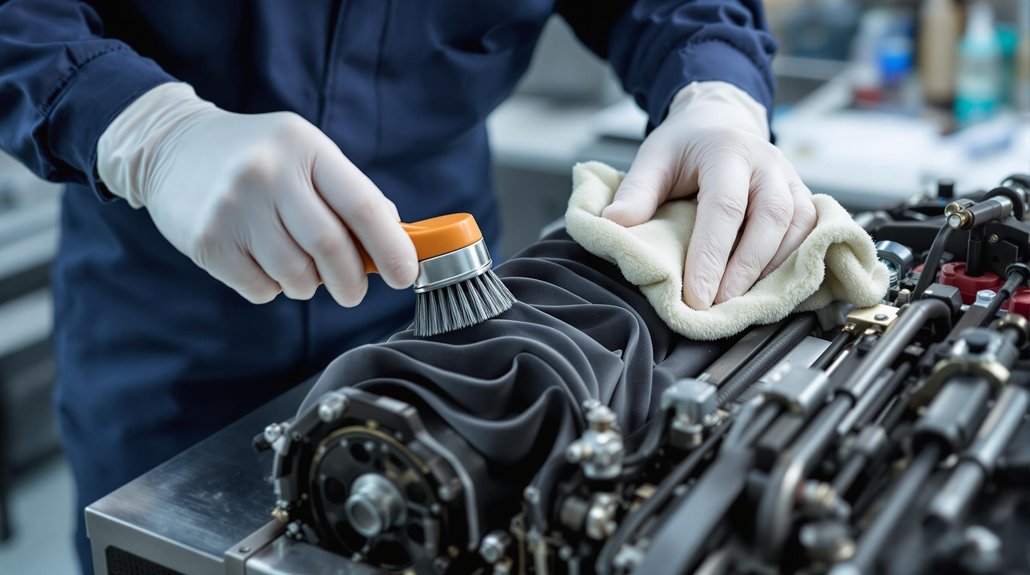
Several proven cleaning methods guarantee the reliability and longevity of railway engine diaphragm system components. To maintain ideal function, establish a strict cleaning frequency based on operational demands and environmental exposure. Begin by de-energizing the system, then disassemble the diaphragm assembly for detailed access. Use soft-bristled brushes for mechanical cleaning and manually scrub stubborn organic residues.
Always inspect for cracks or wear during this process. For chemical cleaning, hot water with mild dish soap efficiently breaks down oils, while WD-40 can dissolve dried residues. When selecting solvents, prioritize non-conductive options near electrical systems and avoid harsh acids to protect rubber components. Track cleaning is essential for maintaining train operation and performance, so applying regular maintenance principles to diaphragm system cleaning will help prevent operational issues.
Adhere to safety protocols and manufacturer guidelines for solvent selection. Document each cleaning session to track maintenance trends and identify recurring issues. When cleaning, emphasize:
- Use of non-abrasive tools and mild solvents
- Regular inspection for wear and damage
- Adherence to safety standards and PPE use
- Thorough documentation of cleaning frequency and findings
Setting and Monitoring Pressure Thresholds for Safe Operation

While railway engine diaphragm systems operate under fluctuating loads and harsh conditions, setting and monitoring precise pressure thresholds is essential to prevent system failures and secure safe operation. Begin by integrating pressure monitoring devices such as piezoresistive sensors or differential pressure transmitters—these offer accurate readings even in high-temperature or corrosive environments. Choose stainless steel or corrugated diaphragms to withstand mechanical and thermal stress during prolonged operation.
Calibrate sensors using factory specifications, and employ dual-technology validation—combining diaphragm resistance with bourdon tube mechanisms—to assure measurement reliability. For critical applications like braking systems, configure redundant alarm triggers with pressure switches such as the SUCO #0180/#0170, and establish both low-pressure alerts and temperature-compensated thresholds.
A key aspect of maintaining safe operations is ensuring that the diaphragm size is appropriately matched to the pressure range of the system, as larger diameters are needed for accurately measuring low pressures. Leverage remote monitoring systems for inaccessible locations and enable dynamic threshold adjustments, using real-time feedback to adapt to changing loads. Regularly inspect wiring, employ EMI shielding, and perform quarterly continuity checks to affirm sensor integrity and safe, uninterrupted diaphragm system operation.
Guidelines for Replacing Gaskets and Mechanical Seals

Before replacing gaskets and mechanical seals in railway engine diaphragms, confirm complete system isolation and thorough drainage of all fluids to prevent contamination and safety hazards. Begin with meticulous gasket preparation: remove old RTV sealant using a solvent, and never wire brush piston or crankshaft surfaces to avoid micro-scratches. Select materials based on fluid and temperature compatibility—avoid natural rubber or EPDM in oil applications due to swelling and degradation, and use steam-rated gaskets with at least 4,800 psi assembly stress where required. Always coat new gaskets with light motor oil and apply RTV sealant as a continuous bead to eliminate gaps.
Pay attention to these essential guidelines:
- Align gaskets precisely to minimize handling errors.
- Opt for thinner gaskets in steam environments for maximum compression.
- Redesign gaskets to improve flange load distribution.
- Test chemical compatibility following ASTM F37B standards.
Adhering to these steps guarantees reliable sealing and operational safety in railway engine diaphragms.
Comprehensive Inspection and Testing of Diaphragm Assemblies
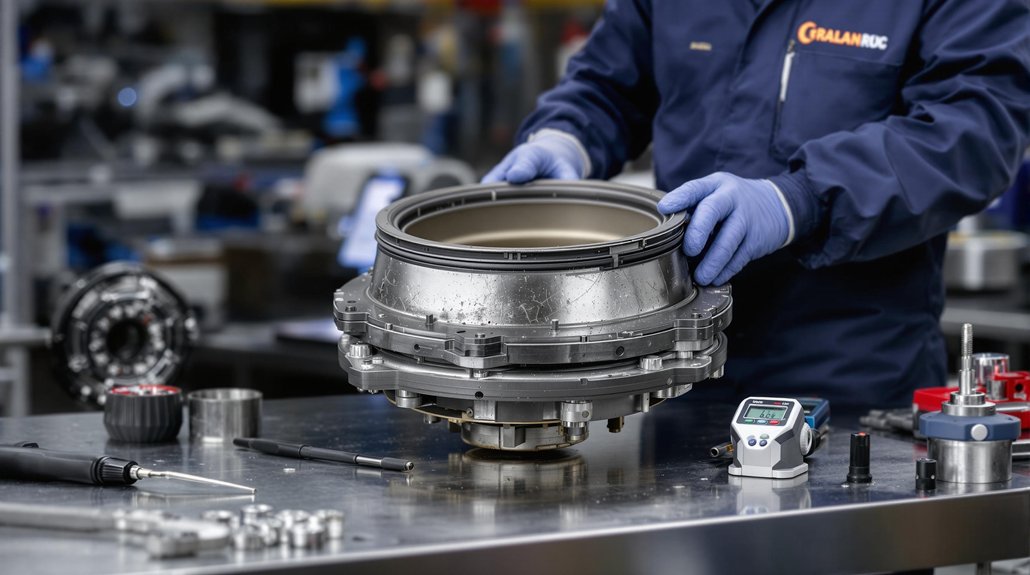
Although diaphragm assemblies are engineered for durability, thorough inspection and testing are essential to confirm ongoing reliability and safety in railway engines. Begin every diaphragm assembly inspection by visually examining surfaces for fractures, corrosion, or wear. Check that diaphragm segments and mating surfaces remain precisely aligned per OEM specifications, and confirm all mounting brackets and fasteners are secure and undistorted. Load-bearing tests should be performed to ascertain that the assembly withstands operational stresses.
Integrate testing protocols for electrical components by conducting insulation resistance and dielectric endurance tests, verifying electrical continuity, and evaluating shielding against EMI. Employ infrared cameras to detect thermal anomalies that could indicate insulation degradation. Automated inspection systems—such as machine vision and thermal imaging—enhance defect detection, but always validate findings with Probability of Detection analysis and manual checks, especially for high-risk components.
Strictly follow regulatory guidelines, meticulously document findings, and confirm all inspections are conducted by certified personnel for maximum safety and traceability.
Frequently Asked Questions
What Materials Are Most Durable for Railway Engine Diaphragm Replacements?
When selecting the most durable materials for railway engine diaphragm replacements, you should prioritize high-performance rubber materials and composite materials. Rubber/fabric-reinforced diaphragms offer exceptional abrasion resistance and handle extreme temperatures, guaranteeing operational safety. Composite materials, such as thermoplastic elastomers (TPE), deliver outstanding flex fatigue resistance and chemical stability. By analyzing media compatibility, pressure limits, and required temperature ratings, you’ll guarantee diaphragm longevity and safe, efficient railway engine performance under harsh operating conditions.
How Often Should Diaphragm Assemblies Be Professionally Serviced?
Did you know that replacing diaphragm assemblies at 80% of their expected lifespan can reduce failure rates by up to 60%? You should align your maintenance schedule with measured degradation cycles, using predictive tools to optimize servicing. Prioritize preventive replacement rather than waiting for issues. Regularly benchmark your inspections and services against manufacturer guidelines, ensuring you address wear well before the diaphragm’s lifespan ends—ultimately protecting system reliability and operational safety.
Can Digital Monitoring Systems Improve Diaphragm Maintenance Efficiency?
You can considerably boost maintenance efficiency by adopting digital monitoring systems for diaphragms. These systems use automated sensors and machine learning to deliver real-time data, detect anomalies, and predict failures before they become critical. You’ll benefit from automated alerts, remote analytics, and integration with maintenance workflows, which streamline scheduling and reduce downtime. Ultimately, digital monitoring enhances safety by identifying hazardous conditions early, ensuring you focus resources where they’re most needed.
What Are Common Signs of Diaphragm Failure During Train Operation?
Ever wonder how diaphragm leaks can undermine your train’s operational efficiency and safety? You’ll notice warning signs like sudden fluid leaks, pressure drops, and increased fuel consumption. Engine performance degrades—expect rough starts, power loss, and even system overheating. Watch for dashboard warnings and abnormal pressure readings. If you ignore these symptoms, you risk crank failures or excessive smoke emissions. Always address these issues quickly to maintain safe, reliable train operation.
Are There Environmentally Friendly Cleaning Agents Recommended for Diaphragm Maintenance?
You should use eco friendly cleaners and biodegradable solutions when maintaining diaphragms. Opt for water-based solvent systems with mild dish soap or specialized industrial cleaners that are non-toxic and safe for staff. Always verify compatibility with diaphragm materials to prevent degradation. Ultrasonic cleaning paired with biodegradable solutions boosts efficiency while minimizing environmental impact. Avoid harsh chemicals unless absolutely necessary, and guarantee proper disposal procedures to maintain both operational safety and environmental compliance.