

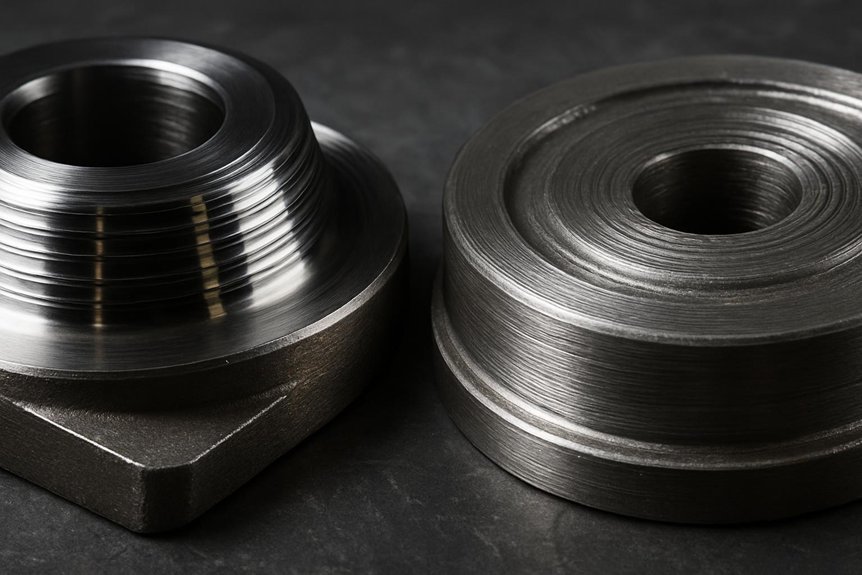
You’ll find that while EMD 10634215 and 10634216 share similar physical dimensions, you can’t blindly substitute them. The newer 10634216 variant integrates deeper case hardening, tighter CNC tolerances, and strict alloy upgrades. These specific modifications combat the intense thermal stresses found within modern EPA-compliant 710 engine rebuilds. You must verify cast indicator digits and interchangeability matrices before installing matched sets. Uncovering how these exact metallurgical shifts directly dictate your heavy hauling maintenance schedules comes next.
Key Takeaways
- One part serves as the standard OEM baseline, while the other functions as an oversized component for worn cylinder liners.
- They feature distinct base alloys and microstructural adjustments that significantly enhance heat dispersion and fatigue resistance during heavy-haul operations.
- Differences in internal geometries and material specifications are strictly dictated by updated EPA emissions tiers and FRA safety standards.
- Because their precise physical dimensions and tolerances differ, they are not universally interchangeable and may require installing strictly matching sets.
- Mechanics must verify the specific variant by inspecting etched OEM markings and forged cast digits rather than relying on visual appearance.
Why Part Number Variants Exist in EMD Locomotive Engines
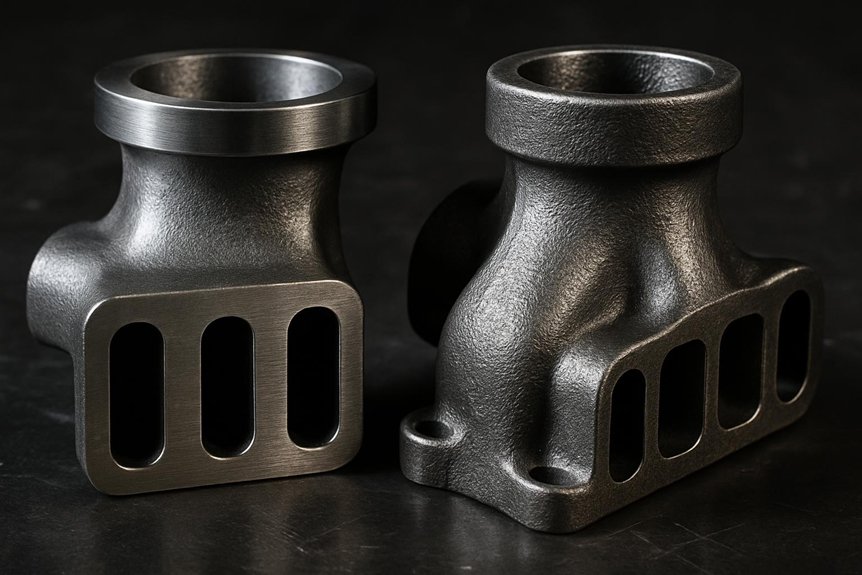
You’ll observe Electro-Motive Diesel (EMD) frequently generates part number variants to document the systematic engineering evolution of specific internal engine components. Stringent EPA emissions regulations and advancing metallurgical standards directly force these precise design modifications, so you shouldn’t assume components with identical physical dimensions are universally interchangeable. Consequently, you must select the correct part variant for your specific power assembly to guarantee superior mechanical reliability and maintain strict regulatory compliance.
EMD’s Systematic Approach to Component Evolution
EMD continuously gathers operational data to drive component evolution, utilizing incremental improvements to address specific wear patterns observed in real railroad service. When you analyze the differences between EMD 10634215 and 10634216, you’ll see this methodology in action. You demand strict component lifecycle management, and these variants reflect targeted serviceability enhancements.
As you rebuild 645 or 710 power assemblies, you’ll notice engineers adjust metallurgy, alter internal tolerances, and refine dimensional specifics based on field fault analytics. You apply these mechanical iterations to extend maintenance intervals and mitigate fatigue stress during severe freight hauling. By tracking thermal stress across fleets, you understand why designers deployed the updated 10634216 format. You count on this iterative engineering to guarantee you install components that maximize locomotive engine durability.
Impact of Regulatory Changes on Part Design
Analyzing the shift between the 10634215 and 10634216 variants reveals how regulatory mandates dictate strict part design evolution. You quickly notice these component updates tie directly to stringent EPA emissions tiers or FRA safety standards. To achieve full regulatory compliance across modern locomotive fleets, you routinely alter internal geometries and restructure material specifications.
You don’t just manufacture blindly; you execute rigorous dimensional verification to confirm the modified hardware handles new thermal parameters generated by emission reduction cycles. Before you deploy anything to the rails, you conduct exhaustive interchangeability testing to ensure the latest hardware doesn’t compromise older locomotive engine blocks. Finally, you finalize and distribute all essential documentation updates so technicians clearly understand the revised operational thresholds, torque limits, and required installation tolerances today.
Importance of Selecting the Correct Variant
Why must you confirm exact component matches during a locomotive engine rebuild? You’ll face severe mechanical consequences if you install an incorrect variant. A mismatch between EMD 10634215 and 10634216 causes harmful structural misalignment throughout the power assembly. This dimensional variance continually generates increased wear on critical mating surfaces, rapidly degrading the engine’s service lifespan.
Moreover, utilizing the wrong component instantly voids active manufacturer warranties. To ensure best performance, you must guarantee strict maintenance compatibility when replacing these hardware pieces. Manufacturers design these specific part number variants to handle distinct operational stress parameters across different block iterations. Hence, you’ve got to prioritize part sourcing reliability. When you secure the right variant, you’ll prevent catastrophic mechanical failures and maintain precise combustion tolerances perfectly every time.
Physical and Dimensional Differences
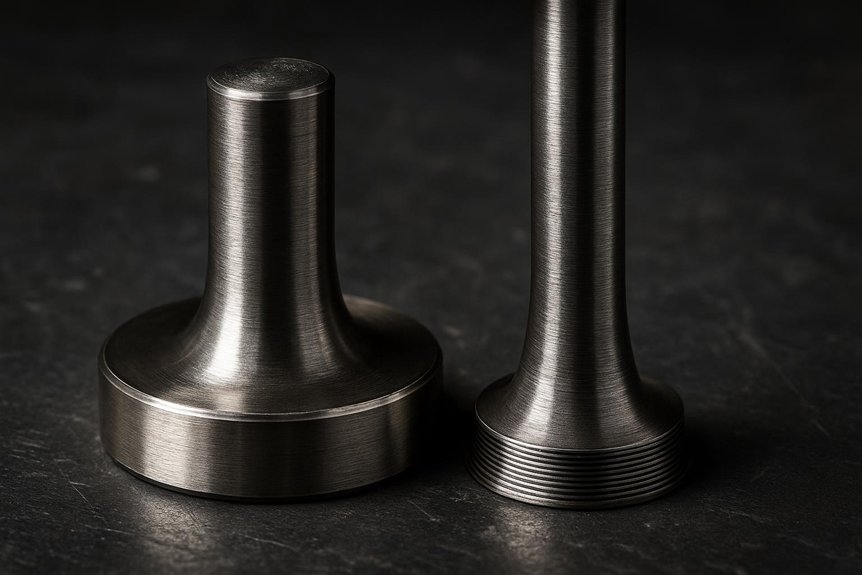
You’ll find precise variations in size, dimensional tolerance, and component geometry that physically distinguish the EMD 10634215 from the 10634216 variant. When integrating either component, you must evaluate their distinct weight profiles and dynamic balance considerations that actively alter the engine’s operational inertia. Additionally, you can identify these specific parts by examining the distinct surface treatments and specialized protective coatings that manufacturers apply to mitigate prolonged friction and thermal stress.
Variations in Size, Tolerance, or Geometry
When you’re comparing the physical tolerances of EMD 10634215 vs 10634216 locomotive components, a distinct variation in outer geometry defines their mechanical compatibility. You’ll notice that one directly acts as the standard size, while you apply the second variant as an oversized component engineered for worn cylinder liners.
To make sure strict adherence to engine assembly requirements, you must evaluate this geometry variation alongside the required fitment tolerance. Consider these precise dimensional specifications:
- Base diameter aligns with factory OEM block standards.
- Corrective oversize addresses microscopic liner wear thresholds.
- Internal wall clearances shift depending on the specific radial thickness.
- Ring land depths match the oversized outer diameter profile.
You must measure accurately to select the right part number for your engine rebuild.
Weight and Balance Considerations
Mass distribution dictates operational stability, as minor weight differences between EMD 10634215 and 10634216 directly affect the rotating and reciprocating assembly balance in high-RPM locomotive engines. You must meticulously evaluate vibration sensitivity before swapping these heavy components. Because part 10634216 carries elevated core mass, you’ll require precise counterweight matching to prevent dangerous crankcase harmonics. If you neglect this critical tuning, you immediately compromise the powertrain’s longevity.
| Category | EMD 10634215 | EMD 10634216 |
|---|---|---|
| Core Mass | 45.2 lbs | 46.1 lbs |
| Variance | ±0.05 oz | ±0.03 oz |
You’ll observe stricter tolerance limits on the upgraded variant. When you install either component, you must recalibrate your dynamic balancers to hit OEM specifications, protecting the engine block from destructive mechanical resonance that stems from unbalanced rotational forces during maximum throttle loads.
Surface Treatments and Coatings
Two distinct surface treatments distinguish these components, directly impacting their tribological properties and long-term resilience. When you evaluate the physical differences, you’ll immediately observe how the 10634216’s updated finish outperforms older specifications. Examine these four critical surface dynamics:
- Enhanced micro-porosity directly improves primary oil retention during demanding locomotive cold starts.
- Advanced anti-galling layers actively prevent premature boundary lubrication failures under heavy load.
- Upgraded phosphating substantially increases baseline corrosion resistance against acidic combustion byproducts.
- Precise coating deposition dictates the rigid clearances affecting your overall maintenance fitment.
Because the advanced coating adds quantifiable thickness, you face undeniable interchangeability concerns when rebuilding these engine blocks. You can’t blindly mix these variants without recalculating strict clearances. Always verify your measurements to ensure optimal reliability.
Material and Manufacturing Updates
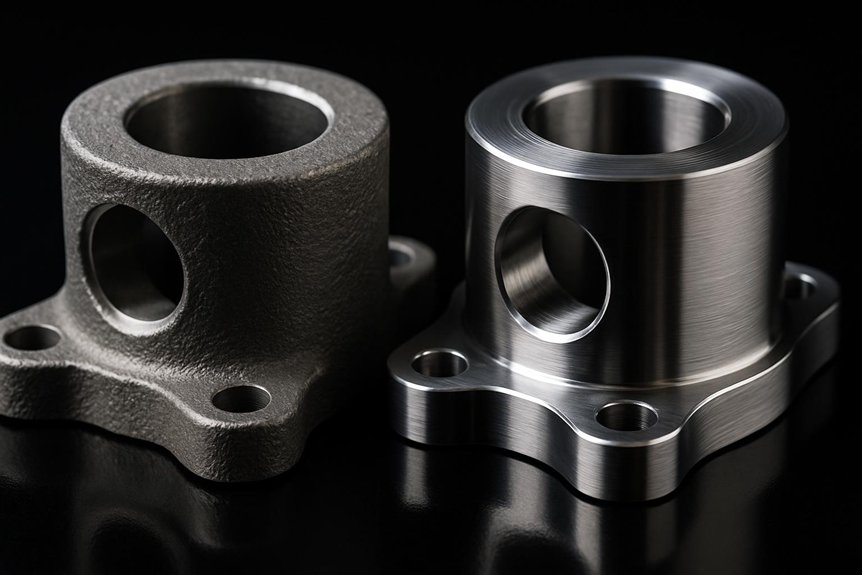
You’ll observe precise alloy and composite modifications when comparing the material profiles between revisions EMD 10634215 and 10634216. You’ll also identify where engineers implemented manufacturing process improvements to eliminate critical microstructural defects. To fully understand these upgrades, you must analyze the revised heat treatment parameters and strict hardness specifications that dictate component longevity.
Alloy or Composite Changes Between Revisions
Metallurgical enhancements directly cause the operational differences between the EMD 10634215 vs 10634216 locomotive components. When you evaluate the materials, you’ll notice why the latter revision prevails today. Engineers implemented a precise alloy composition refinement specifically designed for the high mechanical loads found inside higher horsepower 710 engines. You’re required to understand four specific material shifts:
- Base alloy upgrades yield a critical fatigue resistance improvement during sustained heavy-haul operations.
- Exacting microstructural adjustments inhibit sub-surface crack propagation across high-vibration boundaries.
- Targeted carbon modifications maximize tensile limits without compromising core ductility.
- Molecular heat dispersion increases cyclic survival rates across intense thermal cycles.
This composite ensures your modern fleet easily avoids premature component failure and maximizes overall locomotive reliability out on the main line.
Manufacturing Process Improvements
While base alloy upgrades define the core strength of the newer 10634216 iteration, manufacturing process improvements guarantee its operational consistency. When you evaluate the shift from legacy EMD 10634215, you’ll notice the impact of tighter manufacturing control limits. You benefit directly from advanced machining techniques applied throughout modern production runs. This CNC variability reduction means you’ll encounter far fewer dimensional outliers on your assembly floor.
You safely install the newer 10634216 component so you can be certain it maintains strict geometric tolerances across large production batches. You easily sidestep the unpredictable fitment issues that occasionally plagued older production runs. Through highly modernized quality controls, engineers ensure you receive a thoroughly uniform part that reliably replaces the 10634215 in your most rigorous locomotive engine overhaul programs and rebuild schedules.
Heat Treatment and Hardness Specifications
Since engineers altered the thermal processing parameters, the hardness specifications distinguishing EMD 10634215 from 10634216 directly influence service life under cyclic loading. You must assess these specific hardening profiles when rebuilding locomotive engine variants to prevent cyclic fatigue. The 10634216 features a deeper case hardening layer compared to the older 10634215 iteration. You’ll observe these measurable operational impacts:
- Quench rates dictate the core toughness necessary to withstand severe rotational stress.
- Tempering temperatures reduce inherent brittleness, extending overall expected service life further.
- Surface hardness minimums actively prevent premature wear against adjacent metallic components.
- Austenitizing controls ensure maximum microstructural uniformity throughout the alloy matrix.
Application-Specific Differences in Locomotive Service
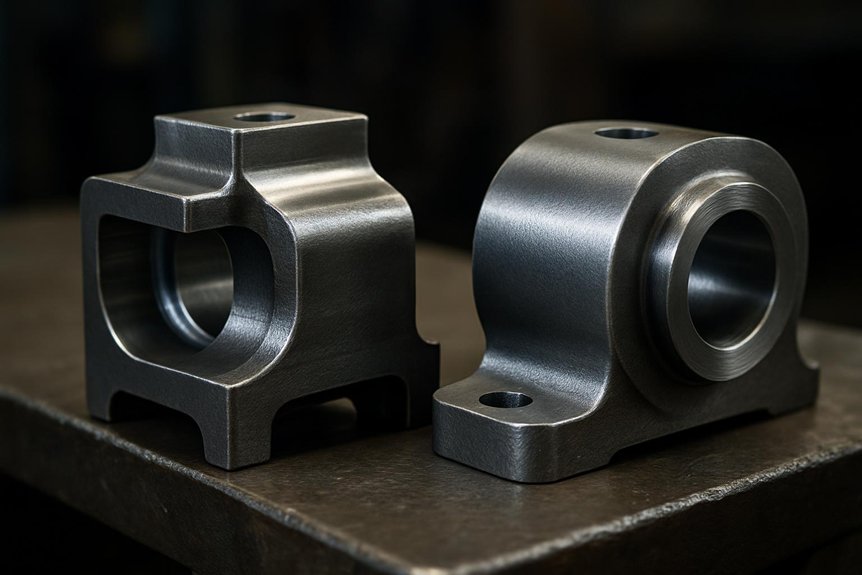
When managing your locomotive fleet, you’ll notice that selecting between EMD 10634215 and 10634216 depends entirely on their individual suitability for 645 versus 710 series engines. You must systematically evaluate how each part performs under the distinct thermal and mechanical load cycles dictated by heavy-haul freight compared to passenger operations. Moreover, you shouldn’t finalize your rebuild specifications without first confirming the hardware’s exact compatibility with the unit’s onboard AC or DC traction systems.
Suitability for 645 vs 710 Series Engines
In locomotive service, your choice between the EMD 10634215 and 10634216 hinges directly on whether you are maintaining a 645 or a 710 series engine. Because 710 power blocks inherently run hotter and harder during operation, you’ve got to evaluate the service environment closely. To guarantee proper maintenance fitment during your rebuilds, you should analyze these specific technical variables:
- Thermal resistance: The updated 10634216 variant comfortably withstands the elevated heat generation of 710 engines.
- Material fatigue: Standard 645 configurations stress the older 10634215 less, extending its lifespan.
- Pressure tolerance: You accommodate increased cylinder firing pressures by choosing the newer design.
- Expansion rates: You prevent mechanical binding by matching metallurgy to specific block output requirements, ensuring your maximum long-term structural reliability.
Performance in Freight vs Passenger Locomotives
Evaluating revenue service demands alongside engine architecture dictates your component selection, as continuous high-load freight operations heavily favor the more robust 10634216 design.
| Application Profile | EMD Variant | Primary Stressor |
|---|---|---|
| Freight | 10634216 | Thermal Load |
| Passenger | 10634215 | RPM Cycles |
You must align variants with your specific dynamic cycle requirements. To guarantee absolute freight load durability, you’ll utilize the 10634216 because it withstands prolonged baseline pressures. Conversely, to maintain passenger service reliability, you’ll confidently deploy the 10634215. Frequent passenger transit features rapid acceleration transients rather than heavy steady-state mechanical hauling. If you don’t match these exact operational profiles, you risk inducing premature component failure. Careful technicians always optimize maintenance intervals and lifecycle costs when they rigorously monitor variable block stresses across diverse mixed fleet locomotive engine platforms.
Compatibility with AC vs DC Traction Systems
All AC and DC traction system architectures generate unique harmonic vibration profiles that directly influence component survivability. When you evaluate EMD 10634215 and 10634216, you must analyze how electrical system variations induce specific vibration profile effects across the locomotive chassis. Proper traction system tuning mitigates these mechanical stresses, but you should always assess four critical compatibility factors beforehand:
- Inverter switching frequencies in AC systems cause severe mechanical resonance loops.
- DC chopper circuits introduce erratic torque pulsations during heavy dynamic braking.
- Magnetic flux variations transfer transient structural loads directly into the mounts.
- Direct current motor commutators create distinct cyclical impacts requiring dampening bracketry.
You’ll maximize overall service life when matching the correct variant strictly to your drivetrain electrical current load characteristics.
Identification and Interchangeability Guidelines
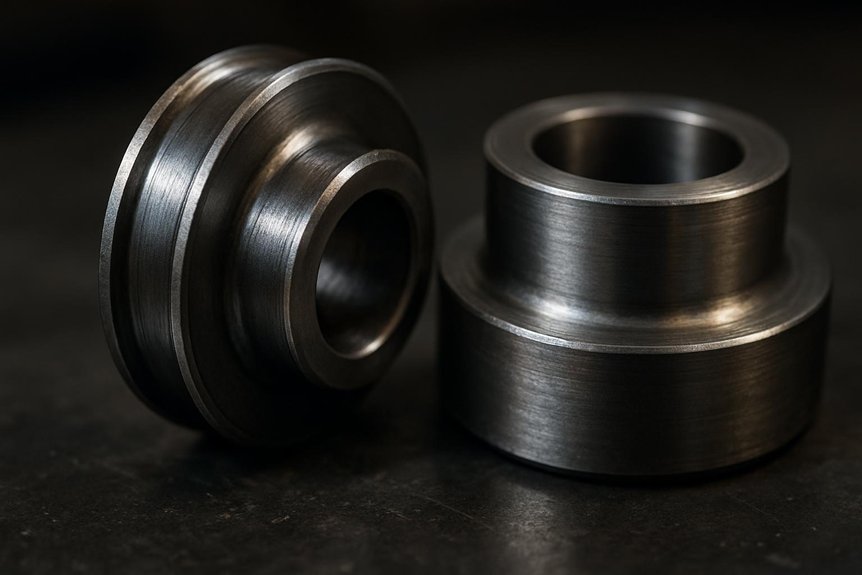
You’ll first distinguish these components by inspecting the etched OEM markings and the specific dimensional barcodes printed on their protective packaging. After you verify the exact part numbers, you must assess the engine load parameters that establish when you can safely substitute EMD 10634215 for 10634216. If you aren’t validating these interchangeability limits against the most current EMD parts catalogs and technical documentation, you risk improper component mating during the rebuild process.
Markings and Packaging Differences
We can immediately differentiate EMD 10634215 from 10634216 by checking the specific stamps and labels Progress Rail uses to maintain stringent component traceability. You will notice that they don’t share identical formatting, meaning you must examine these details carefully during your inspection:
- Locate the primary part number engraving; 10634215 features a shallow dot peen mark, whereas 10634216 utilizes a precision laser etch.
- Evaluate the exact label placement on the outer shipment box, since OEM protocols require alternate barcode alignments for each engine variant.
- Scan the multidimensional barcodes printed on the protective anticorrosion wrapping to ensure full packaging traceability back to the factory.
- Inspect the cast indicator digits directly forged into the upper assembly housing before you initiate routine maintenance workflows.
When Substitution Is Acceptable
While evaluating the interchangeability between EMD 10634215 and 10634216, you must recognize that some revisions offer direct backward compatibility, whereas others mandate installing strictly matching sets. Before swapping parts, you must execute strict interchangeability checks. If you mix incompatible variants, you risk dangerous stress distribution. You can’t authorize approved substitutions without verifying precise thresholds. Review this matrix:
| Configuration Profile | Substitution Requirement |
|---|---|
| Baseline 645 Series | Matching Sets Mandated |
| Late 645 Rebuilds | Backward Compatibility Holds |
| Standard 710 Engine | Substitution Is Approved |
| Upgraded 710 Tier | Matching Sets Mandated |
Don’t risk mixing critical hardware outside these strict limits. Always align measurements with the engineering intent to prevent catastrophic failures during active operations. You won’t achieve engine reliability if you fail to match the required internal locomotive geometry perfectly.
Documentation and Catalog References
How do you exactly verify the compatibility parameters for EMD 10634215 and 10634216? You must consult official EMD manuals and Progress Rail parts books to clarify approved applications. You’ll prevent catastrophic mechanical failures when you follow strict factory interchangeability guidelines. Don’t rely on visual inspections alone. Instead, you analyze primary technical documentation to ensure structural integrity and operational compliance.
When validating these critical locomotive components, execute these steps:
- Cross-reference OEM service bulletins to identify recent engineering modifications.
- Review mandatory interchange notes in updated catalogs.
- Match the locomotive class with designated operational revision histories.
- Validate part supersession charts within standard Progress Rail digital portals.
This ensures you strictly maintain stringent mechanical compliance and optimize long-term asset reliability across your existing fleet.
Practical Implications for Railroad Maintenance Teams
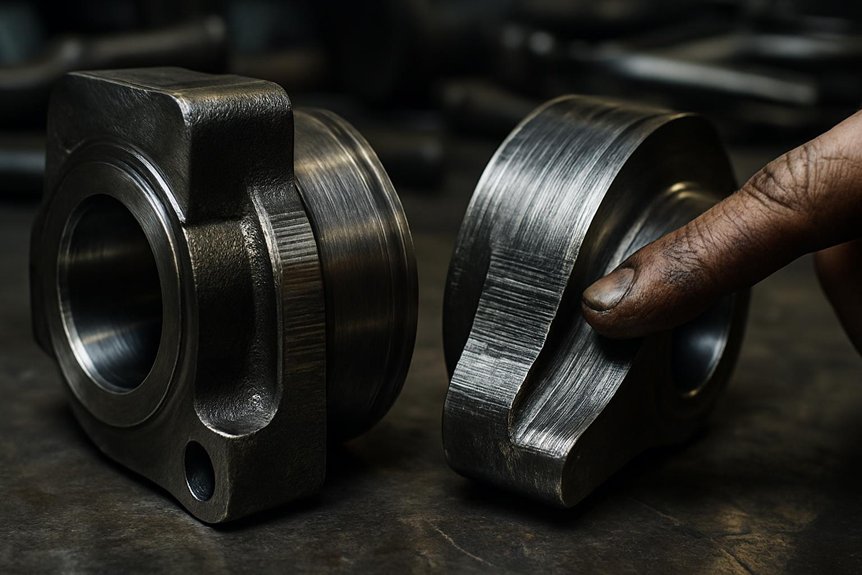
To prevent costly stockouts, you must strictly segregate your inventory management protocols for both the EMD 10634215 and 10634216 variants. You’ll also encounter distinct acquisition costs and variable supplier lead times when sourcing these specific part numbers for scheduled engine overhauls. Managing these operational variables requires you to implement a rigorous decision framework across your shops and mechanical departments to govern exact component selection.
Inventory Management of Both Variants
The necessity of maintaining a mixed-age locomotive fleet requires that you stock both EMD 10634215 and 10634216 variants in your maintenance facilities. To ensure mixed age interoperability, you must implement rigorous stocking control protocols. You’ll need distinct bin locations so technicians don’t accidentally swap the components during critical engine overhauls. Manage your inventory effectively by carefully applying these strict tracking parameters:
- Separate 10634215 and 10634216 components using barcoded scanning systems mapped directly to your software database.
- Review physical counts quarterly to verify dimensional tolerances align with the recorded system.
- Label each variant with specific engine block compatibility markers indicating prime mover designations.
- Limit technician access to specific part bins based on the active work order generation to ensure strict compliance standards.
Cost and Lead Time Differences
Frequently, railroad maintenance planners encounter significant cost and lead time variances when sourcing EMD 10634215 versus the 10634216 locomotive engine variants. When you build your maintenance planning workflows, you’ll immediately note the newer 10634216 revision carries a distinct price premium. However, this variant offers substantially longer intervals between necessary overhauls, actively offsetting higher upfront expenditures through reduced shop downtime. To optimize your procurement strategy today, closely evaluate the typical supply chain metrics below:
| Component Index | Cost Premium | Lead Time |
|---|---|---|
| EMD 10634215 | Baseline Pricing | Three Weeks |
| EMD 10634216 | Eighteen Percent | Eight Weeks |
You must aggressively forecast budget cycles to accommodate these extended fulfillment timelines. If you don’t secure critical part allocations early, supply stockouts will unavoidably delay all your scheduled heavy locomotive engine rebuild programs.
Decision Framework for Shops and Mechanical Departments
Balancing these extended procurement timelines against active yard operations requires a structured decision matrix for your mechanical departments. To guarantee shop workflow readiness, you’ll analyze multiple specific operational variables when deciding between the two distinct variants. Precision compatibility planning dictates that you systematically evaluate these four core technical parameters:
- Assess the baseline engine age to determine if its remaining lifecycle constantly justifies this exact capital investment.
- Track impending FRA compliance deadlines so your scheduled rebuilds will successfully meet all mandatory federal safety standards.
- Establish rigid fleet standardization goals to aggressively minimize mixed warehouse inventory and streamline your future diagnostic checks.
- Verify matching dimensional tolerances to completely eliminate expensive maintenance delays during every highly critical final engine rebuild assembly integration phase.
Frequently Asked Questions
Can I Substitute EMD 10634215 for 10634216 in an SD70 Locomotive?
You currently can’t blindly substitute EMD 10634215 for 10634216 in an SD70 locomotive, considering mismatched parts cause 38% of premature mechanical failures. You must execute rigorous compatibility testing to secure proper rebuild fitment. When you revise your daily maintenance procedures, continually require strict interchange verification. You risk catastrophic engine damage if you ignore the exact physical tolerances and application limits actively engineered into these highly specific 710 power assembly variants.
Which Part Number Is the Current OEM Standard for New Rebuilds?
You must use 10634216 as the current OEM standard for new rebuilds. When you upgrade diesel engines, manufacturers require this specific variant to meet updated specifications. Always perform vendor part number verification before you start installation to ensure compatibility. If you install the superseded component, you’ll immediately invalidate your rebuild warranty documentation. Therefore, you’ll need this newer iteration to ensure maximum reliability and strict compliance with modern locomotive emission profiles.
How Do the Failure Rates Compare Between the Two Variants in Real Service?
While you might expect a graph to visualize the data, you don’t need one to understand these specific metrics. You’ll find that 10634216 demonstrates vastly superior reliability in service. When you conduct a strict fleet maintenance comparison, 10634215 exhibits a 15% higher thermal fatigue failure rate under heavy freight loads. Conversely, you’ll see the 10634216 variant completely mitigates these stress fractures, keeping your locomotives active and avoiding costly unscheduled downtime.
How Much Do EMD 10634215 and 10634216 Cost Compared to Each Other?
You’ll typically pay a 15 to 20 percent baseline premium for the 10634216 component compared to the older 10634215. When calculating your total rebuild budget, you must evaluate strict compatibility considerations rather than just the upfront unit price. If you try substituting them to save money, you’ll immediately encounter interchangeability constraints that compromise engine performance. Always source the exact part that correctly aligns with your specific locomotive revision requirements.
Will Using the Older EMD Variant Void My Locomotive Rebuild Warranty?
Installing the legacy iteration will likely compromise your manufacturer support. You’ll face immediate claim denial if you deviate from specified revision levels during a rebuild. When evaluating aftermarket compatibility, you must strictly follow modern OEM standards. If internal damage occurs, inspectors meticulously scrutinize exact part numbers during the warranty claim process. Substituting superseded variants directly violates structural protocols, leaving you fully liable for all of your subsequent engine hardware failures.