

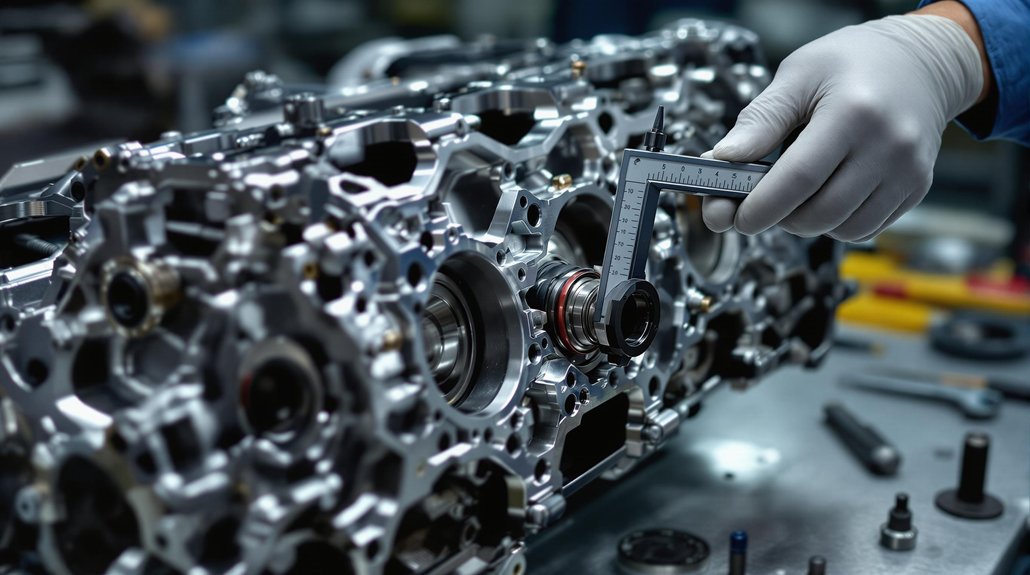
You need to check EMD camshaft bearing clearance specifications to guarantee you’ve got a proper oil film separating metal surfaces, preventing direct contact and wear. Incorrect clearance—too tight or too loose—risks overheating, oil starvation, or rapid bearing failure. By measuring with precise tools and confirming specs, you maintain ideal lubrication, avoid misalignment, and extend engine life. Following these checks supports reliability and helps you avoid costly failures; there are key techniques and detailed best practices to take into account next.
Key Takeaways
- Ensures proper oil film formation, preventing metal-to-metal contact and premature camshaft or bearing wear.
- Verifies correct bearing fit, minimizing risks of seizure, excessive vibration, or engine failure due to misalignment.
- Detects tolerance stack-up or machining errors that could compromise load capacity and engine reliability.
- Confirms lubricant viscosity compatibility, optimizing lubrication performance and reducing the risk of oil starvation.
- Supports preventive maintenance by identifying abnormal wear trends before costly failures occur.
Understanding Critical Clearance Values in EMD Camshafts
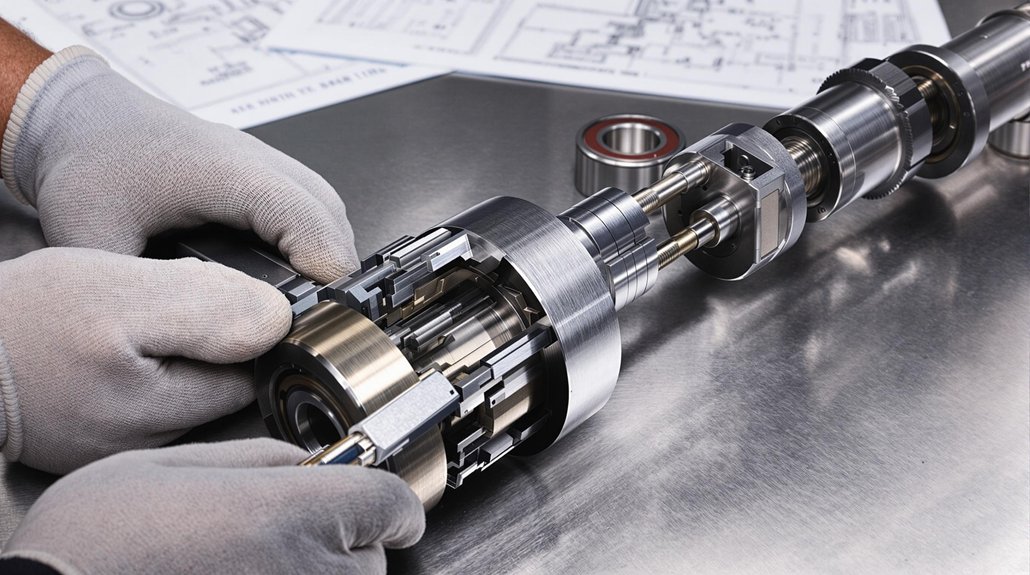
Proper clearance values form the foundation of reliable EMD camshaft operation. When you perform clearance calculations, start with the standard formula—0.00075” to 0.0010” per inch of shaft diameter. For example, a 2.000” shaft requires a baseline clearance of 0.0015”–0.0020”. In high-performance or extreme load scenarios, add 0.0005” to the upper end for added safety. Always account for tolerance stack-ups from the housing, shaft, and bearing materials, as these can introduce up to 0.0026” of variation.
Selecting suitable bearing materials is vital, since each reacts differently under operational stresses and temperature changes. For passenger engines, opt for tighter clearances to minimize noise and vibration, while heavy-duty applications need looser settings for durability. Accurate measurement is critical for engine performance, so using a plastic gauge to check main bearing oil clearance ensures the camshaft remains properly supported and lubricated. Precise clearances guarantee the oil film remains intact, preventing metal-to-metal contact and premature wear. Align your clearance calculations with the bearing material’s properties to optimize both lifespan and operational safety.
Measurement Techniques for Accurate Bearing Clearance
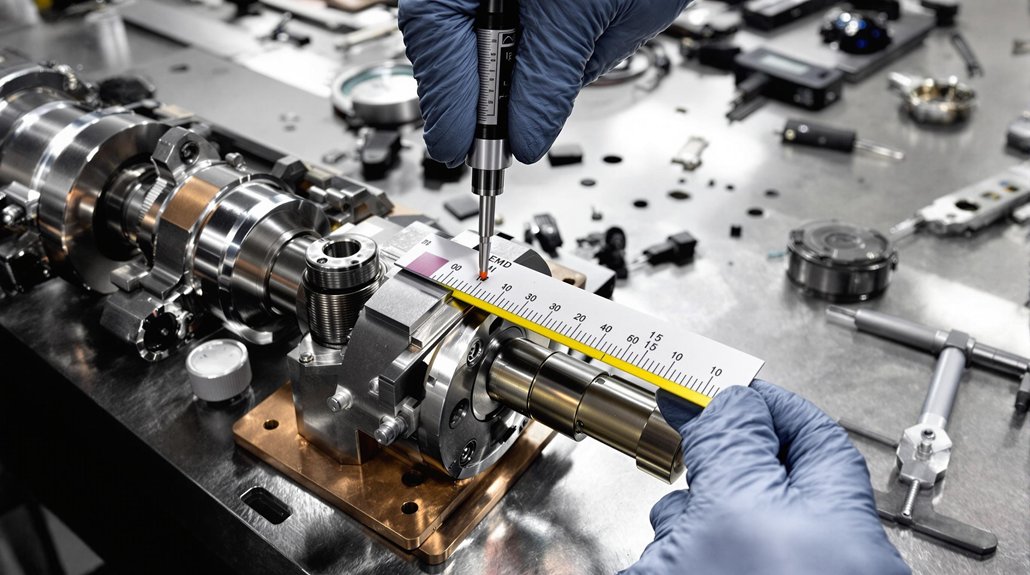
Several essential measurement techniques assure accurate EMD camshaft bearing clearance assessment. Begin by selecting precision measurement tools—dial bore gauges for bearing internal diameter and micrometers with fourth-decimal precision for journal diameter. Always zero and calibrate these measurement tools at 68°F (20°C) to counter thermal expansion effects. Secure bearing caps to their specified torque and assure all surfaces are clean and oil-free for best results.
Proper clearance prevents metal-on-metal contact between engine components, which is critical for ensuring a consistent oil film and long-term reliability.
Measure vertical clearance at 90 degrees to the bearing split line, targeting front, center, and rear positions to identify taper or wear. Remove the camshaft before taking diameter measurements to avoid interference. If using telescopic feeler gauges, never force them; insert the largest size that fits easily to prevent breakage. Plastigage offers a visual method but isn’t as precise as dial gauges—use for quick checks, not critical setups. Meticulously document all clearances in a journal template to track wear trends over time.
The Role of Lubrication in Bearing Longevity
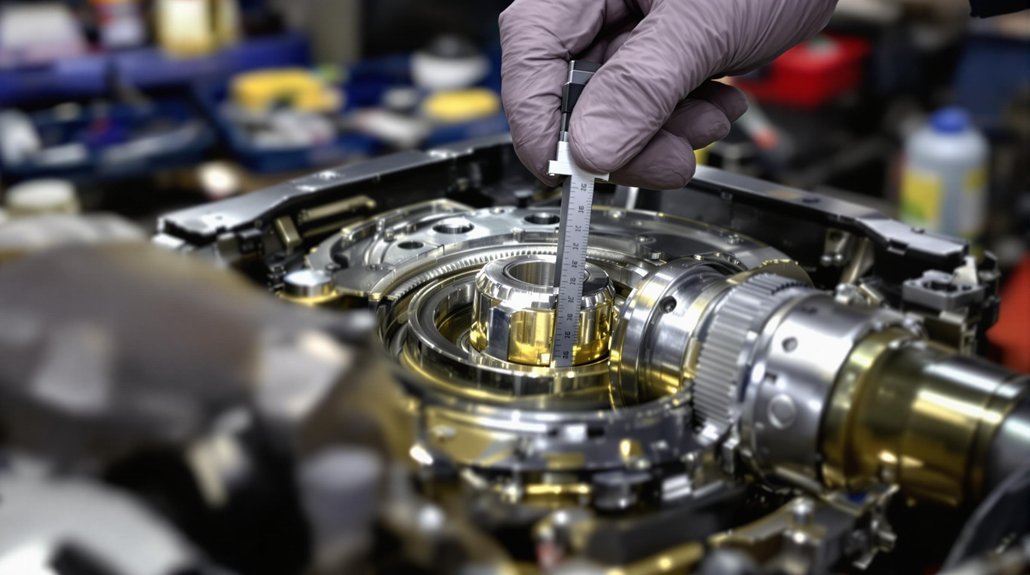
When you assess camshaft bearing longevity in EMD engines, lubrication quality becomes a decisive factor in preventing premature wear. You must verify the lubricant viscosity matches manufacturer specifications to maintain an ideal film thickness between bearing surfaces. This thin oil layer prevents direct metal contact, thereby reducing friction and heat generation. If you choose a lubricant with improper viscosity, you risk inadequate film formation—leading to excessive wear or heat-induced lubricant breakdown.
Always select lubricants based on operational loads, speed, and ambient temperature to ensure consistent flow and protection. Contaminated or low oil contributes to premature wear, making it essential to maintain oil cleanliness and proper levels. Over-lubrication can cause heat buildup, while under-lubrication allows metal-to-metal contact and rapid bearing degradation. Regularly audit lubricant levels and types, adhering to recommended NLGI grades and approved viscosity ranges for EMD camshaft bearings. Precision in lubricant application, contamination control, and ongoing monitoring—such as vibration analysis and thermal imaging—will help you detect early signs of lubrication failure and maximize bearing service life.
Importance of Correct Torque and Installation Procedures
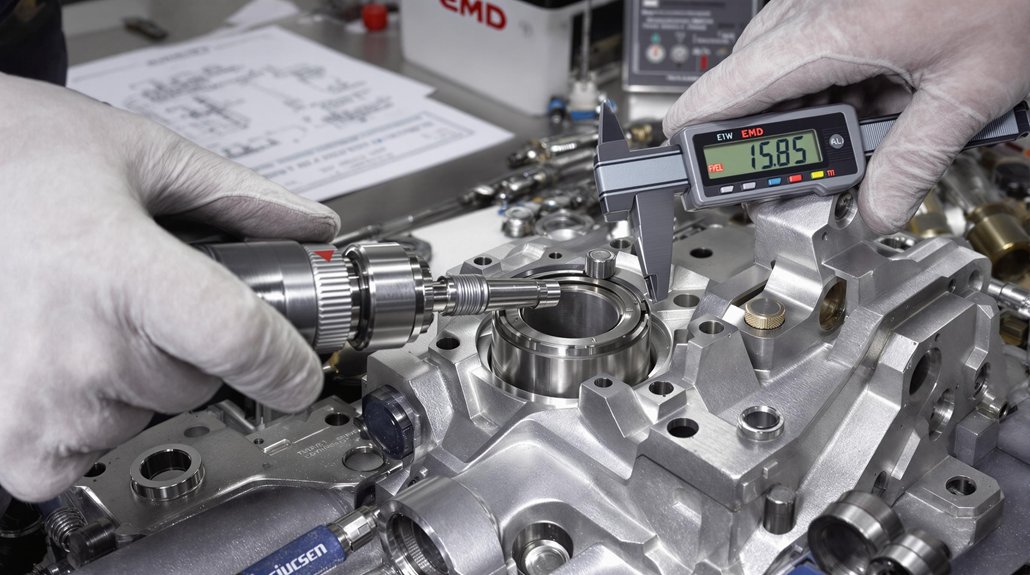
When installing EMD camshaft bearings, you must apply torque precisely according to manufacturer specifications using a calibrated torque wrench. Always follow the correct cap sequencing pattern to guarantee even load distribution and prevent distortion. These steps are critical to maintaining proper bearing clearance and avoiding premature wear. Builders and manuals recommend 15 ft.lbs torque for camshaft bearing caps, as this level helps prevent stripping of studs and ensures long-term reliability.
Precision Torque Application
Precision torque application directly impacts camshaft bearing performance and longevity. When you apply the correct torque to bearing caps and fasteners, you prevent bearing deformation and guarantee the bearing’s inner diameter remains within tight tolerances. If you under- or over-torque, you risk distorting the housing bore, leading to misalignment and uneven force distribution across the camshaft bearing. This not only reduces wear resistance but also compromises the bearing’s load-handling capacity.
Always refer to catalog-specific torque values—such as the 70–2,300 N·m range for MDEU series—and match them precisely to your engine’s specifications. Use calibrated torque tools and follow procedural steps to maintain consistent compression on bearing surfaces. Checking cam bearing housing bores for size and shape before rebuild helps avoid underlying issues that could affect bearing performance, ensuring that torque application delivers the intended benefits. This attention to precision torque protects against premature wear and mechanical failure, optimizing both performance and service life.
Proper Cap Sequencing
Although torque accuracy is essential, the correct sequencing of cap installation plays an equally critical role in guaranteeing proper camshaft bearing clearance. You need to follow a specified bolt pattern—often a cross or staggered method—to avoid uneven pressure that can distort cap alignment. Begin by hand-tightening all bolts, then incrementally apply torque values in the recommended sequence. This prevents local overloading and guarantees the oil film isn’t compromised.
Always verify that the bearing caps’ position markings align precisely with the main journal and oil passages. Use a straightedge to check that each cap maintains proper alignment along the camshaft axis. Performing visual inspection of main caps for correct seating is a key step to ensure accurate assembly. After torquing, inspect for proper seating and confirm that each bearing is fully supported, maximizing load distribution and preventing premature wear or misalignment.
Tolerance and Misalignment Risks in Camshaft Bearings
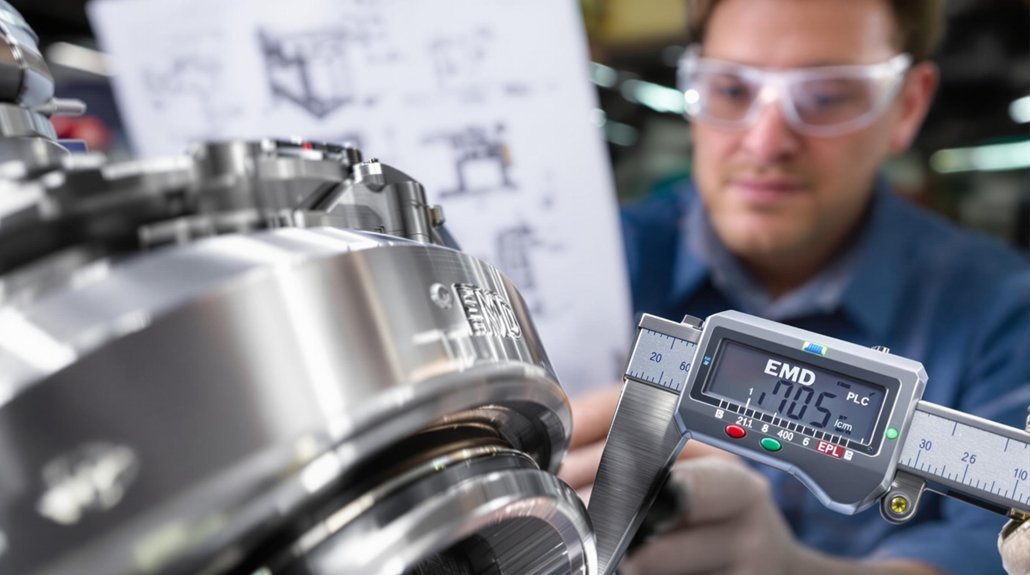
You need to watch for shaft misalignment and compounded tolerance errors, as both can quickly push bearing clearance outside recommended limits. Always verify alignment and measure actual clearances, since even small deviations in housing, shaft, or bearing size stack up and create excessive or insufficient gaps. If you skip these checks, you risk rapid bearing wear, oil starvation, or camshaft seizure. Modern engines require bearings that withstand higher loads and temperatures, so proper clearance is especially important when using stronger, less forgiving materials like aluminum alloys.
Effects of Shaft Misalignment
When camshaft bearings operate under misaligned conditions, the resulting uneven load distribution and increased dynamic stresses can rapidly compromise their integrity. You’ll observe alignment effects such as localized stress concentrations, which accelerate pitting and surface fatigue. Misalignment amplifies edge loading, increasing contact pressures and causing early spalling or cracking. Vibration impact becomes significant, with both radial and axial movements intensifying dynamic forces at the bearing-to-shaft interface.
This not only escalates fretting corrosion and material wear but also generates excessive heat, degrading lubricant viscosity and promoting metal-to-metal contact. As lubricant films erode, friction rises, draining operational efficiency and boosting energy losses. Persistent misalignment leads to premature raceway damage and frequent seal failures, ultimately shortening service life and increasing maintenance demands. Regular monitoring with vibration analysis can help detect subtle changes in machinery performance, allowing for early identification and correction of misalignment before severe bearing damage occurs.
Compounded Tolerance Errors
Even small deviations in camshaft bearing clearances can escalate rapidly due to compounded tolerance errors, especially where shaft, block, and bearing manufacturing variances interact. You’ll encounter tolerance accumulation when block machining, shaft outer diameter, and bearing inner diameter tolerances stack up, pushing clearances outside ideal limits. Aluminum alloy bearings demand strict compliance—material lacks the self-compensation found in babbitt alloys, so any installation errors, such as uneven seating or surface finish irregularities, further skew clearances.
Radial clearance is measured using plastigauge, not thrust clearance, so it is crucial to use the correct method to ensure accurate results. Press-fit and interference designs introduce elastic deformation, complicating post-installation measurements. Contaminants in bearing bores or unfinished bearing seats also contribute to unpredictable clearance loss. If you don’t systematically verify with precise tools, compounded errors can increase wear, reduce load capacity, and jeopardize the camshaft’s operational reliability.
Effects of Clearance Deviations on Engine Performance
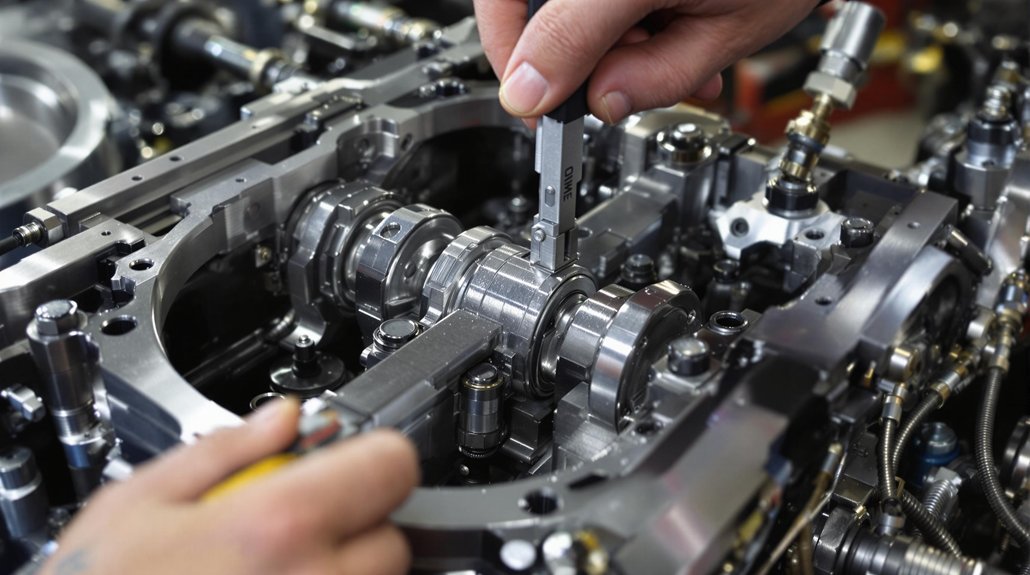
Although camshaft bearing clearance may seem like a minor specification, deviations from prescribed tolerances have immediate and far-reaching effects on engine performance. When you exceed recommended clearances, the primary clearance impact is reduced load capacity, resulting in accelerated material fatigue and overlay cracking. Fatigue cracks propagate to the steel lining, fragmenting the bearing and degrading its structural integrity—especially in turbocharged engines. Excessive clearance also creates oil leakage during cold starts, risking lubrication starvation and lifter malfunction.
Conversely, too little clearance restricts oil flow, increasing friction and heat generation. This thermal stress accelerates bearing wear and shortens component lifespan. On the timing side, increased bearing movement introduces valve phase errors, delaying valve events and reducing combustion efficiency. The cumulative effect undermines power output and responsiveness, particularly in high-compression configurations. By maintaining precise camshaft bearing clearance, you directly support performance optimization, engine reliability, and minimize costly unplanned maintenance. Typical minimum clearance around .006 is observed in older engines, indicating that both excessive and insufficient clearance can have measurable impacts even in long-running, high-mileage engines.
Lubricant Selection and Oil Submergence Guidelines
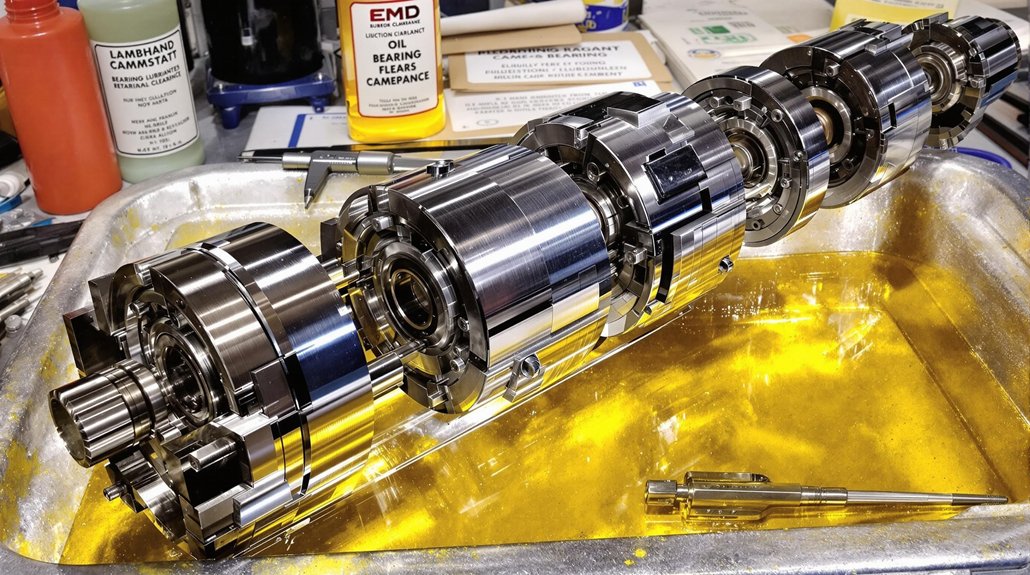
Selecting the correct lubricant and establishing appropriate oil submergence are critical steps in guaranteeing ideal camshaft bearing performance. You need to match lubricant properties—especially viscosity—to the measured bearing clearance. For example, 5w20 oils suit clearances below 0.0021″, while 20w50 oils require clearances above 0.0031″. Using high-viscosity oil with minimal clearance increases temperatures and accelerates oxidation, risking lubrication failure. Conversely, low-viscosity oils with excessive clearance can’t maintain an adequate oil film, leading to metal-to-metal contact.
Oil submergence must be sufficient to keep bearings continuously supplied, preventing starvation during high-load or transient conditions. Confirm the oil level allows for proper circulation without aeration or foaming, as both degrade lubricant properties. Always adjust oil submergence based on operating conditions and engine design. By precisely aligning lubricant properties and oil submergence to your camshaft bearing clearances, you’ll optimize thermal control, lubrication efficiency, and long-term component reliability.
Maintenance Strategies for Sustaining Proper Bearing Clearance
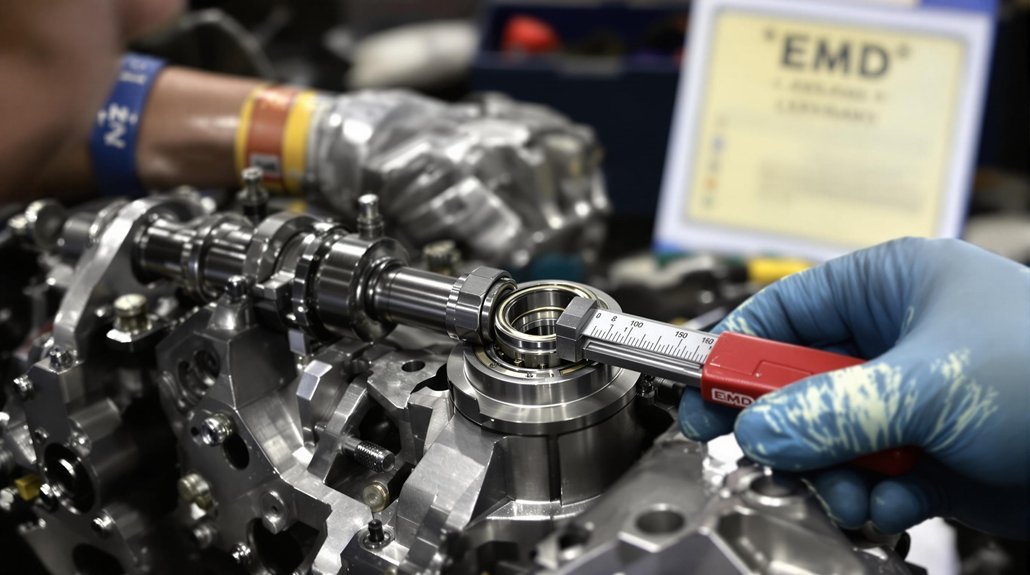
To sustain proper camshaft bearing clearance, you must implement a disciplined combination of precise measurement, systematic inspection, and controlled installation practices. Start bearing maintenance by measuring crankshaft runout with dial indicators, ensuring it stays within a 0.002″ tolerance. Use Plastigage strips to verify that bearing clearance meets the 0.003″–0.005″ specification. Confirm bearing wall thickness with ball micrometers to detect wear or deformation. Adhere to proper torque values—use calibrated wrenches and follow specified patterns to achieve uniform stress on main and rod bearings.
Increase inspection frequency as components age or in high-load environments. Conduct visual inspections for water contamination, dirt scratches, and overlay flaking, referencing standardized criteria. Clean cap bores and serrations before installation to prevent misalignment. Cross-check fitment with alignment tools and validate component dimensions against OEM data. Log all clearance measurements, torque readings, and defect codes to support trend analysis and future preventive actions, ensuring long-term camshaft reliability.
You may also like to read – Symptoms of Worn Camshaft: Epic Signs for Better Diagnosis
Frequently Asked Questions
How Often Should EMD Camshaft Bearing Clearances Be Checked During Service?
You should follow camshaft service frequency and clearance inspection intervals as outlined in EMD’s maintenance guidelines. Typically, check camshaft bearing clearances during every scheduled major overhaul, after any component replacement, or if you notice abnormal engine performance. Always inspect clearances after reassembly or alignment adjustments. Regularly documenting these intervals guarantees you catch excessive wear early, maintain factory tolerances, and prevent unexpected failures, keeping your engine running reliably between service cycles.
What Are the Signs of Camshaft Bearing Clearance Issues During Engine Operation?
You’ll notice camshaft bearing clearance issues by listening for unusual camshaft noise, like clunking or tapping, especially near the valvetrain. Monitor oil pressure closely—if it drops, it can indicate excessive clearance or bearing wear. Watch for a check engine light, power loss, or engine backfiring. Inspect oil for metallic particles, and check for increased oil consumption or leaks near bearing areas, all pointing to potential clearance problems.
Can Bearing Clearance Adjustments Be Made Without Engine Disassembly?
Think of your engine as a sealed vault—bearing adjustment is like trying to fix a lock from the outside. You can’t make precise bearing clearance adjustments without engine disassembly because access to camshaft journals and bearings is blocked. For proper engine maintenance, you must remove and inspect components, measure clearances with specialized tools, and fit appropriate shells. Skipping disassembly risks inaccurate bearing adjustment and potential long-term engine damage.
Are There Recommended Aftermarket Tools for Measuring EMD Camshaft Bearing Clearance?
Yes, you’ll find several recommended aftermarket gauges and precision tools for measuring EMD camshaft bearing clearance. Use plastic strip gauges for quick, visual clearance checks, but rely on precision micrometers and dial bore gauges for high accuracy. Pair these with dial indicators and bearing serration gauges to assess cap distortion and serration alignment. Always calibrate your precision tools before use and follow EMD-specific measurement procedures for best results and compliance.
What Training Is Required for Technicians Measuring EMD Camshaft Bearing Clearances?
To measure EMD camshaft bearing clearances accurately, you need hands-on experience with precision tools like micrometers, bore gauges, and dial indicators. Certification programs train you in reading EMD technical manuals, performing vertical and thrust clearance checks, and following torque specs. You’ll learn assembly validation, proper bearing material handling, and measurement protocols. Cross-training in tribology guarantees you understand oil film dynamics, so you can troubleshoot and maintain ideal clearances effectively.