


Understanding the Core Challenge: Choosing Between EMD 567 and 645 Components
Fleet maintenance managers and locomotive engineers frequently face critical decisions when managing aging or transitioning locomotive fleets. The distinction between EMD 567 and 645 engine platforms impacts component sourcing, maintenance protocols, operational performance, and long-term capital expenditure planning.
Many professionals encounter confusion regarding component interchangeability, performance implications, and upgrade pathways, leading to costly errors in procurement and operational inefficiencies. The complexity intensifies when dealing with aging 567 equipment while newer 645-platform locomotives operate within the same fleet, requiring dual-sourcing expertise and comprehensive understanding of both platforms’ technical requirements.
Common Problems Faced by EMD 567 / 645 Locomotive Professionals:
- Uncertainty about which components are directly interchangeable between 567 and 645 platforms, leading to incorrect part ordering and extended downtime
- Limited availability of 567-series components, forcing difficult decisions between expensive sourcing solutions and premature fleet retirement
- Confusion regarding power assembly upgrade feasibility and required modifications for 567-to-645 conversions
- Difficulty identifying performance differences that justify capital investment in 645-platform technology
- Lack of clear guidance on component specifications and compatibility verification procedures before purchasing
- Uncertainty about maintenance interval differences and component wear pattern variations between engine families
- Complexity in calculating total cost of ownership when comparing repair options across different engine platforms
- Challenges in understanding technical specifications and their practical operational implications for specific locomotive duties
- Inadequate information about bearing journal box maintenance distinctions affecting long-term equipment reliability
- Confusion about fuel injection system differences and their impact on fuel economy and emissions compliance
Comprehensive EMD 567 and EMD 645 Engine Specifications
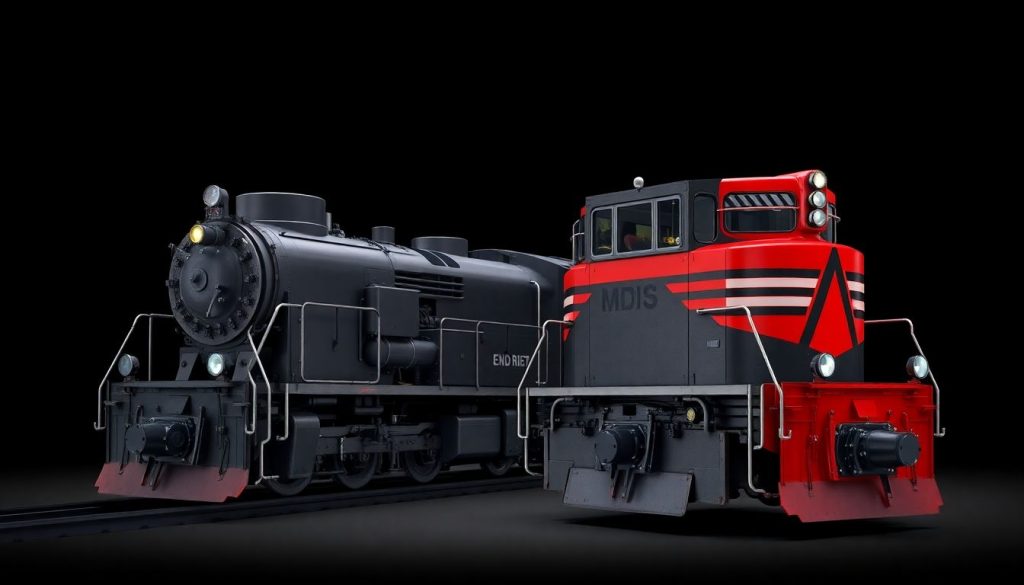
Understanding the fundamental technical specifications of both engine families provides essential context for all downstream maintenance and component decisions. The EMD 567 engine designation refers to its total displacement of 567 cubic inches, representing the cumulative piston displacement across all cylinders. This engine platform emerged from earlier two-cycle technology and became the workhorse of American diesel-electric locomotives throughout the mid-twentieth century. The EMD 645 engine, by contrast, represents a modernized successor platform with 645 cubic inches total displacement, reflecting larger bore dimensions while maintaining identical stroke length to its predecessor.
| Specification | EMD 567 | EMD 645 |
|---|---|---|
| Bore Diameter | 8.5 inches | 9 1/16 inches |
| Stroke Length | 10 inches | 10 inches |
| Total Displacement | 567 cubic inches | 645 cubic inches |
| Compression Ratio (Standard) | 16:1 (later 567D variants) | 14.5:1 |
| Maximum RPM | 800-900 RPM | 900-950 RPM |
| Base Horsepower (Turbocharged) | Up to 2,000 HP | Up to 3,600 HP (V-20) |
| Fuel System | Mechanical unit injectors | Mechanical unit injectors |
| Aspiration Options | Roots blower or turbocharger | Turbocharger or turbocharged variants |
| Production Era | 1940s-1990s | 1960s-present |
The bore increase from 8.5 inches to 9 1/16 inches represents the primary dimensional change driving the performance distinction between these platforms. While the stroke remains constant at 10 inches, the larger bore enables greater piston displacement per cylinder, delivering approximately 14 percent increased displacement and corresponding power output advantages.
This seemingly modest dimensional difference cascades throughout engine architecture, affecting bearing loads, component strength requirements, and cooling system capacity. The EMD 645 engine’s lower compression ratio of 14.5:1 compared to later 567D variants at 16:1 reflects advanced combustion chamber design and improved fuel injection timing capabilities, offsetting power loss while improving reliability and reducing mechanical stress on internal components.
Power Assembly Architecture: EMD 567 vs 645 Comparison
The power assembly represents the heart of locomotive diesel engines, encompassing pistons, connecting rods, crankshaft, and associated bearings that convert fuel combustion energy into mechanical power. Understanding power assembly differences proves critical for fleet managers evaluating upgrade options or managing component availability challenges. The 567 versus 645 power assembly comparison directly influences maintenance decisions, component replacement costs, and retrofit viability assessments.
Bore and Stroke Implications for Power Assembly Design
The EMD 645 bore and stroke configuration requires fundamentally different piston architecture compared to 567 engines. Larger 645 pistons, approximately 9 1/16 inches in diameter, demand enhanced ring groove design, improved skirt configuration, and upgraded material specifications to manage increased combustion pressures and thermal loads.
The identical 10-inch stroke length suggests similar rod-to-stroke ratios, yet the 645’s increased piston mass necessitates stronger connecting rod forgings and enhanced journal bearing materials to accommodate higher reciprocating weight and inertial forces. Premium pistons in 645 assemblies typically incorporate tin-plated skirts that enhance lubrication effectiveness, reducing scuffing tendencies and extending component lifespan compared to earlier 567 designs.
Crankshaft Counterweight Considerations
One of the most critical technical distinctions between 567 and 645 power assemblies involves EMD engine crankshaft counterweights. The 645 crankshaft incorporates enhanced counterweight design reflecting the larger piston mass and resulting unbalanced forces during operation. Camshaft counterweights also require specific adjustment when retrofitting 645 power assemblies into 567 crankcases, a reality that separates knowledgeable technicians from those unfamiliar with upgrade complexity.
The counterweight modifications ensure proper dynamic balance throughout the engine’s operating RPM range, preventing destructive vibration and premature bearing wear. This technical requirement explains why many 567-to-645 conversions require consultation with specialized engineers before implementation, as incorrect counterweight installation can result in catastrophic bearing failures and unscheduled fleet downtime.
Performance Differentiation: Horsepower Advantages and Operational Characteristics
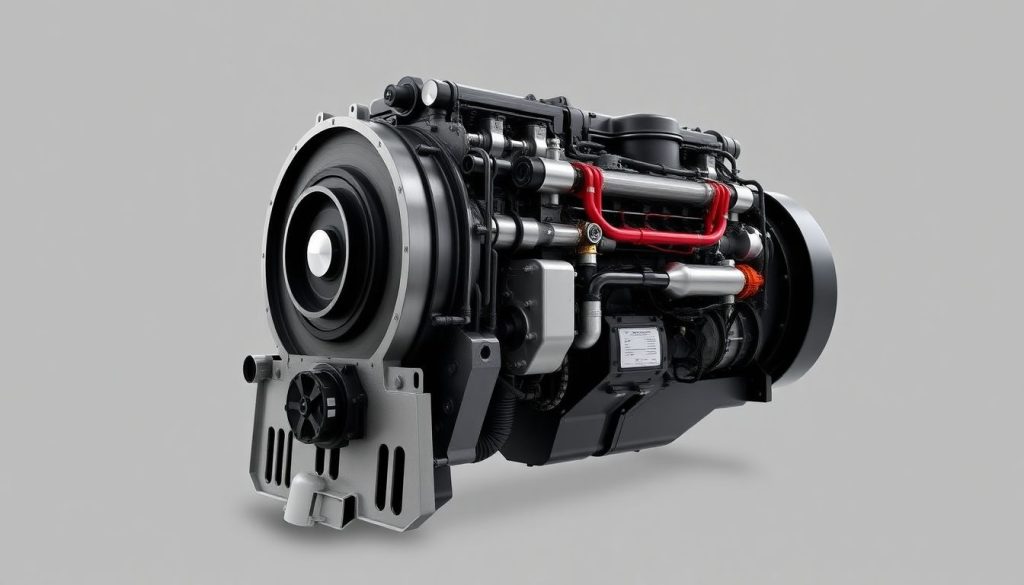
Fleet operators evaluating 645 engine horsepower advantages must understand the multifaceted performance distinctions separating these platforms. The 645 series engine delivers dramatically superior power output, with turbocharged V-20 configurations producing up to 3,600 horsepower compared to 567 engines rarely exceeding 2,000 horsepower even with turbocharging. This horsepower advantage directly translates to improved grade-climbing capability, faster acceleration, and enhanced tonnage capacity for freight operations—factors that influence line-haul service viability and operational economics.
RPM and Power Delivery Profiles
EMD 567 engine RPM specifications typically range from 800 to 900 RPM maximum, while 645 engines operate reliably at 900 to 950 RPM. This modest RPM differential, combined with increased displacement, generates the substantial power advantages distinguishing these platforms.
The lower 567 RPM ceiling reflects conservative engineering practices and mechanical limitations inherent in earlier design philosophy, while 645 engines benefit from advanced bearing technology, improved combustion control, and refined crankshaft dynamics enabling higher sustained operating speeds.
Fleet operations managers should recognize that power delivery profiles differ significantly, with 645 engines providing flatter power curves across broader operating ranges, enabling more consistent performance during variable-demand service such as switching operations or congested rail yards.
Aspiration Technology: Turbocharger versus Roots Blower
The turbocharger versus Roots blower comparison illuminates fundamental advancement in locomotive technology between 567 and 645 platforms. Many 567 engines operate with Roots blower forced induction, a mechanically simple system where the blower belt-drives directly from the crankshaft. This system delivers consistent air pressure but requires mechanical energy extraction from engine output, reducing net horsepower available for rail movement.
Turbocharged 645 engines recover exhaust energy otherwise wasted, compressing intake air with zero mechanical parasitic loss. Turbocharged 645 engines can deliver 50 percent horsepower increases compared to their naturally-aspirated or Roots-blown counterparts, fundamentally altering locomotive performance characteristics and economic viability for demanding service assignments.
Component Interchangeability and Compatibility Analysis
Fleet maintenance professionals frequently encounter situations requiring component interchangeability decisions. Understanding which components can transfer between platforms and which require platform-specific sourcing determines procurement strategy, inventory management, and equipment availability during critical maintenance windows.
EMD Cylinder Liner Compatibility and Modifications
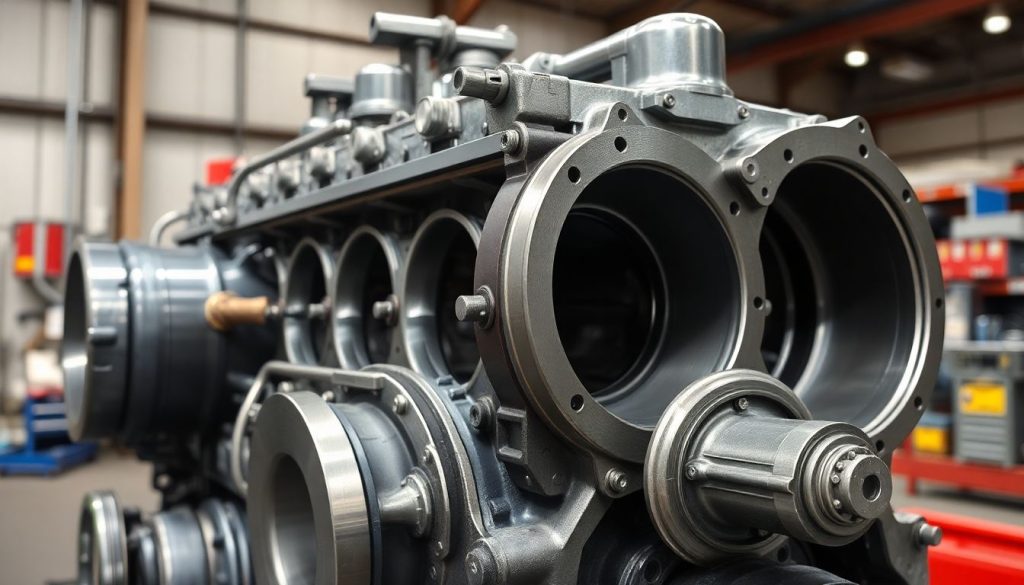
EMD cylinder liner compatibility between 567 and 645 platforms represents a nuanced technical question with significant maintenance implications. While 567C and 567D engines can physically accept 645-series cylinder liners with appropriate modifications, this compatibility requires careful engineering validation.
The larger bore diameter of 645 liners necessitates cylinder block modifications or specialized adapter rings when retrofitting into 567 crankcases, adding expense and complexity that may offset anticipated benefits. Conversely, 645 engines cannot economically utilize 567 liners, as the dimensional mismatch prevents proper sealing and exposes cylinder walls to excessive clearances. Fleet operators contemplating liner retrofits should engage specialized technical resources to validate specific application requirements, as improper liner installation can result in catastrophic failures including crankcase explosions and catastrophic equipment damage.
Locomotive Bearing Journal Box EMD Specifications
Locomotive bearing journal box specifications differ between 567 and 645 engines, though many bearing types cross-reference between platforms with proper verification. Main and rod bearings in 645 engines typically feature enhanced load capacity compared to 567 applications, reflecting the higher reciprocating masses and combustion pressures inherent in the larger-bore platform.
Bearing clearance specifications, lubrication requirements, and replacement intervals may vary between engines, making blind part substitution inadvisable. Experienced fleet maintenance departments maintain comprehensive bearing specification matrices for each engine family represented in their locomotive fleet, enabling rapid identification and procurement of correct replacement components without ambiguity or installation delays.
Fuel Injection System Differences
EMD fuel injection system differences between 567 and 645 platforms reflect evolutionary refinement in combustion control and emissions management. Both platforms utilize mechanical unit injectors, eliminating the electronic fuel control complexity introduced in later EMD models. However, 645 fuel injectors generally feature improved spray patterns, refined injection timing, and enhanced durability compared to 567 counterparts.
The mechanical unit injector design remaining consistent across both platforms means some injector types may cross-reference, though specification verification remains essential before assuming interchangeability. Fuel system pressure specifications typically range from 9,000 to 12,000 PSI in 567 engines, while 645 engines operate at comparable pressures, though specific nozzle designs and needle lift characteristics may vary between applications.
Upgrade Pathways: 645 Power Assembly Upgrade 567 Strategy
Many fleet operators face decisions regarding 645 power assembly upgrade 567 engines as a cost-effective modernization strategy. This upgrade pathway offers compelling advantages compared to complete locomotive retirement, enabling mid-life fleet revitalization with improved performance, enhanced reliability, and extended asset lifespan. Successful implementation requires comprehensive engineering analysis, meticulous component selection, and precise installation procedures ensuring proper mechanical integration.
Technical Requirements and Feasibility Assessment
Retrofitting 645 power assemblies into 567C and later crankcases represents a technically feasible upgrade path successfully implemented thousands of times across North American railroads. The retrofit process capitalizes on the identical stroke length and compatible block architecture, enabling power assembly substitution with acceptable engineering simplicity.
However, camshaft counterweight adjustment emerges as a critical requirement—failure to properly address this modification during installation results in severe vibration, bearing distress, and premature component failure. The retrofit also necessitates fuel system validation, fuel injection advance timing verification, and performance testing under actual operating conditions to ensure reliability and acceptable emissions compliance.
Retrofit Implementation Procedure
Successful 645 power assembly retrofits typically follow methodical procedures beginning with comprehensive teardown inspection of existing 567 equipment. Crankcases undergo careful cleaning, dimensional verification, and defect assessment before 645 component integration. New gasket sets, bearing shells, and carefully verified fasteners ensure leak-free assembly.
Camshaft counterweight modification proceeds under direct supervision of experienced technicians familiar with the specific adjustment requirements. Performance testing following assembly includes running-in procedures under controlled conditions, fuel consumption verification, and emissions testing to confirm acceptable operation across intended service parameters. Many fleet operators engage specialized remanufacturing facilities for this work, leveraging their expertise and specialized equipment while maintaining warranty protection and compliance documentation.
Performance Comparison Table and Selection Guidelines
| Operational Factor | EMD 567 | EMD 645 | Selection Implication |
|---|---|---|---|
| Horsepower Range | Up to 2,000 HP | Up to 3,600 HP | 645 for demanding freight; 567 for switching |
| Grade Climbing | Moderate capacity | Superior capability | 645 for mountain/congested routes |
| Fuel Efficiency | 6-8 MPG equivalent | 7-9 MPG equivalent | 645 marginally superior |
| Component Availability | Limited, aging stock | Extensive inventory | 645 preferable for long-term reliability |
| Maintenance Complexity | Moderate | Higher (advanced systems) | Consider technician expertise availability |
| Retrofit Feasibility | N/A (older design) | Upgrade 567 to 645 possible | 645 retrofit extends equipment life |
| Initial Acquisition Cost | Lower (used equipment) | Higher | Budget constraints vs. long-term value |
| Service Life Potential | 20-30 years | 30+ years | 645 offers extended economic viability |
Maintenance Distinctions and Diesel Engine Piston Ring Wear Patterns
Maintenance protocols diverge between 567 and 645 engines based on design philosophy and component durability characteristics. Understanding these distinctions enables fleet maintenance directors to establish appropriate service intervals, inventory spare components strategically, and predict component failures before catastrophic consequences develop.
Piston Ring Wear Characteristics
Diesel engine piston ring wear patterns differ between 567 and 645 platforms, reflecting design refinements and material improvements in the 645-generation components. Modern 645 ring sets incorporate enhanced chrome plating, refined ring profile geometry, and improved material composition extending service life compared to 567 counterparts.
Low-oil-consumption ring sets in 645 engines produce less smoke and lower particulates, benefiting fleet operators operating in emissions-sensitive regions. Ring groove wear progression typically manifests earlier in 567 engines, necessitating more frequent overhauls and ring replacement compared to 645 engines with comparable service hours.
Oil Analysis and Condition Monitoring
Proactive oil analysis programs reveal operational distinctions between engine families. 567 engines typically exhibit higher iron content in used oil, reflecting accelerated bearing wear and component stress compared to 645 engines under similar service conditions. Fuel dilution rates differ between engine families, with 567 engines demonstrating greater fuel-oil mixing particularly in cold weather operation. These analytical findings inform maintenance decisions, spare parts inventory, and rebuild interval planning specific to each engine family represented in fleet operations.
Scheduled Maintenance Intervals
| Maintenance Task | EMD 567 | EMD 645 |
|---|---|---|
| Oil Changes | Every 250-300 hours | Every 300-400 hours |
| Fuel Filter Replacement | Every 400 hours | Every 500 hours |
| Air Filter Service | Every 250 hours | Every 300 hours |
| Bearing Inspection | Every 1,000 hours | Every 1,500 hours |
| Major Overhaul | 20,000-25,000 hours | 30,000-40,000 hours |
Component Sourcing and Availability Considerations
567 Power Assembly Availability Challenges
The 567 power assembly availability constraint represents the primary driver pushing fleet operators toward 645 platform adoption or retrofitting. Original equipment manufacturer production of 567 power assemblies ceased years ago, forcing operators dependent on aging 567 locomotives toward limited remanufactured sources or costly custom manufacturing. This scarcity directly impacts fleet maintenance economics, potentially making component costs prohibitive when sudden failures require emergency replacement. Strategic fleet operators maintain surplus 567 power assemblies in reserve for critical locomotives, hedging against supply disruptions and sudden availability challenges.
645 Power Assembly Sourcing Options

The 645 platform’s continued production ensures robust component availability through multiple distribution channels. Fleet operators can source 645 components from extensive inventory, benefit from competitive pricing reflecting manufacturing scale economies, and avoid extended lead times characteristic of 567 sourcing. This availability advantage translates to reduced fleet downtime, more predictable maintenance budgeting, and enhanced operational reliability—factors justifying capital investment in 645-platform modernization.
Practical Implementation: When to Retrofit, When to Replace
Fleet management decisions regarding 645 power assembly upgrade 567 versus complete locomotive retirement demand comprehensive economic analysis. Retrofit viability depends on locomotive frame condition, electrical system compatibility, and anticipated remaining service life. Well-maintained 567 frames less than twenty years old typically justify retrofit investment, while severely deteriorated or antiquated frames may justify complete replacement despite higher capital expenditure.
Retrofit Justification Criteria:
- Locomotive frame structural integrity confirmed through comprehensive inspection
- Electrical systems compatible with 645-era control systems or economically upgradeable
- Anticipated remaining service life exceeding 10-15 years supporting retrofit amortization
- Fuel system capable of supporting 645 injection system requirements
- Cooling system capacity adequate for 645 engine thermal output
- Component lead times acceptable for planned retrofit scheduling
Conclusion: Strategic Component Selection for Fleet Operations
EMD 567 and EMD 645 platforms represent distinct technological generations within locomotive diesel engine families, each offering specific advantages reflecting their design era and intended applications. Fleet maintenance professionals equipped with comprehensive understanding of EMD 567 engine specifications, EMD 645 engine specifications, and detailed EMD 567 vs 645 comparison frameworks can optimize component procurement, extend equipment lifespan, and minimize unscheduled downtime through informed decision-making.
The transition from 567 to 645 platforms reflects broader industry evolution toward enhanced efficiency, improved reliability, and superior environmental performance. While 567 engines continue serving satisfactorily in many applications, emerging component availability constraints and superior 645 platform economics increasingly favor modernization investments. Fleet operators maintaining balanced portfolios of both engine families require sophisticated maintenance capabilities, comprehensive spare parts inventories, and access to qualified technical resources familiar with both platforms’ nuances.
Experienced fleet managers recognize that successful locomotive operations depend fundamentally on informed component specification, precise technical knowledge, and access to reliable sourcing partnerships. Whether managing aging 567 equipment, leveraging 645-platform capabilities, or executing strategic retrofit upgrades, maintaining detailed component specifications and performance documentation enables data-driven decisions optimizing long-term fleet economics and operational reliability.
For fleet maintenance professionals seeking verified component specifications, technical consultation, or reliable sourcing partnerships supporting both 567 and 645 platforms, engaging experienced suppliers offering comprehensive technical expertise and verified component quality ensures maintenance programs remain aligned with operational objectives and budget constraints. Strategic sourcing partnerships, armed with detailed technical knowledge and proven component reliability, transform locomotive maintenance from reactive problem-solving into proactive optimization supporting fleet modernization and extended equipment lifespan.