

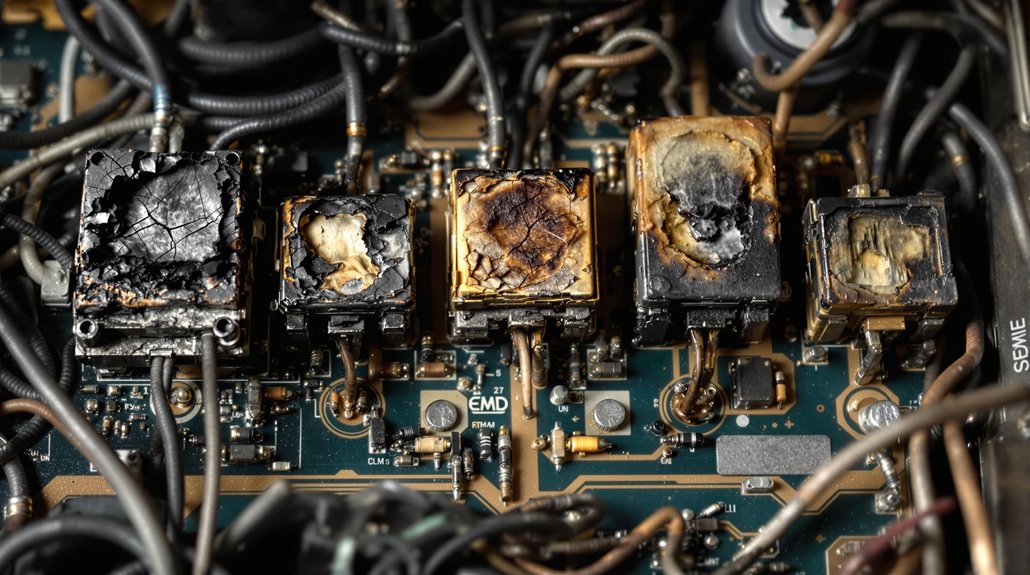
You’ll notice five key semiconductor diode failure symptoms in EMD locomotives: increased forward voltage drops, unusual heat generation, fluctuations in output voltage, elevated reverse leakage currents, and unexpected circuit interruptions. These signs often stem from overvoltage damage, thermal stress, overstress, or electrostatic discharge. Such degradation impacts excitation control and voltage regulation, risking system reliability. Understanding these symptoms helps you catch early faults and protect your traction systems—explore further to uncover the underlying causes and mitigation tactics.
Key Takeaways
- Increased forward voltage drop and reverse leakage current indicate diode degradation in EMD locomotive systems.
- Unusual heat generation and thermal imbalances signal potential diode overheating or thermal stress.
- Fluctuations and ripple in output voltage reflect diode failure affecting excitation control and voltage regulation.
- Sudden loss of rectification or voltage clamping failure suggests overvoltage-induced diode damage.
- Inconsistent electrical performance and possible short or open circuits reveal mechanical or electrical diode faults.
Signs of Overvoltage-Induced Diode Damage
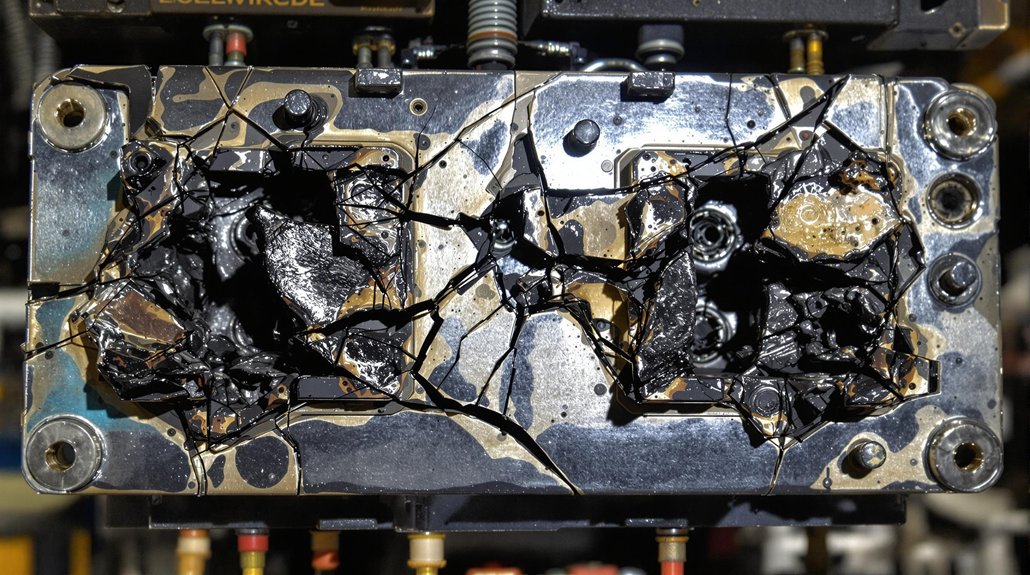
When overvoltage pulses exceed design limits, semiconductor diodes in EMD locomotives often suffer immediate electrical failures, such as dielectric breakdown that causes shorts or open circuits. You’ll notice overvoltage symptoms like sudden loss of rectification or clamping in voltage regulation circuits, often triggered when Zener diodes experience reverse voltage beyond breakdown specifications. This can lead to voltage spikes bypassing protective elements, destroying diode junctions. Diode degradation manifests progressively; forward voltage drops increase beyond specified values, and reverse leakage currents rise, undermining clamping capabilities in TVS diodes during transient events.
You might detect erratic voltage regulation or reduced current handling without visible damage, complicating diagnostics. At the component level, degraded diodes often show reverse recovery times exceeding normal parameters and capacitance values deviating from datasheet specs. Recognizing these precise overvoltage symptoms and signs of diode degradation allows you to pinpoint failures early, ensuring timely maintenance and preventing system-level disruptions in locomotive power systems. Accurate voltage measurements with a true-RMS voltmeter are essential to correctly identify voltage irregularities that may lead to diode failure, since ordinary meters can give misleading readings with non-sinusoidal waveforms true-RMS measurement.
Indicators of Thermal Stress in Diode Components

Although semiconductor diodes in EMD locomotives are designed to operate within specific thermal limits, you’ll observe clear indicators of thermal stress that degrade their performance over time. Thermal monitoring and diode diagnostics reveal characteristic signs such as shifts in forward voltage and increased reverse leakage currents, both reflecting internal material changes. Prolonged exposure leads to mechanical fatigue in bond wires and altered electrical parameters, challenging predictive maintenance.
Key thermal stress indicators include:
Key thermal stress indicators include shifts in voltage, increased leakage, discoloration, and altered electrical behavior.
- Deviations from ideal exponential I-V curves, indicating “soft” breakdown.
- Prolonged reverse recovery time under elevated temperatures.
- Visible discoloration or dross formation on diode surfaces.
- Increased electrical noise during load operation.
- Gradual shifts in critical voltage thresholds and diode capacitance.
- Additionally, electrical overstress from large pulsed voltages or currents can accelerate diode degradation.
Accurate thermal monitoring proves difficult due to sensor placement and environmental gradients, requiring sophisticated diode diagnostics to differentiate genuine thermal stress from transient anomalies. Recognizing these indicators helps you prevent sudden diode failures and optimize locomotive reliability.
Effects of Overstress and Electrostatic Discharge on Diodes

Since semiconductor diodes in EMD locomotives endure complex electrical environments, they often face overstress and electrostatic discharge (ESD) conditions that compromise their integrity. Overstress from high current surges or voltage spikes can cause thermal runaway, junction avalanche, and material degradation, initiating diode failure. ESD events induce metal interconnect burnout, gate oxide rupture, and junction breakdown, damaging the diode’s critical structures. Because ESD is a transient discharge resulting from static charge accumulation, it can create large current flows that severely damage ICs if not properly managed, emphasizing the importance of understanding the ESD mechanisms involved.
Effective ESD protection employs low-clamp voltage diodes, optimized dynamic resistance, and on-chip protective structures to limit surge impact. Failure symptoms include leakage currents, short circuits, and resistance increases, often stemming from inadequate surge energy redirection or faulty clamps.
| Overstress Condition | ESD Failure Mode | ESD Protection Strategy |
|---|---|---|
| High current surges | Metal interconnect burn | Low-clamp voltage diodes |
| Voltage spikes | Gate oxide rupture | Dynamic resistance optimization |
| Prolonged rush currents | Junction breakdown | On-chip protective structures |
| Faulty clamp circuits | Contact spike damage | Surge current redirection |
Maintaining robust ESD protection is essential to prevent diode failure in these demanding applications.
Characteristics of Degraded Semiconductor Diodes
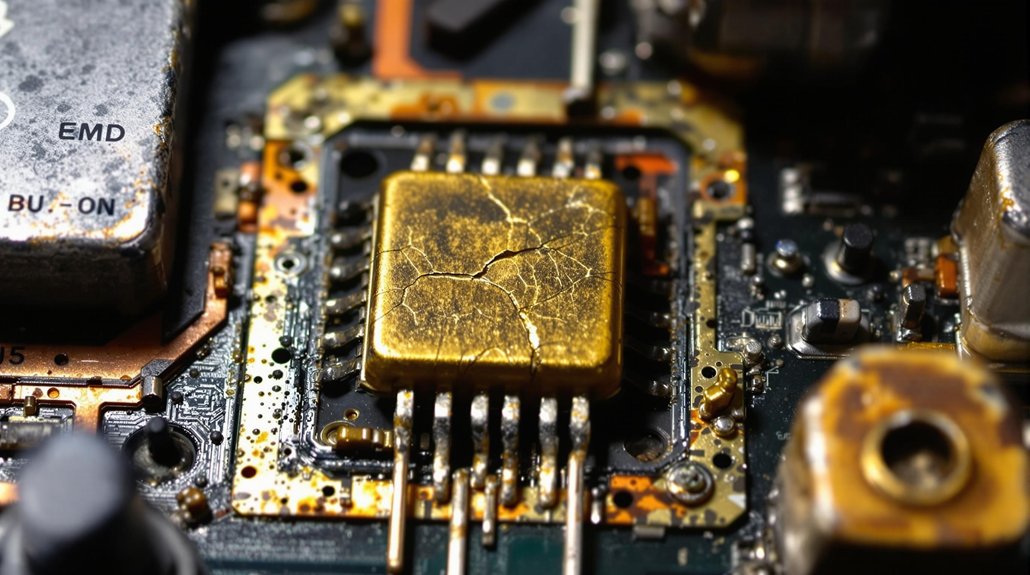
Degraded semiconductor diodes display distinct electrical and physical changes that signal declining performance and imminent failure. You’ll notice shifts in electrical parameters such as increased reverse leakage current and elevated forward voltage drops, accompanied by altered I–V characteristic curves. These symptoms arise from underlying degradation mechanisms like ion migration and defect accumulation under forward bias. Microstructural defects—including radiation-induced recombination centers and crystal lattice imperfections—further compromise diode integrity.
Key characteristics include:
- Rapid current spikes beyond critical voltage thresholds
- Mechanical lead separation reducing electrical continuity, which can cause an increase in thermal resistance and further deterioration
- Microplasma emissions under reverse bias revealing gap breakdown
- Progressive “walkout” phenomena preceding failure
- Partial recovery of function after thermal annealing
Understanding these precise indicators helps you identify diodes under stress and anticipate failure, enabling timely maintenance to prevent operational disruption in EMD locomotives.
Operational Consequences of Diode Failures in EMD Traction Systems
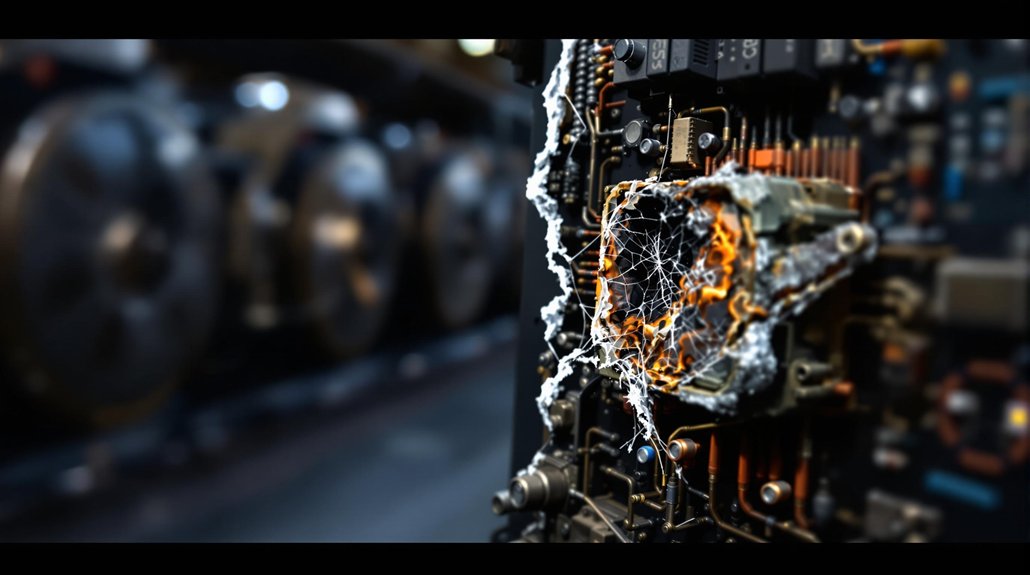
When semiconductor diodes fail in EMD traction systems, you’ll encounter a cascade of operational challenges that directly impact excitation control and voltage regulation. Diode failure mechanisms, such as shorted or open diodes, increase excitation currents that overload exciter rotor windings, risking burnout. Voltage ripple influx damages regulators, especially those lacking over-excitation protection, while terminal voltage collapse from fully shorted diodes causes excitation loss. These excitation system impacts degrade no-load voltage stability and force regulators into maximum output modes, risking rotor damage.
Additionally, overcurrent stresses accelerate component wear, and transient events exacerbate diode degradation. Thermal imbalances from differential loading heighten failure rates, while excitation surges can propagate bus faults, threatening motor insulation. Protective systems may prematurely trip, causing shutdowns and operational delays. Maintenance complexity rises as full-diode replacements become necessary due to undetectable collateral damage, increasing diagnostic demands and inventory costs. Regular inspections and proactive maintenance are crucial to detect early signs of diode deterioration and prevent catastrophic failures. Overall, diode failures critically compromise system reliability, demanding vigilant monitoring and timely interventions to mitigate excitation and voltage regulation disruptions.
Frequently Asked Questions
How Can I Test Diode Health Without Removing It From the Circuit?
Think of diode testing methods as a detective maneuvering through a maze—you’re tracing paths without disturbing the walls. You’ll use multimeter diode test mode to spot forward voltage drops and look for reverse bias resistance. Power off the circuit, isolate one diode leg if needed, and watch for parasitic paths that can mislead you. Circuit analysis techniques like load testing or comparing against known values help confirm diode health without removal, ensuring precise, in-circuit diagnostics.
What Replacement Diode Types Are Compatible With Older EMD Locomotive Systems?
When selecting replacement diode brands for older EMD locomotive systems, you’ll want to prioritize compatibility factors like voltage class and insulator type. Universal diodes designed for EMD’s GP, SD, and F-series locomotives offer broad cross-model compatibility, simplifying repairs. Brands from authorized vendors like LocomotivePartsOnline.com provide accurate part numbers and quality options, including new and budget-friendly units. Always verify voltage ratings to avoid circuit damage and guarantee seamless integration with existing subsystems.
Are Thermal Imaging Scans Effective for Routine Diode Maintenance?
Think of thermal imaging as your eyes seeing the invisible heat signatures dancing on circuit surfaces. For routine maintenance, it’s highly effective—thermal imaging pinpoints temperature anomalies early, catching potential diode issues before they escalate. By integrating this non-intrusive method, you reduce downtime and enhance safety, ensuring precise diagnostics. However, remember it only detects thermal faults, so combine it with other tests for thorough diode health assessment during routine maintenance.
How Does Environmental Cycling Accelerate Diode Degradation?
You’ll find that environmental cycling accelerates diode degradation by imposing repeated thermal and mechanical stress, which shortens diode lifespan. The fluctuating temperatures cause mismatched expansion between materials, leading to microcracks and voids at interfaces. This environmental stress weakens metallization and die attach layers, increasing electrical resistance and reducing thermal conductivity. Over time, these effects compound, driving progressive failure mechanisms that degrade diode performance and reliability markedly faster than steady-state conditions.
What Are Best Practices to Prevent Electrostatic Discharge During Diode Handling?
You wouldn’t handle a delicate watch with greasy hands, so don’t touch diode leads directly—use handling techniques that focus on insulated regions. Preventive measures like grounding wrist straps, conductive work surfaces, and ionizers neutralize static charges effectively. Avoid insulative materials and store components in shielded packaging to minimize risk. Regularly monitor grounding systems and ionizer performance, ensuring your environment stays balanced and electrostatic discharge is prevented during diode handling.