


You’ll prevent 12% of valve failures by replacing diaphragms before cyclic stress and chemical exposure cause ruptures. Your diaphragms face millions of pressure cycles, thermal-induced corrosion, and humidity that doubles degradation rates above 60%. Worn diaphragms compromise brake effectiveness, increase fuel consumption from compressor overwork, and violate 49 CFR 236.590 compliance requirements. Preventive replacement costs 40% less than emergency repairs while maintaining consistent pressure transmission and extending actuator lifespan throughout your pneumatic system.
Key Takeaways
- Cyclic mechanical stress and chemical exposure progressively degrade diaphragm materials, leading to fatigue, cracking, and eventual catastrophic failure.
- Worn diaphragms compromise system performance, causing pressure inconsistencies, extended response times, and reduced operational efficiency across pneumatic controls.
- Regular replacement prevents unexpected breakdowns that result in costly emergency repairs, production downtime, and accelerated wear of connected components.
- Federal regulations mandate specific inspection intervals and maintenance documentation for pneumatic control systems to ensure safety and compliance.
- Proactive diaphragm replacement based on manufacturer specifications extends system lifespan and reduces total ownership costs by 40%.
Understanding Diaphragm Material Degradation in Locomotive Pneumatic Systems

When cyclic mechanical stress repeatedly flexes a diaphragm during pneumatic operations, the material undergoes progressive fatigue that ultimately leads to failure. You’ll observe this diaphragm fatigue accelerate as high air pressure increases flexion rates, shortening operational lifespan. Your system’s valve balls and seats create abrasion patterns on diaphragm surfaces, especially when handling particulate-laden fluids. Regular system maintenance schedules prevent excessive wear by ensuring worn components are replaced before catastrophic failure occurs.
Material properties degrade through multiple pathways. High ambient temperatures reduce elastomer flexibility while increasing brittleness. You’re facing thermal cycling that compounds polymer degradation, while low-temperature exposure increases rigidity and limits compliance during pneumatic cycles. Vibration from unbalanced systems induces microscopic tears that propagate through the material structure.
Fluid viscosity changes alter diaphragm movement efficiency, creating irregular wear patterns. When overpressure events occur, sudden stress spikes push materials beyond yield points. You must monitor heat transfer from adjacent components, as localized deterioration considerably impacts diaphragm integrity and performance metrics.
Chemical Exposure and Corrosion Effects on WABCO Control Diaphragms

Three primary chemical mechanisms systematically degrade Wabco control diaphragms in locomotive pneumatic systems. First, thermal-induced reactions cause oil particles to release esters and aerosols, creating corrosive compounds that attack diaphragm surfaces. You’ll observe accelerated deterioration when oil-crack products accumulate, especially in high-temperature zones above 140°F.
Second, dissolved gases like CO2 and H2S combine with moisture to form acidic solutions. These acids penetrate diaphragm materials, causing embrittlement and microscopic cracking. When humidity exceeds 60%, chemical interaction rates double, reducing diaphragm lifespan by 40%. Additionally, microbially induced corrosion develops when bacteria colonies form in moisture-rich environments, producing metabolic byproducts that further compromise diaphragm integrity.
Third, electrolyte infiltration in 0.025–0.1mm gaps triggers localized crevice corrosion. You’ll find concentrated damage at mounting points where moisture accumulates.
For effective corrosion prevention, install desiccant cartridges with coalescence filters to remove aerosolized contaminants. Replace standard diaphragms with 316L stainless steel-reinforced variants. Schedule monthly connector cleaning to eliminate moisture buildup. These measures extend diaphragm service life from 18 to 36 months.
Preventing Catastrophic Failures Through Scheduled Diaphragm Maintenance

You’ll need systematic risk assessment methods to identify critical failure points before diaphragm ruptures compromise your HAZMAT systems or trigger unplanned shutdowns. By analyzing cyclic stress patterns, chemical exposure data, and historical failure rates, you can predict when micro-cracks will propagate into catastrophic breaks. Your maintenance schedule optimization should align replacement intervals with measured degradation curves, ensuring you’re replacing diaphragms at 80% of their statistical failure point rather than waiting for emergency repairs that cost three times more than planned replacements. Running AODD pumps dry accelerates wear through excessive speed increases and compressed air consumption, making dry-run monitoring essential for maintaining your predictive maintenance accuracy.
Risk Assessment Methods
While pneumatic control systems operate reliably for thousands of cycles, diaphragm failures can trigger catastrophic events that shut down entire production lines or compromise safety-critical functions. You’ll need systematic diaphragm evaluation methods to predict failures before they occur.
FMEA analysis helps you identify failure modes and calculate Risk Priority Numbers (RPN) for each component. By tracking stroke counts and pressure logs, you can establish failure prediction models specific to your operating conditions. Studies show that diaphragm damage accounts for 12% of pneumatic control valve failures in industrial applications, making it a critical monitoring priority.
| Risk Factor | Industry Impact |
|---|---|
| Diaphragm Rupture | 72-hour production shutdown |
| AOV Failure | Nuclear safety system compromise |
| Actuator Malfunction | $2.4M chemical spill liability |
| Undetected Leakage | 15% efficiency loss daily |
Root cause analysis of historical failures reveals patterns that inform your replacement schedules. Combine visual inspections with data analytics to optimize maintenance intervals.
Maintenance Schedule Optimization
Once diaphragm failures exceed acceptable risk thresholds, your maintenance schedule becomes the primary defense against unplanned shutdowns. You’ll need to establish cyclical protocols: weekly visual inspections, monthly air valve cleaning, and annual diaphragm overhauls. Use stroke counters and maintenance technology to track pump cycles against manufacturer specifications. Monitor diaphragm performance through key metrics—stroke rate, air pressure consistency, and fluid discharge patterns.
Document historical maintenance data to identify failure patterns specific to your applications. Align inspection frequency with operating conditions: aggressive chemicals demand weekly checks, while standard applications require quarterly assessments. Install upstream air filters to preserve diaphragm integrity and implement torque verification protocols. Avoid tightening hardware components while the system remains under pressure to prevent seal damage and premature diaphragm failure. Store categorized spare diaphragms based on material compatibility and shelf life to guarantee rapid replacement capability.
Impact of Worn Diaphragms on Braking System Performance and Safety

Worn diaphragms create cascading failures throughout your braking system that directly threaten vehicle safety and operational efficiency. As diaphragm performance degrades, you’ll experience compromised force transmission through misaligned mechanical linkages, reducing brake shoe contact effectiveness by up to 40%. Your system’s pressure regulation becomes unreliable, with cracked diaphragms causing inconsistent build-up rates that extend stopping distances beyond acceptable safety margins. These mechanical failures particularly impact modern PEBS systems where precise pressure control is essential for Advanced Driver-Assistance Systems functionality.
The safety implications extend beyond basic braking deficiency. You’re facing increased collision risks from unpredictable pressure drops that disable emergency brake engagement when you need it most. Position feedback errors in automated systems cause missed stops, while unstable air regulation prevents achieving target braking pressures. These failures accelerate component wear across S-cams, push rods, and brake shoes, creating unbalanced forces that damage road-facing components. Your operational costs escalate through increased fuel consumption from frequent compressor activation and premature component replacement cycles.
Regulatory Requirements for Pneumatic Control System Maintenance in Rail Transport

You must comply with federal regulations 49 CFR 236.590 and 238.309, which mandate specific inspection intervals and documentation requirements for pneumatic control systems. The 49 CFR 236.590 specifically addresses safety and operational standards for pneumatic apparatus in railroad operations. Your replacement diaphragms need material certification that meets OEM specifications and regulatory standards for safety-critical components. You’re required to maintain detailed inspection logs, perform maintenance at 736-day intervals for systems without air dryers, and guarantee all maintenance personnel complete certification programs covering both technical procedures and compliance protocols.
Safety Standards Compliance
When maintaining pneumatic control systems in rail transport, you’re required to comply with extensive federal regulations outlined in 49 CFR Part 236, which governs the installation, inspection, maintenance, and repair of signal and train control systems. You must follow specific standards under § 236.590, mandating inspection, cleaning, and documentation of pneumatic apparatus including train stops and control systems.
Your compliance strategies should incorporate multi-layered regulatory requirements spanning federal, state, and local jurisdictions. You’ll need to maintain detailed inspection records aligning with safety audits and reporting requirements. For passenger coaches equipped with AB-type brake systems, maintenance intervals extend to 2,208 days, demonstrating how specific equipment configurations determine regulatory compliance schedules. While you can petition the FRA for alternative procedures offering equivalent safety measures, you must strictly follow federal guidelines unless approved otherwise. Rail transit systems may impose additional maintenance frequencies beyond federal mandates, requiring you to adapt your compliance framework accordingly.
Material Certification Requirements
Material certification requirements form the foundation of regulatory compliance when replacing pneumatic control system diaphragms in rail transport. You must maintain complete material traceability documentation linking every replacement component to its original certification. Your replacement diaphragms need ASTM/AAR/EN compliance certificates that verify pressure-bearing capabilities and operational durability under specified conditions.
During certification audits, you’ll present these documents to prove adherence to 49 CFR Part 236 and OEM specifications. You’re required to use certified alternatives when original materials become obsolete, ensuring they meet manufacturer-approved interchangeability standards. Your maintenance logs must include certification details for each diaphragm replacement, creating an auditable trail. Post-replacement pressure testing validates that certified materials maintain system integrity, meeting both federal regulations and RTD-recommended maintenance frequencies.
Inspection Schedule Mandates
While material certifications establish the foundation for compliance, inspection schedule mandates create the operational framework that keeps your pneumatic control systems functioning reliably throughout their service life.
Federal regulations dictate your inspection frequency requirements:
- 49 CFR §236.590 – You must inspect and clean pneumatic apparatus regularly
- 49 CFR §299.445 – You’ll follow OEM-recommended intervals for safety-critical components
- Monthly inspections – You’re required to check slip rails, expanders, and lubrication systems
- Post-maintenance testing – You must validate functionality before returning equipment to service
Your written inspection program must detail procedures for pre-service inspections every two calendar days to ensure safety-critical pneumatic components remain operational. Your maintenance documentation must capture equipment IDs, defect dates, and test results per §229.29(a). You’ll track pneumatic leaks, valve wear, and pressure anomalies systematically. RCM programs help you optimize inspection cycles based on historical failure data and environmental factors affecting your system’s reliability.
Cost Analysis of Preventive Diaphragm Replacement Versus Emergency Repairs

Two key financial metrics drive the decision between preventive diaphragm replacement and emergency repairs: total cost of ownership and operational downtime expenses. You’ll find preventive replacement yields lower upfront costs compared to reactive purchases, while emergency repairs demand higher immediate spending for urgent parts and labor.
Your cost benefit analysis reveals preventive strategies enable predictable budgeting through scheduled maintenance cycles. You’re avoiding hidden expenses like lost productivity during unscheduled downtime. Emergency response fees and limited specialized diaphragm availability during crises compound reactive maintenance costs. Plant downtime due to pump failure incurs significant financial losses that far exceed the cost of scheduled replacements.
Through lifecycle management, you’ll achieve substantial savings from reduced replacement frequency and prolonged system lifespan. Preventive schedules guarantee minimal operational stoppages, maintaining production continuity. You’re preserving ideal airflow and reducing gas consumption with properly functioning pneumatic systems.
The data confirms preventive diaphragm replacement minimizes total ownership costs while maximizing operational efficiency. You’ll benefit from simplified part replacement, predictable labor costs, and extended warranty periods for newly replaced components.
Signs of Diaphragm Wear and Establishing Replacement Intervals
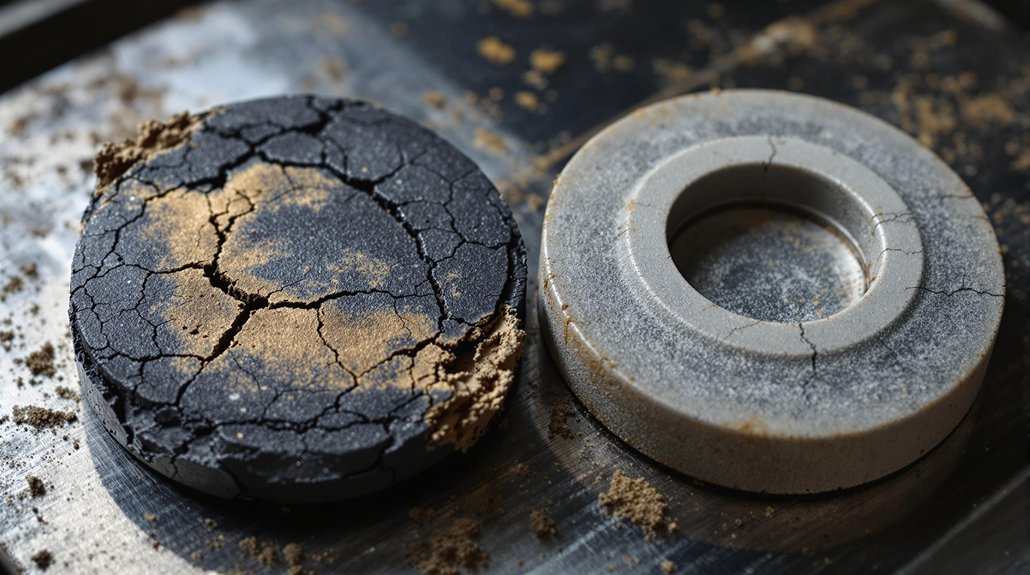
- Cycle count monitoring – Replace diaphragms after exceeding manufacturer-specified thresholds
- Pressure testing results – Schedule replacement when baseline pressure exceeds design limits
- Visual damage assessment – Replace units showing tears, deformation, or corrosion
- Performance degradation – Monitor flow rate inconsistencies and positioning control accuracy
You’ll establish effective replacement intervals by tracking these indicators systematically. Document pressure fluctuations, actuator response times, and vacuum test results. When multiple symptoms appear simultaneously, immediate replacement prevents catastrophic failure. Regular monitoring transforms reactive maintenance into predictive scheduling, optimizing system reliability while minimizing downtime costs.
Maintaining Operational Efficiency Through Proactive Diaphragm Management

After implementing systematic monitoring protocols, you’ll maximize operational efficiency through strategic diaphragm management that transforms maintenance from reactive firefighting to predictive optimization. You’re eliminating variable flow rates caused by worn diaphragms while guaranteeing precise control through clean actuators and aligned mechanisms.
Track performance metrics including pressure consistency, throttle response times, and seal integrity data. You’ll prevent diaphragm-induced vibrations that disrupt system stability by replacing components before degradation impacts diaphragm functionality. Document flow variations, actuation speeds, and leakage rates to establish replacement baselines.
Your proactive approach reduces emergency repair costs while minimizing production downtime. You’re extending actuator lifespan by eliminating strain from malfunctioning diaphragms and preventing stem misalignment through scheduled replacements. Energy consumption drops considerably when efficient fluid transfer isn’t compromised by leakage. This strategic management guarantees bubble-tight sealing during shutdowns, maintains consistent process control, and demonstrates regulatory compliance through documented maintenance records.
You may also like to read – How to Replace WABCO Locomotive Brake Diaphragms
Frequently Asked Questions
Can Diaphragms Be Repaired Instead of Replaced Entirely?
Like patching a leaking dam, you can repair diaphragms with surface-level fixes using chemical solvents or lubrication for minor damage. However, diaphragm repair feasibility depends on damage severity. Full-thickness tears, chemical degradation, or delamination require replacement. While surface repairs offer cost-effective short-term solutions, repair feasibility diminishes with extensive damage. You’ll find that standardized replacement often proves more reliable than attempting repairs on critically compromised components.
What Tools Are Needed for Diaphragm Replacement Procedures?
You’ll need specific diaphragm replacement tools for proper installation. Use socket wrenches to disassemble valve housings, torque-limiting screwdrivers to prevent seal damage, and needle-nose pliers for positioning new diaphragms in tight spaces. Following maintenance best practices, you’ll require scalable cleaning brushes to prepare sealing surfaces and remove debris. Don’t forget manufacturer-specified torque wrenches for reassembly and specialized diaphragm pullers if the component’s bonded to metal plates.
How Do Temperature Fluctuations Affect Diaphragm Replacement Frequency?
You’ll find temperature fluctuations greatly reduce your diaphragm lifespan through material degradation cycles. When temperatures exceed 60°C, synthetic rubbers deteriorate rapidly, while sub-4°C conditions cause hardening and brittleness. Your replacement frequency doubles with 20°C temperature swings occurring daily. Monitor thermal cycling data – each 10°C variation accelerates aging by 15%. Temperature impact manifests through expansion-contraction stress, creating microcracks that compromise structural integrity within 6-12 months versus 24-month stable-temperature operations.
Which Diaphragm Materials Offer the Longest Service Life?
Like a marathon runner’s shoes, your diaphragm materials determine operational endurance. You’ll maximize diaphragm durability by selecting Hytrel or Santoprene for their exceptional flex life—Hytrel achieves 10+ million cycles in clean applications. Material comparison reveals PTFE offers unmatched chemical resistance but costs 3-5x more. For balanced performance, you’re looking at thermoplastic elastomers providing 2-3 year service intervals versus 6-12 months for standard EPDM in demanding pneumatic systems.
Should Spare Diaphragms Be Stored in Specific Conditions?
You’ll need to maintain specific diaphragm storage conditions to preserve material integrity. Store spare diaphragms in dry, clean indoor environments at temperatures between 15-25°C, avoiding extremes above 60°C or freezing conditions. Keep them in original packaging to prevent contamination and UV exposure. Monitor the 5-year shelf life carefully, recording storage dates for traceability. These ideal conditions prevent premature degradation, ensuring diaphragms perform reliably when installed in your pneumatic systems.