

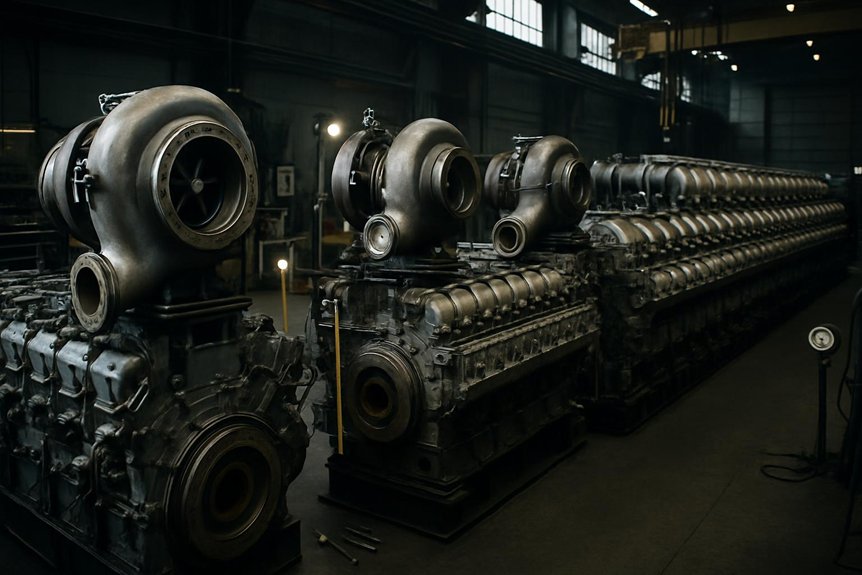
You match EMD 710 turbochargers by full configuration, not cylinder count alone: 8-cylinder engines use smaller approved assemblies, 12-cylinder units use mid-range families, 16-cylinder mainline engines need higher-flow assemblies, and 20-cylinder heavy-haul platforms use the largest approved families. You must verify rating, emissions tier, injectors, controls, lube routing, cooling, gear drive, and approved part numbers. Flange fit doesn’t prove interchangeability, and non-listed turbos can void certification; the details below clarify the limits.
Which EMD 710 engine configurations (8–20 cylinder) use which turbocharger assemblies, and what are the interchangeability limits in locomotives?
The EMD 710 family covers 8–20 cylinder locomotive prime movers with multiple turbocharger assemblies tailored to duty cycles. Railroads typically mate 8–, 12–, 16– and 20–cylinder 710 engines with specific turbo part families to balance fuel efficiency, emissions, and reliability in mainline and heavy-haul service. Interchangeability limits are driven by emissions kits, gear ratios, and control software rather than simple flange compatibility, so engineers must treat turbo swaps as engineering changes, not parts substitutions.
In locomotives, each 710 turbocharger assembly is matched to airflow, backpressure, and thermal loads for its cylinder count and rating band. Swapping to a different turbo model can affect horsepower, NOx compliance, and wheel-slip behavior, even when the hardware mounts correctly. Procurement teams therefore need configuration-level visibility: engine model, tier level, railroad option kits, and approved turbo part numbers.
Locomotive fleets often carry several generations of 710 engines, from early Dash-2 style units to modern Tier 2 and beyond. Managing turbocharger interchangeability across these fleets requires structured asset data and a clear policy for upgrades versus like-for-like replacements. Your blog can guide readers through these practical decisions, highlighting common pitfalls and best practices for EMD fleets.
Key Takeaways
- EMD 710 turbo matching depends on cylinder count, horsepower rating, emissions tier, duty cycle, and certified equipment package.
- 8-cylinder 710 engines use smaller turbo assemblies for switching service, lower airflow demand, and controlled exhaust temperatures.
- 12-cylinder engines use mid-range turbo families, while 16-cylinder engines require higher-flow assemblies for regional and mainline freight duty.
- 20-cylinder 710 engines use the largest approved turbo families for heavy-haul operation, cooling demand, alternator load, and thermal margin.
- Turbo interchangeability cannot rely on flange fit; approved part numbers, controls, lube circuits, cooling, backpressure, and emissions compliance must match.
Understanding EMD 710 Engine Configurations in Locomotives
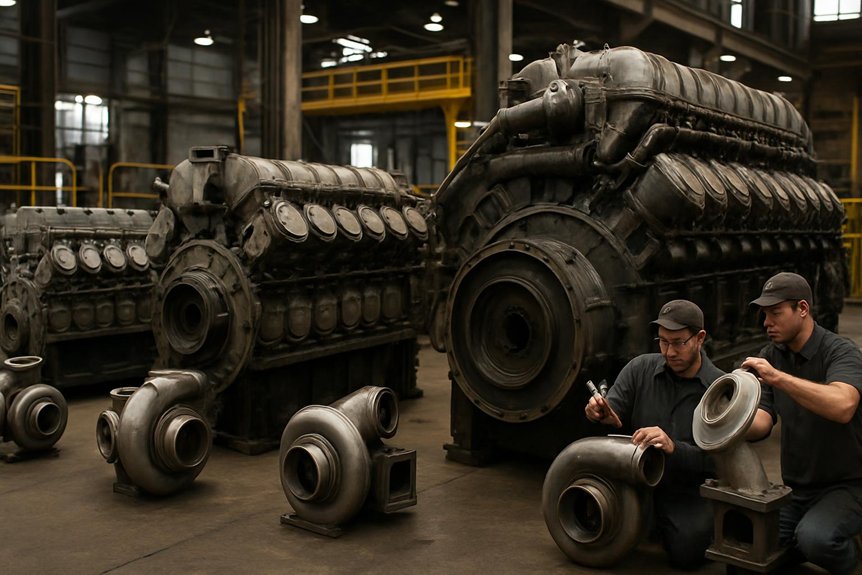
You define modern EMD 710 engine configurations by cylinder count, rating band, emissions tier, and approved turbocharger assembly. Each 8-, 12-, 16-, and 20-cylinder layout supports specific locomotive roles, from switcher duty to heavy-haul mainline service. As fleets age, you must track platform changes, option kits, and certification limits before approving upgrades or interchangeability.
What defines modern EMD 710 engine configurations
Modern EMD 710 engine configurations use a two-stroke, V-type diesel architecture built for locomotive duty. You evaluate them by cylinder count, displacement, rating band, and certified equipment package, not by block size alone. Each bank shares scavenging, exhaust, lube, and cooling requirements that shape approved component choices.
You’ll see 8-, 12-, 16-, and 20-cylinder variants across locomotive fleets. Smaller 8-cylinder units support lower horsepower requirements where compact packaging matters. The 12-cylinder format raises output while controlling fuel use and thermal stress. A 16-cylinder 710 often serves as the standard high-horsepower road configuration. Larger 20-cylinder versions deliver maximum output where axle loading, cooling capacity, and alternator demand justify the package. Ratings vary with injector settings, turbo matching, controls, and emissions certification, so you should verify the complete locomotive configuration before planning work.
Locomotive roles for each 710 cylinder count
Because duty cycle drives airflow demand, each EMD 710 cylinder count fits specific locomotive roles and turbocharger requirements. You typically see 8-cylinder units in switching service, where frequent throttle changes demand fast response, stable low-speed combustion, and controlled exhaust temperatures.
Regional freight often uses 12-cylinder configurations for balanced horsepower, fuel economy, and axle-loading limits. You’ll match turbocharger assemblies to moderate continuous load, not maximum heavy-haul output.
Mainline freight commonly relies on 16-cylinder EMD 710 engine configurations, where sustained horsepower requires higher airflow, validated backpressure, and approved rating bands. Procurement teams must verify part numbers, gear drives, and emissions files before substitution.
Heavy-haul units may use 20-cylinder platforms for maximum tractive power. Here, emd 710 turbocharger interchangeability narrows sharply because thermal loading, certification, and control calibration leave little tolerance.
Evolution of the 710 platform in rail fleets
As rail fleets evolved, the 710 platform moved from early 710G configurations toward electronically controlled Tier 2 and later emissions packages. You now manage EMD 710 engine configurations by generation, rating band, and approved turbocharger assemblies.
- Early 710G units rely more on mechanical governing, fixed calibration, and turbo matching by horsepower class.
- Later 12-, 16-, and 20-cylinder fleets add electronic controls that coordinate fuel delivery, boost, and protection logic.
- Tier 2+ packages tighten NOx and particulate compliance, so turbo changes must preserve certified airflow and backpressure limits.
- Modern overhaul planning treats locomotive prime mover upgrades as configuration changes, not simple component swaps.
You’ll reduce risk by tracking engine model, software, emissions kit, gear train, and approved turbo part family together.
Turbocharger Assemblies Matched to EMD 710 Engine Configurations
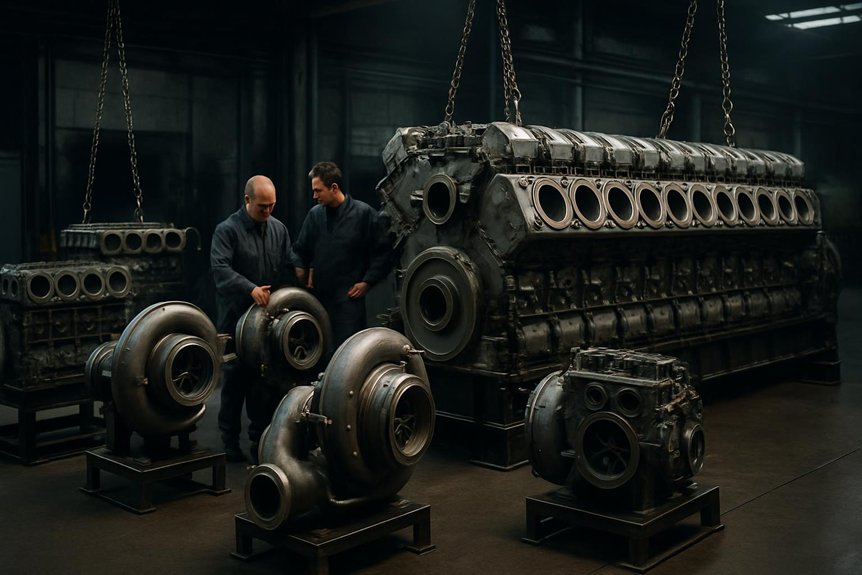
You match turbocharger assemblies to EMD 710 engine configurations by cylinder count, rating band, and approved duty profile. Each turbo must support the required airflow, boost response, exhaust energy, and thermal margin for locomotive service. You can’t treat interchangeability as simple fitment; emissions certification, drive gearing, and control settings set the limits.
Mapping turbos to EMD 710 engine configurations
When mapping turbocharger assemblies to EMD 710 engine configurations, start with cylinder count, rating band, and emissions tier. You’ll avoid treating turbo selection as simple flange matching during locomotive prime mover upgrades.
- 8-cylinder 710: Match smaller turbocharger assemblies to lower airflow demand, lighter duty cycles, and approved horsepower ratings.
- 12-cylinder 710: Select mid-range turbo families aligned with commuter, road-switcher, or medium-haul locomotive service.
- 16-cylinder 710: Use higher-flow assemblies matched to common mainline ratings, Tier kits, and railroad-specific control settings.
- 20-cylinder 710: Reserve the largest approved turbo families for maximum exhaust energy, heavy-haul loading, and thermal margin.
You should verify engine model, software, gear drive, and emissions certification before approving substitutions. That’s how you control EMD 710 turbocharger interchangeability risks.
Key turbocharger design features for locomotive duty
Correct turbo selection also depends on design features that support locomotive duty. You need EMD 710 engine configurations matched to turbocharger assemblies with the right clutch, gas path, and cooling provisions. The integral clutch matters because the turbo must support low-speed scavenging before exhaust energy rises. It lets gear-driven assist transfer to exhaust-driven operation without unstable airflow during throttle changes.
After combustion energy increases, you rely on exhaust-driven operation for efficient boost under sustained load. This supports constant-speed locomotive operation, where engine rpm follows notch settings while traction demand changes. Aftercooling then controls charge-air temperature, protecting pistons, liners, valves, and emissions calibration. You also reduce thermal stress during variable-load service, including grades and dynamic dispatch cycles. Treat these features as approval criteria, not optional preferences.
Rating bands and airflow requirements by cylinder count
Because each 710 cylinder count carries a different horsepower band, turbocharger assemblies must match actual combustion air demand. You size the turbo around fuel rate, exhaust energy, altitude margin, and emissions limits for EMD 710 engine configurations.
- 8-cylinder units: You need controlled boost and conservative compressor flow, protecting low-load response and thermal limits.
- 12-cylinder units: You balance higher airflow with turbine geometry that supports transient locomotive duty without overspeed.
- 16-cylinder units: You match compressor maps to common mainline ratings, fuel burn targets, and certified NOx performance.
- 20-cylinder units: You require larger flow capacity, stronger turbine energy handling, and verified cooling capability.
Treat each rating band as a certified system. Don’t interchange turbos unless gearing, controls, lube circuits, and approvals align.
Interchangeability Limits in Locomotive Applications
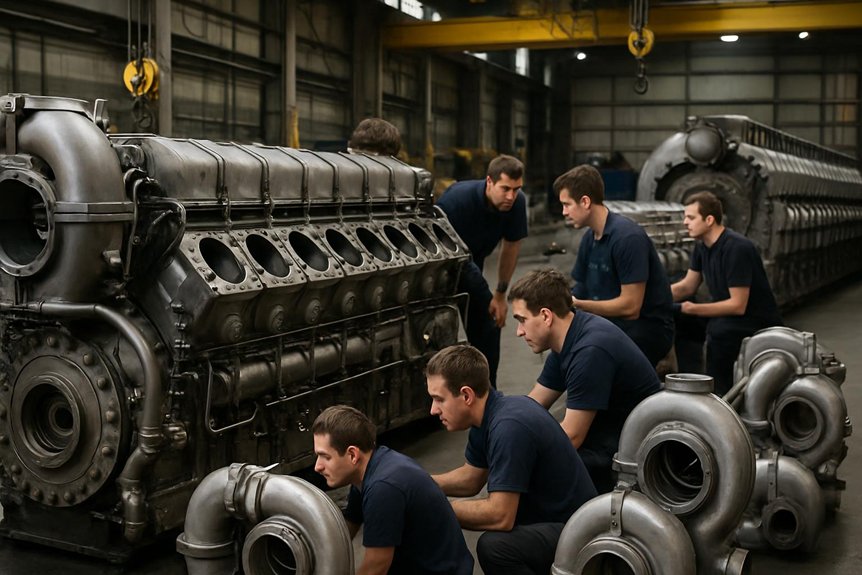
You can’t treat flange fit as true interchangeability in EMD 710 locomotive turbocharger assemblies. Emissions certification, rating bands, and approved part numbers define whether a turbo swap stays compliant. Control software, overspeed protection, and thermal limits must match the locomotive’s configuration before release to service.
Mechanical compatibility versus true interchangeability
Although a turbocharger may bolt onto an EMD 710 housing, that doesn’t make it truly interchangeable. You must validate the full EMD 710 engine configurations before approving any swap.
- Check drive gear alignment. Mismatched gearing changes rotor speed, load response, and accessory train stress.
- Verify lube oil circuits. Incorrect flow or drain routing can starve bearings during locomotive duty cycles.
- Confirm cooling and sealing interfaces. Small deviations can raise thermal loading, leakage risk, and exhaust backpressure.
- Assess structural limits. Different turbocharger assemblies can impose loads beyond approved frame, bracket, or housing capacity.
Treat EMD 710 turbocharger interchangeability as a controlled engineering change, not a visual match. Mikura International helps you compare part numbers, configuration records, and approved locomotive prime mover upgrades before downtime becomes expensive.
Emissions and certification constraints on turbo swaps
Mechanical fit is only one approval gate; emissions certification often sets the harder limit. For EMD 710 engine configurations, you must verify the certified emissions kit before changing turbocharger assemblies. Tier documentation can define the turbo as a regulated component, tied to injectors, timing, exhaust hardware, and rating.
Certification data matters because airflow and backpressure influence NOx, particulates, smoke, and fuel maps. You can’t treat EMD 710 turbocharger interchangeability as valid just because the casing, flange, and drive match. A non-listed turbo may void the locomotive’s certified configuration and require revalidation.
Procurement teams should confirm engine model, horsepower rating, Tier level, kit number, and approved part list. Mikura International helps you align locomotive prime mover upgrades with documented compliance, reducing audit exposure and costly rework.
Control system and protection logic impacts
Beyond physical fit, control calibration often defines the real interchangeability limit. With EMD 710 engine configurations, you can’t treat turbocharger assemblies as isolated hardware.
- Governor settings set fuel response against expected boost. Change the turbo, and you may create smoke, lag, or overspeed risk.
- ECU maps define air-fuel limits, timing, and load response. Incorrect mapping can raise exhaust temperature and reduce component life.
- Protection thresholds monitor boost, airbox pressure, lube oil, and temperature. Mismatched signals may trigger nuisance shutdowns or miss real faults.
- Approved logic supports emissions certification and reliability records. Uncontrolled EMD 710 turbocharger interchangeability can compromise compliance, horsepower, and wheel-slip behavior.
Therefore, you should verify software, governor setup, and protection logic before approving locomotive prime mover upgrades.
Operational Impacts of Turbocharger Choices in Rail Service
You balance horsepower response, fuel burn, and thermal loading when you change turbocharger assemblies in EMD 710 rail service. You can’t treat reliability separately from configuration approval, because mismatch risks bearing distress, surge, emissions issues, and repeat failures. You gain lifecycle cost control when you standardize approved assemblies by engine rating, duty cycle, and fleet policy.
Performance trade‑offs when changing turbocharger assemblies
When you change turbocharger assemblies on the same EMD 710 locomotive prime mover, you also change its air delivery curve. For EMD 710 engine configurations, that affects how each cylinder count reaches rated load.
- Throttle response: You may gain low-speed boost, but you can sacrifice high-notch breathing if the match is wrong.
- Fuel consumption: You’ll burn more fuel when boost lags, because racks open before airflow supports combustion.
- Smoke levels: You can create visible smoke during load pickup when air-fuel balance falls outside approved calibration limits.
- Altitude capability: You’ll protect horsepower better at elevation with the correct assembly, but mismatched units can raise exhaust temperature.
Treat every turbo change as a configuration-controlled locomotive prime mover upgrade, not a simple parts swap.
Reliability, maintenance, and failure modes
Because each turbocharger assembly runs within a defined air, heat, and speed envelope, reliability depends on configuration control. With EMD 710 engine configurations, you prevent avoidable failures by matching inspections to cylinder count, rating, and approved turbocharger assemblies.
Bearing failures often trace to oil contamination, low pressure, or overspeed after an incorrect match. Housing distortion can follow excessive exhaust temperature, poor mounting alignment, or operation outside the certified rating band. Screen plugging restricts airflow and raises thermal loading, so you need configuration-specific cleaning intervals and records.
Treat every turbo change as a controlled maintenance event, not a simple swap. Verify lube supply, drain routing, drive gear condition, mounting hardware, and software settings. When you follow approved limits, you reduce repeat removals and protect locomotive prime mover availability.
Lifecycle cost and fleet standardization benefits
Reliability gains compound when turbocharger choices become fleet standards, not one-off maintenance decisions. You control lifecycle cost better when EMD 710 engine configurations share approved turbocharger assemblies by cylinder count, rating band, and emissions tier. That discipline matters across mixed 8-, 12-, 16-, and 20-cylinder locomotive fleets.
- Standardize approved part families, and you reduce slow-moving inventory without risking EMD 710 turbocharger interchangeability limits.
- Align training by configuration, so mechanics recognize mounting, gear drive, lube, and cooling differences faster.
- Track locomotive prime mover upgrades against certified turbo numbers, because emissions compliance can’t rely on flange fit.
- Plan replacements through configuration data, and you cut downtime from wrong assemblies, missing kits, or software mismatches.
Mikura International supports these standards with configuration-focused parts expertise.
Practical Guidance for Engineers and Procurement Specialists
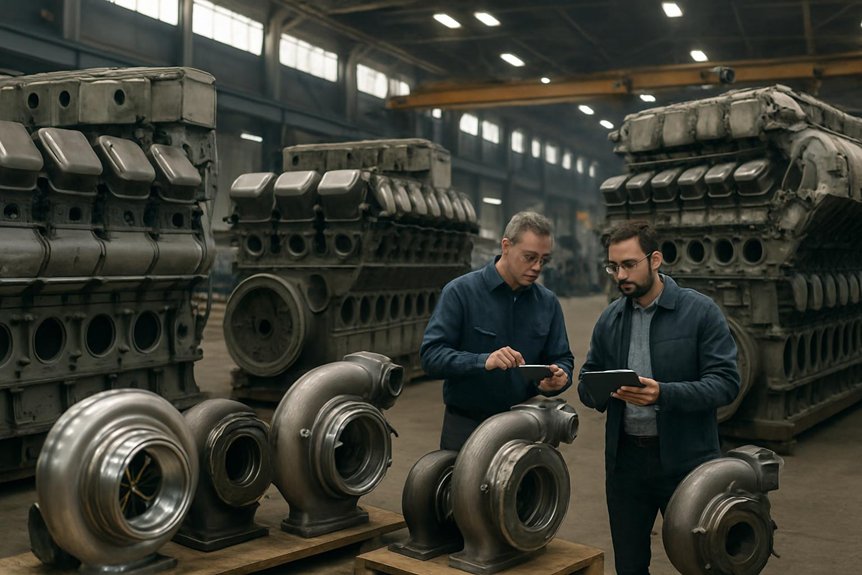
You should start with a verified register of EMD 710 engine configurations, including cylinder count, rating, tier, and approved turbocharger assemblies. Then, you can separate like-for-like replacements from upgrade candidates using reliability, emissions, and lifecycle-cost criteria. Finally, you’ll reduce interchangeability risk by aligning changes with OEM data, qualified rebuilders, and documented railroad standards.
Building a configuration register for EMD 710 engine configurations
A disciplined configuration register gives your team control over EMD 710 engine configurations across mixed locomotive fleets. You prevent unauthorized turbocharger assemblies from entering service by tying every part decision to verified locomotive data.
- Record engine model, cylinder count, horsepower rating, and locomotive number.
- Capture emissions tier, certification kit, and any railroad-specific option package.
- List approved turbo part numbers, supersessions, serial numbers, and installation dates.
- Track control software versions, calibration files, and governed speed settings.
Use the register during planning, purchasing, overhaul, and failure analysis. It helps you confirm EMD 710 turbocharger interchangeability before materials leave inventory. Standard fields also support audits, warranty reviews, and emissions documentation. At Mikura International, we treat this record as a control document, not an informal parts list.
Decision framework for upgrades versus like‑for‑like replacement
When should your team upgrade turbocharger assemblies instead of ordering like-for-like replacements? Start with emissions targets. If EMD 710 engine configurations must maintain certified Tier performance, don’t change turbo families without approved configuration evidence.
Next, quantify fuel savings potential against route profile, notch usage, and expected thermal margin. You should upgrade only when airflow and backpressure changes support rated horsepower without raising exhaust temperature risk.
Then, review reliability history by part number, failure mode, and cylinder configuration. Repeated bearing, seal, or turbine damage may justify an engineered upgrade, not another identical replacement.
Finally, test the capital budget against lifecycle value. A like-for-like turbocharger assembly fits urgent outage recovery and fleet standardization. An upgrade fits planned overhaul windows, documented compliance needs, and measurable reliability or fuel-burn improvement.
Collaborating with OEMs and rebuilders for safe interchangeability
Before approving EMD 710 turbocharger interchangeability, verify the proposed assembly against OEM configuration data, qualified rebuilder records, and your locomotive’s certified emissions file. For EMD 710 engine configurations, don’t treat matching flanges as approval.
- Confirm cylinder count, horsepower rating, gear drive, lube routing, cooling interfaces, and control software revision.
- Require qualified rebuild shops to document clearances, balance reports, material substitutions, actuator settings, and serialized build history.
- Run controlled field testing before fleet release, including boost, exhaust temperature, smoke, fuel rate, and fault-code trending.
- Keep procurement tied to approved part numbers, emissions tier, and railroad option kits.
Mikura International supports these checks with configuration-focused sourcing and transparent records. You’ll reduce failures, protect compliance, and avoid costly locomotive downtime.
Frequently Asked Questions
Which Turbocharger Assemblies Are Commonly Used on 16-Cylinder EMD 710 Locomotive Engines?
Like a matched compressor wheel to its scroll, you’ll typically see EMD 710 16-cylinder locomotives using EMD turbocharger assemblies from the 710G/GT series, matched by horsepower rating, emissions tier, and control package. You shouldn’t select by cylinder count alone. You’ll need the engine model, rating, gear arrangement, lube and cooling connections, software calibration, and certified part number before approving any replacement or locomotive prime mover upgrade.
How Much Flexibility Do Railroads Have to Interchange Turbochargers Across EMD 710 Configurations?
You have limited flexibility. You can’t treat EMD 710 turbochargers as simple swap parts across 8-, 12-, 16-, and 20-cylinder configurations. You must match airflow, gear drive, mounting, lube circuits, controls, emissions certification, and rating band. Even when a turbocharger assembly physically fits, it may violate Tier compliance or overload components. Use approved part numbers, configuration records, and engineering review before any substitution to protect reliability, fuel burn, and warranty.
What Are the Main Risks of Installing a Non-Approved EMD 710 Turbocharger?
Like a hidden crack in rail, a non-approved EMD 710 turbocharger can turn minor mismatch into costly failure. You risk wrong airflow, excess backpressure, high exhaust temperatures, bearing distress, and piston damage. You can also lose emissions certification, upset control calibration, reduce horsepower, raise fuel burn, and trigger wheel-slip issues. If mounting, gearing, lube, or cooling don’t match, you’ve made an unsafe engineering change, not a replacement for your locomotive fleet.
Can Rebuilt Turbocharger Assemblies Support Certified EMD 710 Emissions Compliance?
Yes, you can use rebuilt turbocharger assemblies to support certified EMD 710 emissions compliance, but only when they match the approved configuration. You need the correct part family, nozzle area, gear ratio, actuator setup, and documented overhaul standard. Don’t treat a rebuild as a generic substitute. Your records should tie the turbo to the engine model, emissions kit, calibration, and test evidence, so audits and performance checks remain defensible.
What Records Should Procurement Teams Keep for EMD 710 Turbocharger Traceability?
Cover your bases by keeping engine serial number, EMD 710 configuration, cylinder count, horsepower rating, emissions tier, approved turbocharger part number, serial number, rebuild status, and certification documents. You should also record installation date, locomotive number, software level, gear ratio, lube and cooling connections, supplier certificates, test reports, and removal reason. Don’t treat these as paperwork; they protect compliance, warranty, reliability, and future procurement decisions across your fleet.