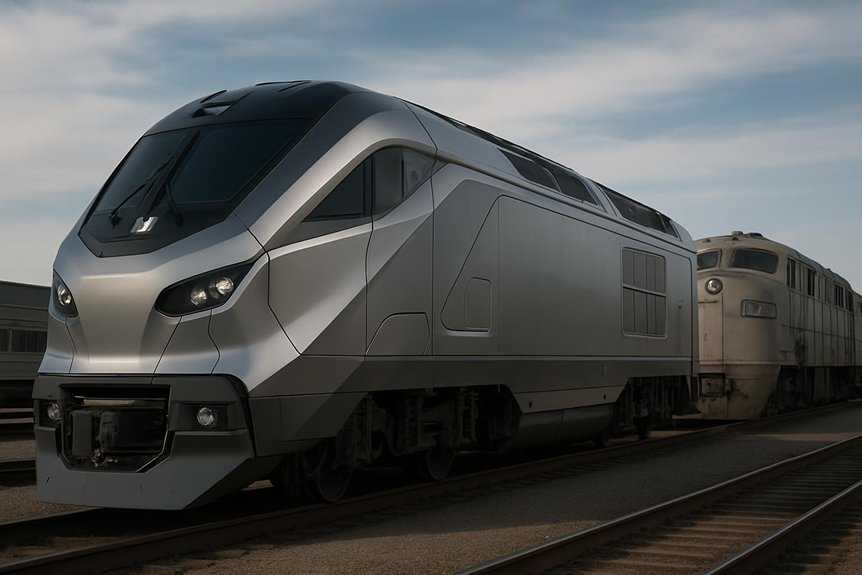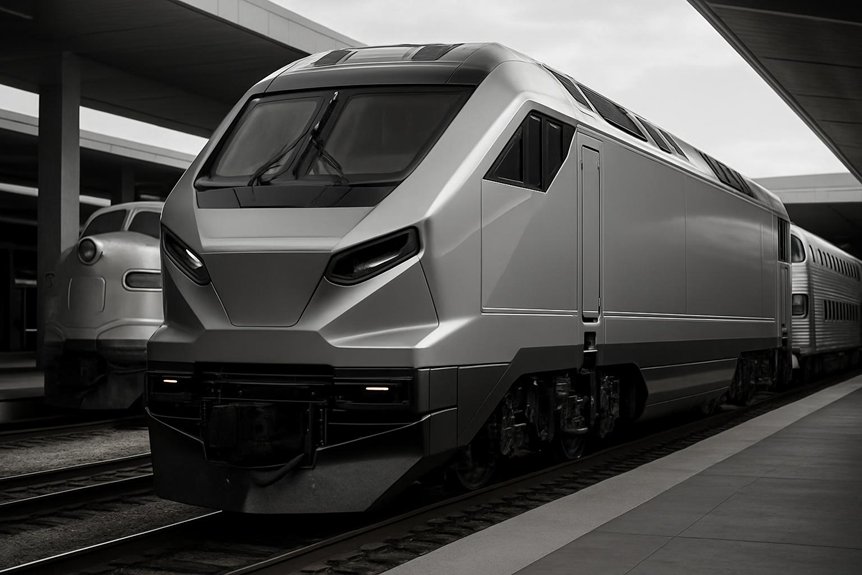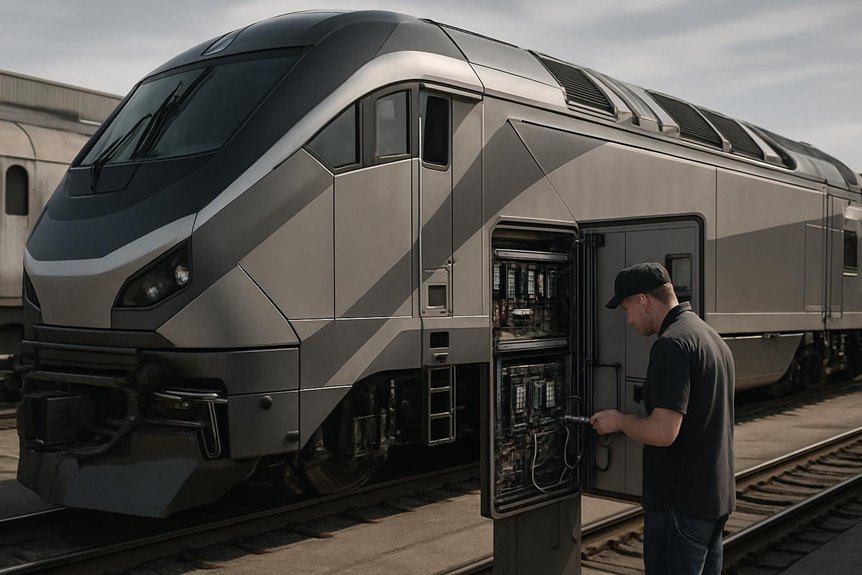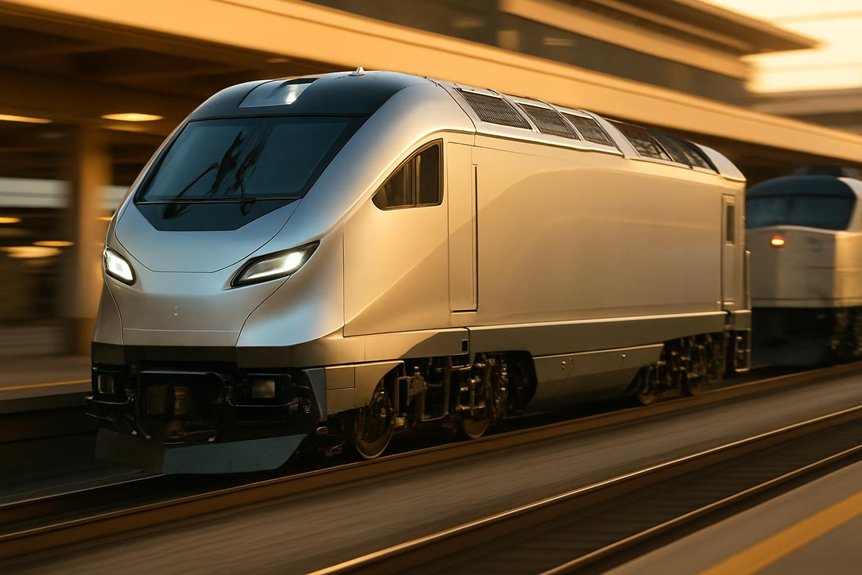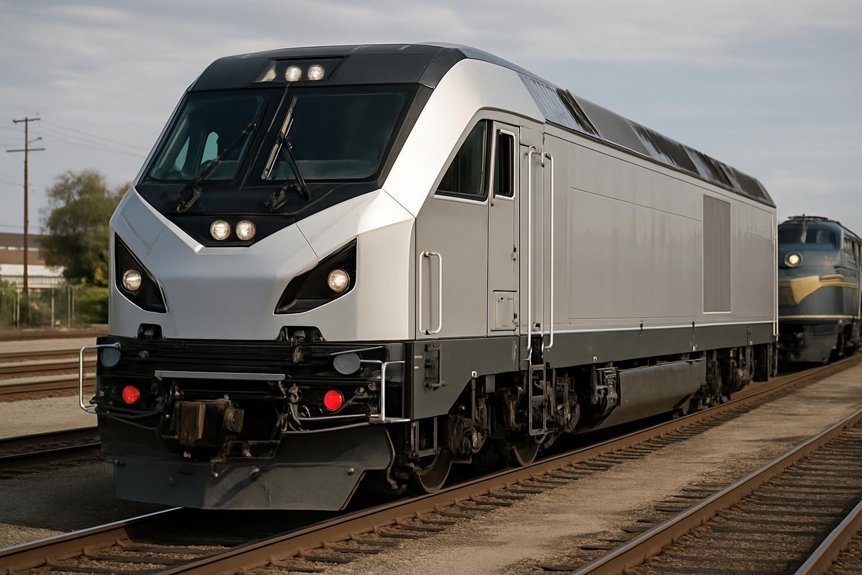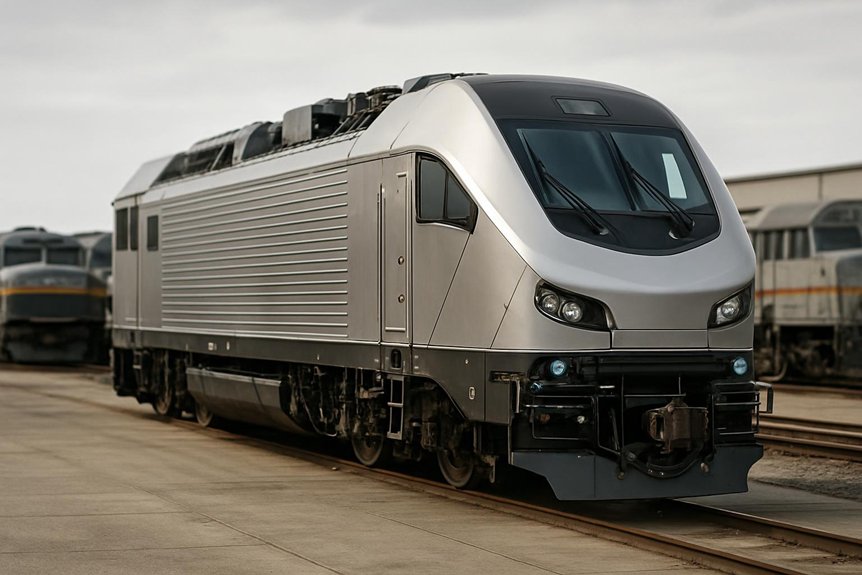
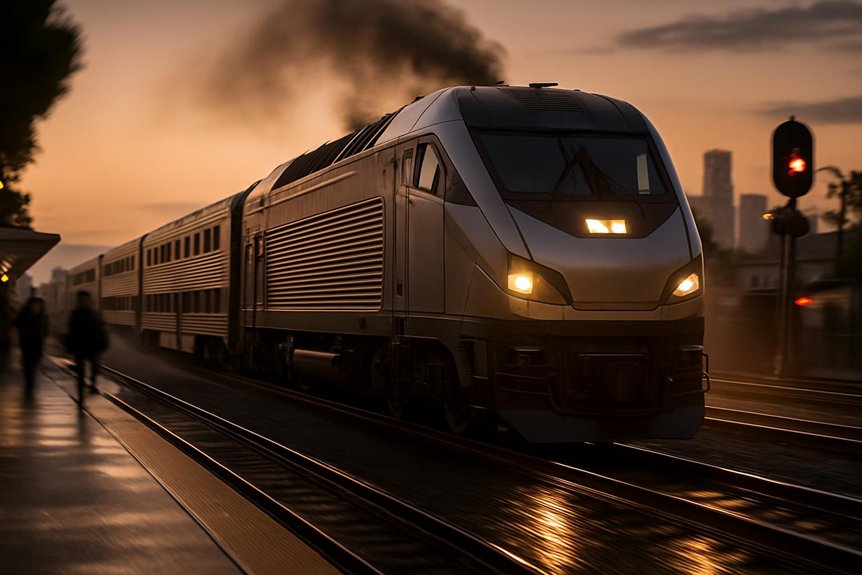
How do the EMD F125’s performance specifications (horsepower, tractive effort, top speed) translate to real-world commuter duty cycles?
The EMD F125’s 4,700 horsepower enables rapid acceleration. This is crucial for frequent station stops. It minimizes schedule delays on dense commuter lines. The engine sustains high speeds with heavy consists. This directly meets demanding duty cycles.
Its high tractive effort allows quick starts. This is vital for short station distances. The locomotive moves fully loaded trains efficiently. This reduces dwell time and improves service frequency. The AC traction system provides reliable adhesion. This ensures consistent performance in all weather.
The 125 mph top speed matches mainline track limits. This allows flexible scheduling on shared corridors. The locomotive seamlessly integrates with existing fleets. It handles peak-hour surges without overheating. These specifications translate to lower lifecycle costs. This makes it a robust commuter asset.
You translate the EMD F125’s 4,700 hp, AC traction, and 125 mph ceiling into commuter value by measuring recovery after every stop. You get stronger launches with loaded trains, tighter wheel-slip control on wet rail, and less schedule loss in peak service. The 125 mph margin helps on shared corridors where dispatch slots are tight. You also track fuel burn, cooling, emissions, diagnostics, and maintenance intervals. Next, you’ll see how those specs perform in real duty cycles.
Key Takeaways
- The F125’s 4,700 hp supports fast acceleration and schedule recovery after frequent commuter station stops.
- AC traction converts horsepower into controlled tractive effort, improving adhesion on wet rail, grades, and heavy peak loads.
- Repeated stop-start duty cycles heavily load the engine, alternator, inverters, traction motors, cooling systems, and emissions equipment.
- Tier 4 emissions systems are integrated with thermal management to maintain performance without major power derating during high-load service.
- The 125 mph capability provides dispatch flexibility on shared corridors, though it mainly matters where station spacing and signaling allow.
Understanding the F125’s Power-to-Weight Ratio
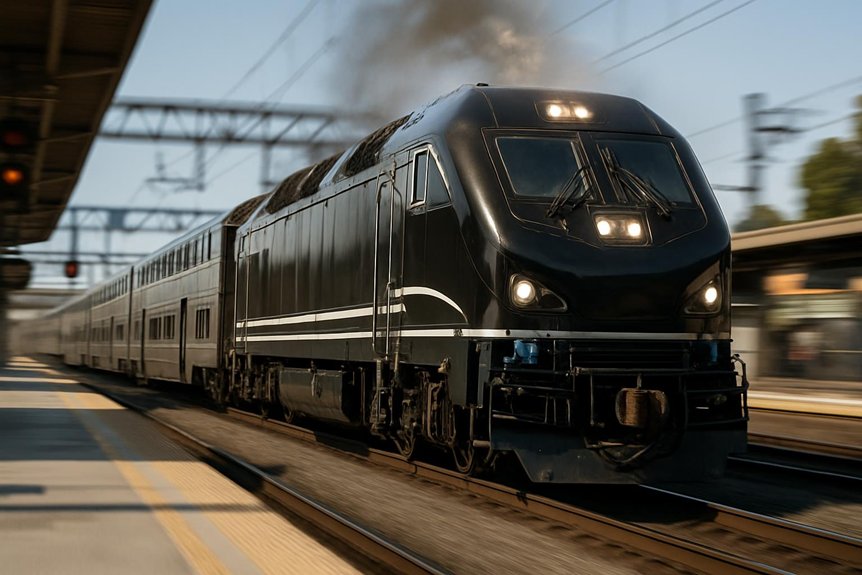
When you assess EMD F125 performance specifications, the 4,700 HP rating shows its acceleration advantage between tight station stops. You get Tier 4 emissions compliance without giving up the power needed for heavy commuter consists. In peak-hour duty cycles, that power-to-weight balance supports fast starts, stable speeds, and better fleet availability.
The 4,700 HP Advantage for Rapid Acceleration
Because commuter locomotive duty cycles punish slow recovery, 4,700 horsepower matters immediately after every station stop. You’re fighting inertia, passenger load, grade, and timetable pressure at once. Within the emd f125 performance specifications, that output lets the prime mover feed the traction system with enough power to bring a heavy consist back to track speed quickly.
- You reduce lost seconds after each stop, protecting tight peak-period schedules.
- Support shorter station spacing without letting acceleration gaps compound downstream.
- You maintain stronger performance with full cars, where lower-powered locomotives recover more slowly.
For rail engineers and procurement teams, this isn’t just a headline rating. It’s usable recovery power. You convert horsepower into schedule resilience, better fleet utilization, and fewer delay minutes across daily service.
Meeting Tier 4 Emissions Without Sacrificing Power
Rapid acceleration only creates value if the locomotive can sustain it within modern emissions limits. With the F125, you get a high-speed diesel engine paired with exhaust after-treatment, so EPA Tier 4 compliance doesn’t force a power penalty. That matters when EMD F125 performance specifications must support commuter locomotive duty cycles, not just test-stand numbers.
| System factor | Operational value |
|---|---|
| High-speed diesel | Maintains 4,700 hp output |
| After-treatment | Controls NOx and particulates |
| Power-to-weight balance | Preserves acceleration response |
| Thermal management | Supports repeated load changes |
You’re managing emissions hardware, airflow, cooling, and traction demand as one system. The result is cleaner power delivery that still supports fast starts, sustained speed, and dependable fleet availability without compromising schedule-critical performance.
Duty Cycle Analysis for Peak-Hour Demands
Although peak-hour service looks routine on a timetable, it pushes the F125 through repeated full-power starts. You’re converting 4,700 horsepower into acceleration, then asking the locomotive to recover thermally before the next stop.
- Full-power launches: You load the prime mover, alternator, inverters, and traction motors hard.
- Thermal recovery: Cooling circuits and engine management software control temperatures, preventing overheating and power derating.
- Consist control: AC traction system efficiency helps you maintain adhesion while moving loaded commuter trains quickly.
That matters because EMD F125 performance specifications aren’t just brochure figures. You need dependable acceleration when platforms are crowded and dwell times compress. During peak cycles, the power-to-weight ratio supports schedule recovery without abusing components. For agencies, that protects fleet availability, maintenance planning, and locomotive lifecycle costs.
Maximizing Tractive Effort for Frequent Stops
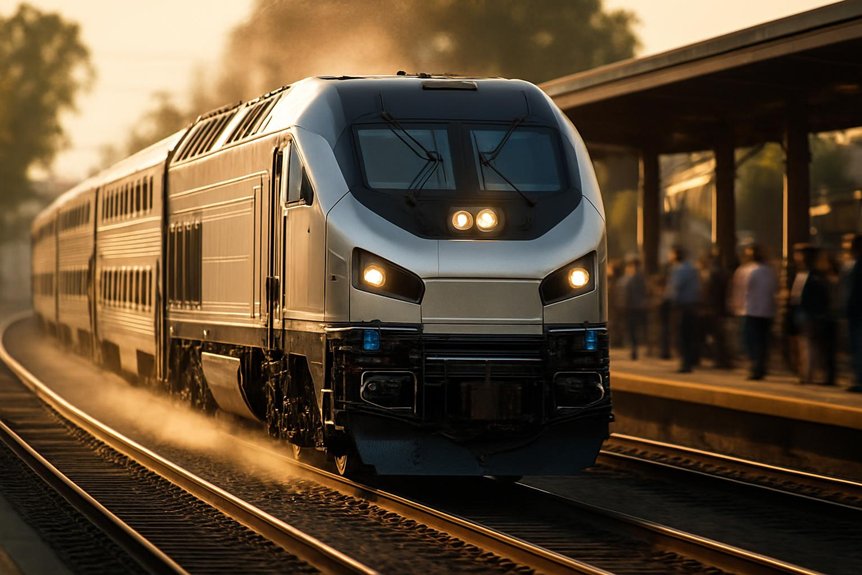
You use the EMD F125 performance specifications to convert AC traction efficiency into stronger adhesion at every start and cut dwell time because faster train launches restore schedule margin between closely spaced stations. You also maintain tractive effort on gradients, wet rail, and peak-load conditions without overstressing the traction system.
How AC Traction Motors Deliver Superior Adhesion
When frequent stops challenge adhesion, the F125’s AC traction system helps convert horsepower into controlled tractive effort. You gain finer wheel-slip control than older DC motor technology can provide, especially on wet, oily, or leaf-contaminated rail.
- AC traction system efficiency: You regulate torque at each axle, so power reaches the rail without excessive slip.
- Usable tractive effort: You protect adhesion margins during demanding commuter locomotive duty cycles and heavy peak loads.
- Lower locomotive lifecycle costs: You reduce wheel wear, thermal stress, and avoidable maintenance events.
For rail engineers evaluating EMD F125 performance specifications, this systems advantage matters. You’re not just buying rated horsepower. You’re applying it through traction electronics that stabilize adhesion, preserve components, and support repeatable performance across daily commuter service.
Reducing Dwell Time Through Faster Train Starts
AC traction converts adhesion control into faster, repeatable station starts. You use the EMD F125 performance specifications to turn high starting tractive effort into measurable timetable recovery. When doors close, the locomotive can load traction quickly, move a fully occupied consist, and reach the next speed band sooner. That first acceleration phase matters most on commuter locomotive duty cycles with short station spacing.
Each faster launch cuts seconds from platform-to-platform running time. Across dozens of stops, those seconds become schedule margin, better slot adherence, and fewer cascading delays. You also reduce throttle hunting because the AC traction system efficiency supports controlled torque delivery. For procurement teams, this links performance directly to service frequency, fleet utilization, and locomotive lifecycle costs without adding trainsets or changing the timetable structure.
Performance on Gradients and in Adverse Conditions
As gradients tighten and weather degrades adhesion, the EMD F125 performance specifications become operational safeguards. You need tractive effort that protects schedules, not just impressive catalog numbers. On routes with tunnels, bridges, and short station spacing, the F125’s AC traction system helps convert power into controlled rail adhesion.
- You start fully loaded trains on grades with reduced wheel slip risk.
- Recover speed faster after stops, protecting commuter locomotive duty cycles.
- You reduce traction stress, supporting fleet availability and locomotive lifecycle costs.
When rain, leaves, or cold rail reduce adhesion, consistent torque control matters. The F125 helps you maintain acceleration without excessive sanding or delay. For agencies managing peak-hour pressure, that means fewer missed slots, steadier headways, and better asset utilization under real corridor constraints.
The 125 mph Top Speed and Schedule Flexibility
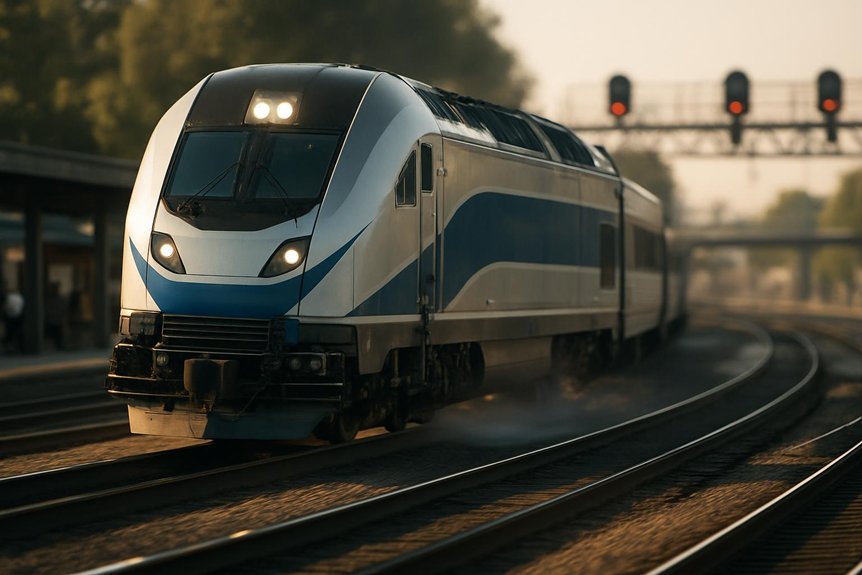
You can use the EMD F125 performance specifications to align 125 mph capability with high-speed mainline traffic. You won’t use that speed on every commuter segment, but it protects schedule recovery on shared corridors. Aerodynamics and lightweight design help sustain speed efficiently while supporting commuter locomotive duty cycles.
Integrating with High-Speed Mainline Traffic
When commuter routes share mainline territory, top speed becomes a dispatching tool. With the EMD F125 performance specifications, you can plan around 125 mph capability instead of treating commuter trains as moving constraints. That matters when your slots sit between higher-speed intercity moves or priority freight paths.
- You reduce bottlenecks by matching authorized mainline speeds where signaling and track allow.
- Protect meets and passes because the F125 can clear control points faster.
- You improve network fluidity by keeping commuter consists closer to mainline traffic profiles.
For rail engineers, that speed margin supports tighter dispatch plans without relying on unrealistic recovery time. For procurement teams, it strengthens fleet utility on shared corridors, where schedule integration directly affects commuter locomotive duty cycles and locomotive lifecycle costs.
Balancing Speed Potential with Commuter Route Realities
Mainline capability only creates value if it fits real commuter stopping patterns. You rarely use 125 mph between closely spaced stations, but that margin still matters. With the EMD F125 performance specifications, you gain schedule flexibility without forcing the locomotive to run continuously at its ceiling.
On shared corridors, you can recover minutes after dwell delays, meet faster mainline paths, and avoid holding conflicts. The locomotive sustains higher speeds with reserve capacity, so propulsion and cooling systems don’t operate at constant maximum stress.
That operating headroom supports commuter locomotive duty cycles by reducing thermal strain, mechanical wear, and unscheduled maintenance risk. Over time, you protect fleet availability and control locomotive lifecycle costs while maintaining dependable peak-period performance for your agency and riders each day.
The Role of Aerodynamics and Lightweight Design
Because speed margin depends on more than horsepower, the F125’s monocoque carbody plays a direct performance role. You get a streamlined, lightweight structure that reduces aerodynamic drag and train mass.
- At 125 mph, lower drag means the prime mover doesn’t work as hard to hold speed.
- With less mass, you improve acceleration between stations and protect recovery time after delays.
- With lower sustained load, you support fuel efficiency, emissions compliance, and locomotive lifecycle costs.
For commuter locomotive duty cycles, that matters. You need speed flexibility on shared corridors without wasting horsepower fighting resistance. The carbody helps the AC traction system efficiency translate into usable schedule margin. In EMD F125 performance specifications, aerodynamics aren’t styling. They’re a systems-level contributor to peak reliability and fleet availability.
Translating Specifications into Lifecycle Cost Savings
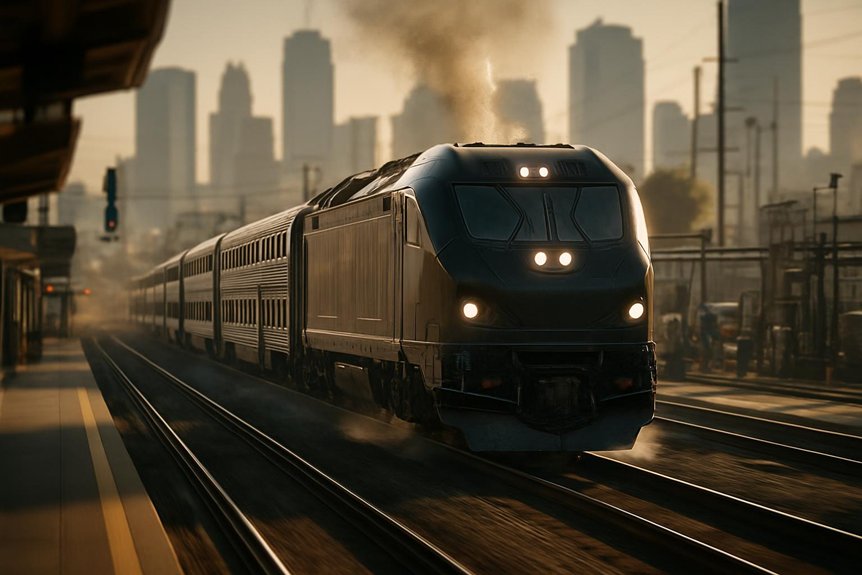
You translate EMD F125 performance specifications into locomotive lifecycle costs through fuel burn, maintenance intervals, and daily availability and gain efficiency from modern engine technology, while longer service intervals keep more units ready for peak commuter locomotive duty cycles. You also reduce risk when reliability metrics confirm stable performance under repeated starts, stops, and high-load service.
Fuel Efficiency Gains from Modern Engine Technology
Across commuter locomotive duty cycles, the EMD F125 performance specifications support fuel savings through modern electronic fuel injection. You get tighter combustion control across idle, acceleration, cruise, and braking recovery changes.
- The system meters fuel precisely at each load point, so you don’t overfuel during station departures.
- It supports 4,700 horsepower output while reducing wasted fuel during variable throttle operation.
- It helps lower annual gallons consumed, improving locomotive lifecycle costs without reducing performance.
For rail engineers and procurement teams, that matters because commuter service rarely runs at steady state. Your trains cycle through starts, short runs, and high-demand peak periods. Electronic fuel injection adjusts faster than older mechanical systems. You cut fuel burn, support emissions compliance, and preserve the acceleration profile your schedule requires.
Extended Maintenance Intervals and Fleet Availability
When maintenance windows tighten, the EMD F125 performance specifications help protect fleet availability through durable systems design. You reduce shop visits because the locomotive’s core systems tolerate demanding commuter locomotive duty cycles. High horsepower and strong tractive effort matter beyond acceleration. They prevent sustained overload, which helps components stay within engineered operating limits.
You also gain maintenance advantages from AC traction system efficiency. AC traction motors don’t use brushes, so you eliminate brush inspection and replacement tasks. That reduces labor hours, parts consumption, and unscheduled downtime exposure. The engine design supports longer intervals between major overhauls, keeping more locomotives assigned to service.
For procurement teams, that availability improves locomotive lifecycle costs. You’re not only buying performance. You’re buying productive fleet hours and fewer maintenance-related service constraints daily.
Reliability Metrics in Daily Commuter Service
Because commuter agencies measure reliability in service miles, Mean Distance Between Failures becomes a critical procurement metric. You use MDBF to connect EMD F125 performance specifications with actual fleet availability, not brochure ratings. Higher horsepower, AC traction system efficiency, and thermal capacity support repeatable commuter locomotive duty cycles during peaks.
- You reduce road failures when propulsion, cooling, and controls sustain acceleration cycles.
- Protect schedules when predictable tractive effort supports starts in wet rail conditions.
- You lower locomotive lifecycle costs when fewer failures cut rescues, overtime, and spare ratios.
For procurement teams, MDBF turns performance into financial evidence. You can model parts demand, maintenance labor, and service risk with greater confidence. Mikura International supports that planning with dependable locomotive parts expertise.
Real-World Case Studies of F125 Duty Cycles
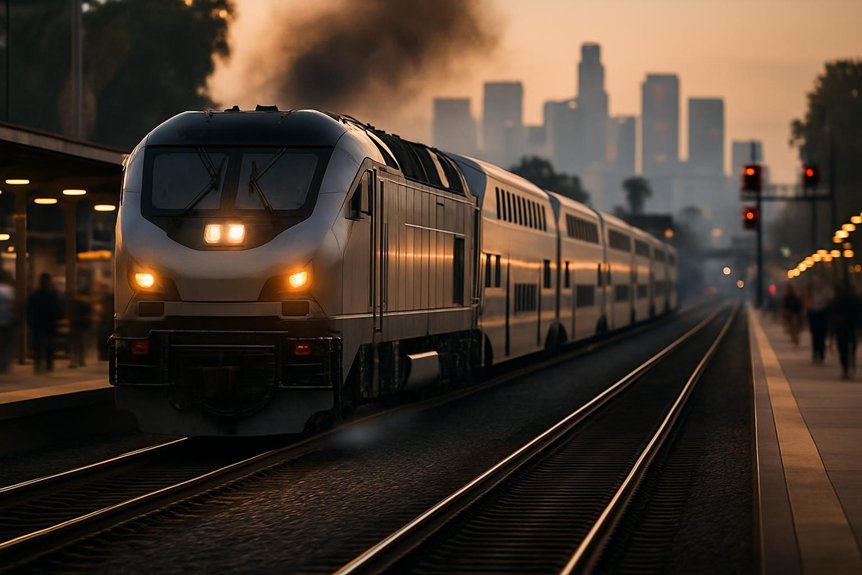
You can benchmark EMD F125 performance specifications against Metrolink’s Southern California duty cycles. You’ll see how acceleration, adhesion, and AC traction system efficiency compare with legacy commuter locomotives. You can then apply those findings to procurement models, fleet availability targets, and locomotive lifecycle costs.
Operational Data from Metrolink’s Southern California Fleet
Field data gives rail engineers the clearest test of EMD F125 performance specifications. As the first major F125 adopter, Metrolink runs them through Southern California’s demanding commuter locomotive duty cycles. You see hot, arid conditions, short station spacing, and peak-period loading stress every major subsystem.
- Acceleration: You can validate 4,700 hp through repeated station starts, where rapid throttle response protects schedules.
- Adhesion: You track AC traction system efficiency during dry rail, heat, and variable grades, confirming controlled tractive effort.
- Availability: You measure cooling, emissions systems, and maintenance intervals under sustained stop-start service.
For procurement teams, this operating profile matters. It shows how theoretical ratings become fleet availability, controlled locomotive lifecycle costs, and reliable corridor performance without depending on ideal test conditions.
Comparing F125 Performance to Legacy Locomotives
When agencies compare EMD F125 performance specifications with legacy units like the F59PHI, the upgrade case becomes measurable. You can tie horsepower, AC traction system efficiency, and emissions output directly to commuter locomotive duty cycles. The F125’s 4,700 hp supports faster station-to-station recovery, while legacy power can lose margin under peak consists.
| Metric | EMD F125 | F59PHI |
|---|---|---|
| Power | 4,700 hp | 3,200 hp |
| Top speed | 125 mph | 110 mph |
| Emissions tier | Tier 4 | Tier 0/1 era |
You also reduce fuel burn through modern engine controls and better adhesion management. That matters during wet rail starts, dense schedules, and shared-corridor slots. Lower emissions improve compliance, while faster acceleration protects dwell recovery. For procurement teams, those deltas shape locomotive lifecycle costs and fleet availability.
Lessons Learned for Future Commuter Locomotive Procurement
As agencies translate EMD F125 performance specifications into new RFPs, duty-cycle data now drives sharper procurement language. You don’t just ask for horsepower, tractive effort, and speed. You define how those outputs must hold up during peak commuter locomotive duty cycles.
- Specify telemetry that tracks acceleration, adhesion, fuel burn, emissions, and thermal margins in service.
- You require remote monitoring, so maintenance teams spot faults before they reduce fleet availability.
- You prioritize modular repairs that shorten shop time and control locomotive lifecycle costs.
This F125 experience helps you connect AC traction system efficiency to measurable uptime. It also shows why procurement should include maintainability, diagnostics, and parts access. At Mikura International, we support that systems view with reliable locomotive parts expertise.
Frequently Asked Questions
What Is the Horsepower Rating of the EMD F125 Locomotive?
The EMD F125 locomotive is rated at 4,700 horsepower. Ironically, that big number matters most in small gaps between stations. You use that output to accelerate loaded commuter consists quickly, protect schedules, and recover from delays. It also supports sustained high-speed running without overstressing systems. With AC traction system efficiency, you turn horsepower into usable adhesion, lower locomotive lifecycle costs, and stronger fleet availability during peak commuter demand.
How Does the F125 Compare to the Older EMD F59PHI?
The F125 outperforms the older F59PHI with higher horsepower, AC traction, better adhesion, and 125 mph capability. You get faster acceleration, stronger peak-period recovery, and improved control on wet rail. Its emissions-compliant prime mover also supports lower locomotive lifecycle costs. The F59PHI remains proven, but it can’t match the F125’s AC traction system efficiency, high-speed corridor flexibility, or availability advantages for demanding commuter locomotive duty cycles.
What Type of Traction Motors Does the EMD F125 Use?
The EMD F125 uses AC traction motors, paired with an AC traction system for precise adhesion control. You get stronger wheel-slip management during wet rail conditions, quicker starts, and steadier acceleration under heavy commuter loads. That matters because frequent station stops punish inefficient traction systems. With AC traction system efficiency, you can support tighter schedules, reduce thermal stress, and improve fleet availability across demanding commuter locomotive duty cycles while controlling lifecycle costs.
How Does the F125 Support Emissions Compliance for Commuter Agencies?
You can verify the theory through fuel burn, duty-cycle data, and aftertreatment performance: the F125 supports emissions compliance with a Tier 4 diesel engine package. You cut NOx and particulate output while maintaining commuter locomotive duty cycles. Its AC traction system efficiency helps reduce wasted energy during acceleration. You also protect locomotive lifecycle costs, because cleaner combustion and planned maintenance support fleet availability without sacrificing peak-hour performance or schedule reliability.
What Maintenance Intervals Affect F125 Fleet Availability?
Scheduled inspections, engine oil service, filter changes, traction motor checks, and cooling system maintenance affect F125 fleet availability most. You’ll protect uptime by aligning preventive maintenance with off-peak windows and mileage-based intervals. Because the AC traction system reduces mechanical wear, you can improve reliability during commuter locomotive duty cycles. Mikura International helps you source quality locomotive parts that support planned maintenance, reduce downtime, and control locomotive lifecycle costs.