

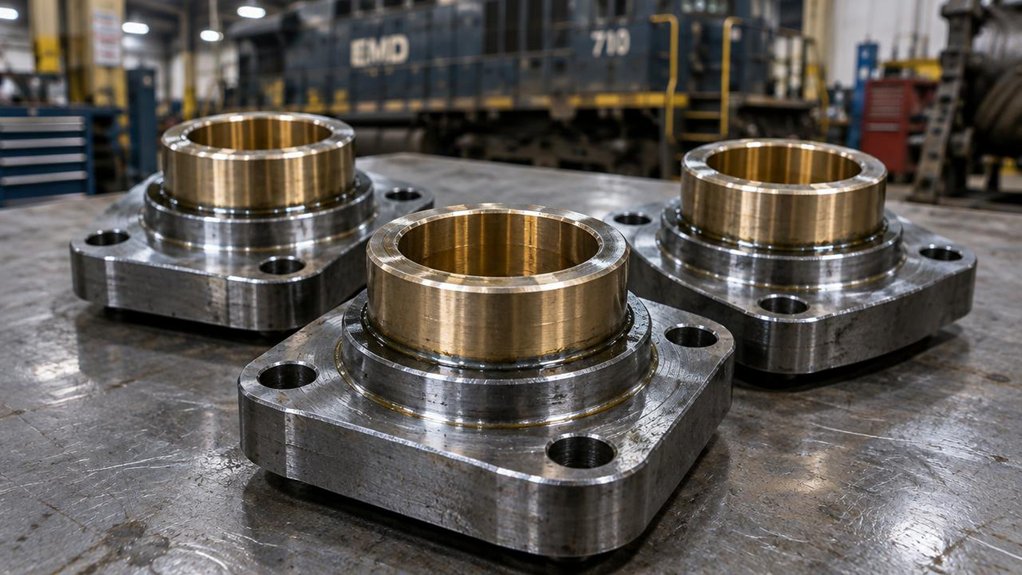
Wrong top support bushings cause costly locomotive downtime. A bushing with incorrect clearance or oil-groove geometry starves the journal of oil. That leads to scoring, overheating, and early failure.
Many maintenance teams struggle to match bushing type to engine series. Mikura International supplies genuine EMD bushing assemblies that fit right the first time.
- Confirm the exact engine series before ordering: 567D, 645E3, 645F3, or 710G.
- Match bushing material to journal hardness to prevent accelerated wear.
- Verify running clearance against the EMD maintenance manual.
- Check oil-groove geometry for correct lubrication flow.
- Measure bore ID and OD with calibrated micrometers before installation.
- Confirm the interference fit to stop bushing rotation in the housing.
- Inspect the journal surface for scoring before fitting a new bushing.
- Replace bushings in matched sets for even load distribution.
- Source only genuine EMD parts with traceable documentation.
| EMD Engine Series | Recommended Bushing Type | Key Fit Check | Common Wear Signs |
|---|---|---|---|
| 567D (Turbocharged) | Bronze or babbitt-lined steel | Material suited to journal hardness | Scoring, babbitt flaking, discoloration |
| 645E3 | Tri-metal or bronze-backed | Precision-bored ID | Overlay wear, uneven contact patterns |
| 645F3 | Tri-metal or bronze-backed | Precision-bored ID | Fatigue cracks, heat marks |
| 710G | Bronze-backed, babbitt-lined bore | Precision-ground OD for interference fit | Bushing rotation, fretting on OD |
Top support bushing assemblies for EMD locomotive engines must match OEM specs. These specs cover material, running clearance, and oil-groove geometry.
Turbocharged 567D engines need bronze or babbitt-lined steel bushings. The bushing material should suit the journal hardness.
On 645E3 and 645F3 units, choose tri-metal or bronze-backed bearings. These bearings should have precision-bored IDs.
For 710G engines, use bronze-backed bushings with babbitt-lined bores. Precision-ground ODs ensure a consistent interference fit.
Key Takeaways
- Top EMD turbo support bushings use steel-backed bronze or babbitt-lined construction to resist seizure, embed debris, and withstand high shaft speeds.
- For turbocharged 567D engines in SD24 and GP20 locomotives, choose bronze or babbitt-lined steel bushings compatible with original journal hardness.
- 645E3, 645E3B, and 645F3 engines need tri-metal or bronze-backed assemblies with precision-bored inner diameters to handle higher boost and thermal loads.
- High-output 710G units on SD70-series locomotives require babbitt-lined, bronze-backed bushings with precision-ground outer diameters for consistent interference fit.
- Verify bore, outside diameter, and oil-groove geometry against OEM drawings, and replace bushings when radial or axial play approaches EMD limits.
The EMD Turbo Support Bushing Specs That Matter Most
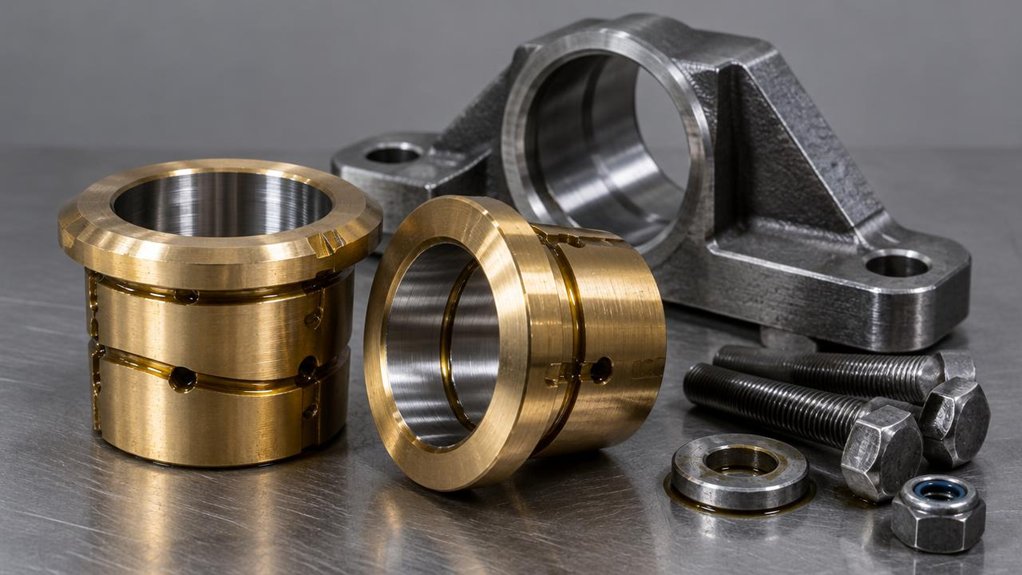
The turbo support bushing carries the turbocharger’s rotating assembly in EMD locomotive engines. It operates at high shaft speeds and under heavy thermal load. A few critical specifications largely determine how long your EMD turbo stays in service. Start with bushing material selection. Choose a steel-backed bronze or babbitt-lined bushing that resists seizure and embeds debris. It must also hold its fatigue strength at locomotive operating temperatures. Next, verify bore and outside diameter tolerances against OEM drawings. Small deviations change running clearance and oil film thickness. Too little clearance raises friction and heat. Too much clearance invites shaft whirl and vibration.
Oiling groove design matters equally. Check that groove geometry, depth, and feed hole placement match the original pattern. This ensures lubricant reaches the load zone during locomotive startup. Don’t overlook surface finish, concentricity, and press-fit interference. These factors control alignment and heat transfer within the turbo assembly. Finally, insist on material certifications and dimensional inspection reports. Mikura International supplies EMD turbo support bushings backed by this documentation. With verified specifications, you’ll avoid premature failures and costly locomotive downtime.
Best Turbo Support Bushings for Turbocharged EMD 567s
Turbocharged 567D-series engines powered locomotives such as the EMD SD24 and GP20. These engines share core design principles with later EMD platforms. However, their turbo support bushings demand specifications matched to the original gear-driven turbocharger.
Material compatibility comes first. Choose bronze or babbitt-lined steel bushings suited to the original journal hardness. Mismatched alloys accelerate wear under the gear train’s torsional loads. Confirm that oil groove patterns match your turbocharger’s lubrication passages. Early 567D3 units won’t tolerate substitutes designed for 645 oil flow rates.
Material compatibility comes first. Mismatched bushing alloys accelerate wear under the gear train’s torsional loads.
Follow these installation best practices:
- Measure housing bore and journal diameters before fitting.
- Verify running clearance against EMD maintenance manual tolerances.
- Press bushings squarely using a piloted driver to prevent distortion.
- Pre-lubricate with engine oil.
- Check gear train backlash after installation.
If you’re sourcing aftermarket assemblies, demand documentation confirming dimensional conformity to original EMD drawings. This prevents premature failures and protects the turbocharger’s overrunning clutch.
Top Turbo Support Bushing Assemblies for EMD 645 Engines
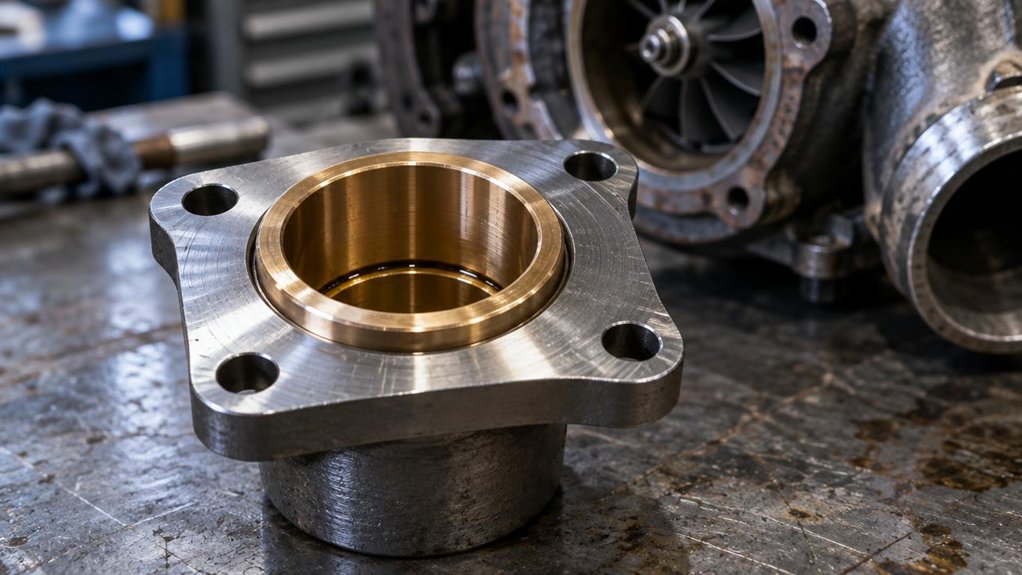
The 645E3, 645E3B, and 645F3 engines powered the GP40, SD40-2, SD45, and SD50 locomotives. Their turbochargers retain the gear-driven, overrunning-clutch design inherited from the 567D. However, they operate at higher boost pressures and greater thermal loads. For this reason, specify support bushing assemblies built for sustained high-temperature service. Look for tri-metal or bronze-backed bearings with precision-bored inner diameters. Controlled oil-groove geometry is equally important. Clearances should be verified to match OEM tolerances. Assemblies rated for E3B and F3 duty cycles resist scuffing and fretting. These failures typically follow prolonged locomotive operation at full notch. Mikura International supplies turbo support bushing assemblies suited to these demanding locomotive applications.
Before ordering, perform a diagnostic inspection of the existing bushings. Measure bore wear and check for babbitt fatigue or heat discoloration. Also note any scoring on the journals. During replacement, pay close attention to installation alignment. Even slight misalignment between the gear train and rotor shaft accelerates bushing wear. It can also damage the overrunning clutch. Torque all fasteners to specification. Finally, confirm oil supply before restarting the engine.
Best EMD 710 Turbo Support Bushings for High-Output Units
Step up your specifications for the 710G series. These turbochargers run higher boost and sustained loads on SD70-series locomotives rated up to 4,300 hp. As a result, you cannot simply carry over your 645 bushing choices. Specify assemblies with bronze-backed, babbitt-lined bores machined to OEM clearance tolerances. Confirm hardness and surface finish against the turbo’s support bracket drawings.
Prioritize these features:
- Precision-ground outer diameters for a consistent interference fit
- Oil-groove geometry matched to 710 lube flow paths
- Heat-treated retaining hardware that resists thermal cycling
- Full material certifications and dimensional inspection reports
For field performance optimization, measure and log radial play at each turbo inspection. You’ll spot vibration trends before they damage the bracket or housing. Pair that data with maintenance interval planning. This lets you replace bushings alongside scheduled turbo overhauls, not during unplanned shop visits. When you source remanufactured units, require documented test results. Verify that they meet current EMD specifications.
Signs Your EMD Turbo Support Bushing Needs Replacing
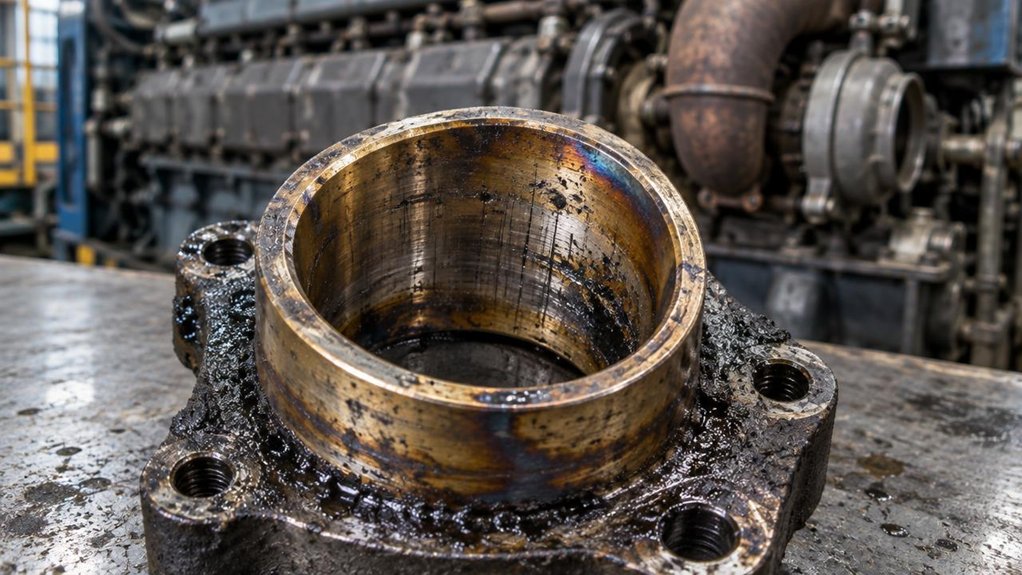
A worn support bushing transfers vibration directly into the locomotive turbo bracket and housing. Catch this degradation early, before it shows up as structural damage. Start by recognizing the common failure symptoms:
- Elevated turbo vibration readings at notch 8 and during load switchovers.
- Visible fretting, polished contact surfaces, or red-brown oxide residue at the bushing bore.
- Measurable radial or axial play exceeding the limits in your EMD maintenance instruction.
- Cracked, hardened, or extruded elastomer in isolated bushing designs.
- Bracket fasteners that loosen repeatedly despite correct torque.
- New cracks at bracket welds, mounting pads, or turbo housing flanges.
Don’t wait for a road failure to confirm wear. Check bushing clearance with a dial indicator and feeler gauges. Do this at your scheduled locomotive inspection intervals. Trend every reading to track wear progression over time. If play approaches the limit, replace the bushing rather than shimming it. Also inspect the mating bore for ovality.
Frequently Asked Questions
Are Aftermarket Turbo Support Bushings as Reliable as Genuine EMD OEM Parts?
Often, yes, but only when they are properly certified. Many locomotive and marine operators believe only genuine EMD parts survive turbocharger loads. Aftermarket reliability testing partly debunks this theory. Reputable suppliers match OEM bearing alloys and hardness specifications. They also hold bore tolerances within ±0.0005 inches. You still need EMD compatibility verification against 645 or 710 series drawings. Demand material certifications, dimensional inspection reports, and dyno-cycle data. Review these documents before installing any non-OEM bushing on your locomotive or marine engine.
How Long Does It Take to Install an EMD Turbo Support Bushing?
You’ll typically need 4–8 labor hours to replace an EMD turbo support bushing on a locomotive. This estimate assumes you have clear access to the turbocharger mounting. If you must remove the turbocharger, expect 12–16 hours. Your installation timeline also depends on field diagnostics performed in the locomotive shop. First, confirm bushing wear and measure clearances against EMD specifications. Next, inspect the mounting bolts for damage, stretch, or thread wear. Don’t skip torque verification during reassembly. Follow the specified bolt sequence and torque values in your locomotive maintenance manual. This prevents premature bushing failure and keeps your EMD locomotive engine running reliably.
Can a Worn EMD Turbo Support Bushing Be Reconditioned Instead of Replaced?
Usually, no. Replacing a worn EMD locomotive turbo support bushing is the only way to ensure reliable service life. However, limited reconditioning options do exist. Start with a thorough dimensional inspection of the bushing. Measure the bore ID, OD, and roundness with a calibrated bore gauge and micrometer. Then compare these readings against the limits in the EMD locomotive maintenance manual. If wear is within tolerance and shows no scoring, cracking, or heat discoloration, you can polish the surfaces. If any dimension exceeds the manual’s limits, you will need a new bushing.
What Special Tools Are Needed to Replace an EMD Turbo Support Bushing?
Replacing an EMD locomotive turbo support bushing requires a few specialized tools. You’ll need a hydraulic or screw-type bushing puller and a matched installation driver. A turbocharger lifting fixture rated for the unit’s weight is also essential. An inside micrometer or dial bore gauge measures the housing bore. Outside micrometers measure the bushing to confirm the correct interference fit. Without these measurements, you can’t confirm proper fit. Use a calibrated torque wrench to tighten the retaining hardware to specification. A magnetic-base dial indicator verifies alignment during assembly. Keep a vibration analyzer on hand for post-installation checks. Normal vibration readings after installation help confirm the bushing is seated correctly.
How Should Spare EMD Turbo Support Bushings Be Stored Before Installation?
Store spare EMD turbo support bushings sealed and dry before installation on your locomotive. Ironically, a part built to survive thousands of hours of turbo heat can fail on a damp shelf. Practice Moisture Control by holding relative humidity below 50%. Keep the VCI-treated Protective Packaging intact until installation. Maintain Temperature Stability between 50°F and 80°F to prevent condensation. Apply Storage Rotation using FIFO logging by receipt date. Never stack heavy locomotive components on bushing cartons.