

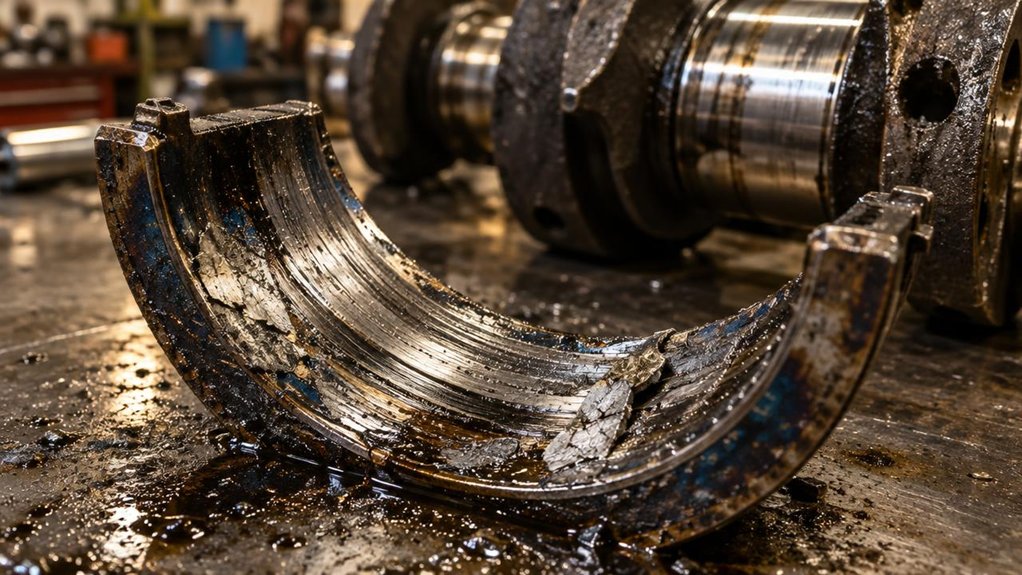
A failing main bearing bushing rarely gives loud warnings. Most crews notice trouble only after a crankcase detector trips.
By then, the crankshaft journal may already be scored. Unplanned shutdowns cost railroads time, revenue, and costly repairs.
Early warning signs protect your EMD locomotive engine. They also give you time to source genuine replacement bearings.
- Lube oil pressure drops at idle. Steady oil temperature with falling pressure points to opening bearing clearance.
- Oil temperature rises steadily. Friction from worn bushings adds heat to the lubricating oil.
- Crankcase breathers emit smoke. Overheated bearing surfaces vaporize oil inside the crankcase.
- Crankcase pressure detector trips. Never reset it before a full inspection, because a crankcase explosion risk may exist.
- Lead and tin rise in oil samples. This signals wear of the bearing overlay layer.
- Copper spikes in oil samples. This means the intermediate bronze layer is now exposed.
- Metal particles collect in filters. Bright flakes on filter elements confirm active bearing distress.
- Unusual knocking under load. Excess clearance lets the crankshaft strike the bearing shell.
| Warning Sign | Likely Cause | Recommended Action |
|---|---|---|
| Low oil pressure at idle | Increased bearing clearance | Check clearance with plastigage or micrometer |
| Rising oil temperature | Bearing friction and heat | Reduce load and schedule inspection |
| Breather smoke | Overheated bearing surface | Shut down and inspect crankcase |
| Tripped crankcase detector | Possible hot bearing or blow-by | Do not reset until inspected |
| High lead and tin in oil | Overlay layer wear | Increase sampling frequency |
| Copper spike in oil | Intermediate layer exposed | Plan immediate bearing replacement |
| Metal flakes in filter | Active bearing breakdown | Remove bearing caps and inspect shells |
You can catch EMD main bearing bushing failure early by watching lube oil pressure.
A drop at idle with steady oil temperature points to opening clearance.
Also watch for rising oil temperature and smoke from crankcase breathers.
A tripped crankcase pressure detector is a serious warning.
Never reset it before a proper inspection.
Oil samples reveal even more.
Rising lead and tin indicate overlay wear.
Copper spikes mean the intermediate layer is exposed.
At that stage, replacement should not wait.
The next sections explain how to confirm the damage.
They also cover how to time replacement correctly.
When replacement is due, Mikura International supplies genuine EMD main bearings for locomotive engines.
Key Takeaways
- Dropping lube oil pressure at idle with normal oil temperature often signals excess main bearing clearance from bushing wear.
- Rising oil temperature, crankcase breather smoke, or a tripped crankcase pressure detector indicate bearing friction heat requiring immediate inspection.
- Rising lead and tin in oil analysis show overlay wear-through, while copper spikes reveal exposed intermediate layers.
- Sodium or boron signal coolant leaks, and fuel dilution lowers viscosity, collapsing the oil film and accelerating bushing failure.
- Inspected shells showing scoring, embedded debris, wiped overlay, fatigue cracking, heat discoloration, or exposed copper confirm bearing failure.
Which Symptoms Signal EMD Main Bearing Bushing Failure?
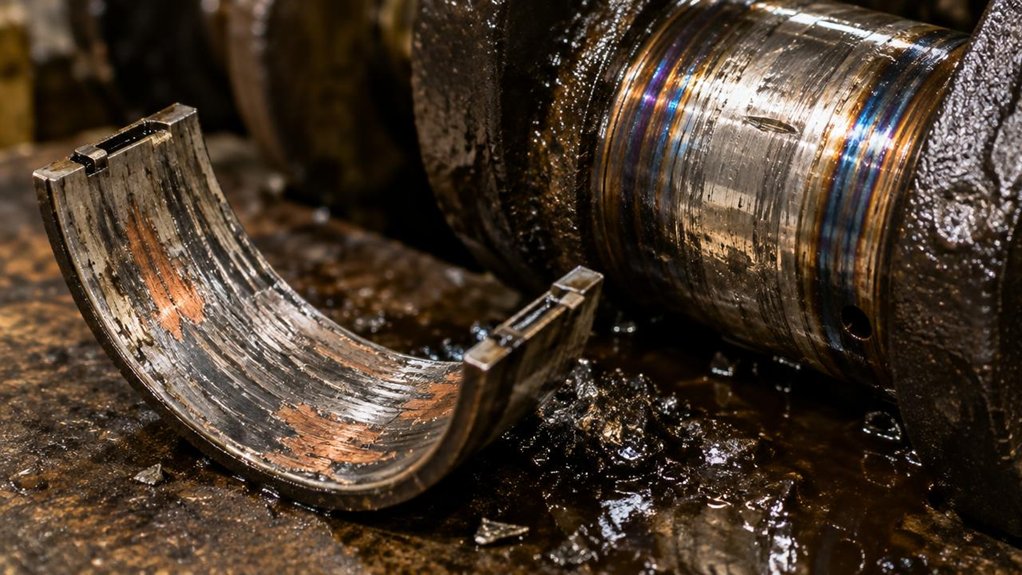
How do you know an EMD main bearing is failing before it takes out the crankshaft? You watch for a pattern, not a single alarm. This applies to diesel-electric locomotives and marine propulsion engines alike. Start with lube oil pressure. Your 645 or 710 engine may show dropping pressure at idle while oil temperature stays normal. If so, you’ve likely got excess bearing clearance.
Next, check overheating indicators. Watch for rising oil temperature and smoke from the crankcase breathers. A tripped crankcase pressure detector is another warning sign. Together, these point to friction heat at the bearing. Don’t reset the detector and restart; inspect first.
Pull your oil samples. Elevated lead, tin, or copper means you’re losing bearing overlay and bronze backing. Bright flakes in filters or the strainer housing confirm active bearing distress.
Finally, use vibration detection. Accelerometers mounted on the engine block pick up low-frequency knocks before you can hear them. When vibration spikes alongside pressure loss, shut down immediately. Then drop the bearing caps for inspection.
What Do Oil Samples Reveal About EMD Bushing Wear?
Oil analysis catches bearing wear in EMD locomotive engines early, before pressure drops or vibration spikes. Spectrographic results give you tribology insights into which bearing layer is failing. EMD main bearings use a steel back, a copper-lead or bronze intermediate layer, and a lead-tin overlay. Each metal tells you how deep the damage runs.
- Lead and tin: Rising levels mean the overlay’s wearing through. Expect some baseline, but track the trend.
- Copper: A copper spike means you’ve exposed the intermediate layer. Schedule an inspection immediately.
- Iron with silicon: Iron points to journal scoring. Silicon reveals dirt ingress driving abrasive wear.
Don’t ignore contaminants. Sodium or boron signals coolant leaks. Fuel dilution lowers viscosity and collapses the oil film. Both accelerate bushing failure.
Sample at consistent intervals from the same port while the locomotive engine is running or hot. This ensures reliable wear detection. Compare each result against your locomotive fleet’s baselines, not generic limits.
How Do You Measure and Inspect EMD Main Bearing Bushings?
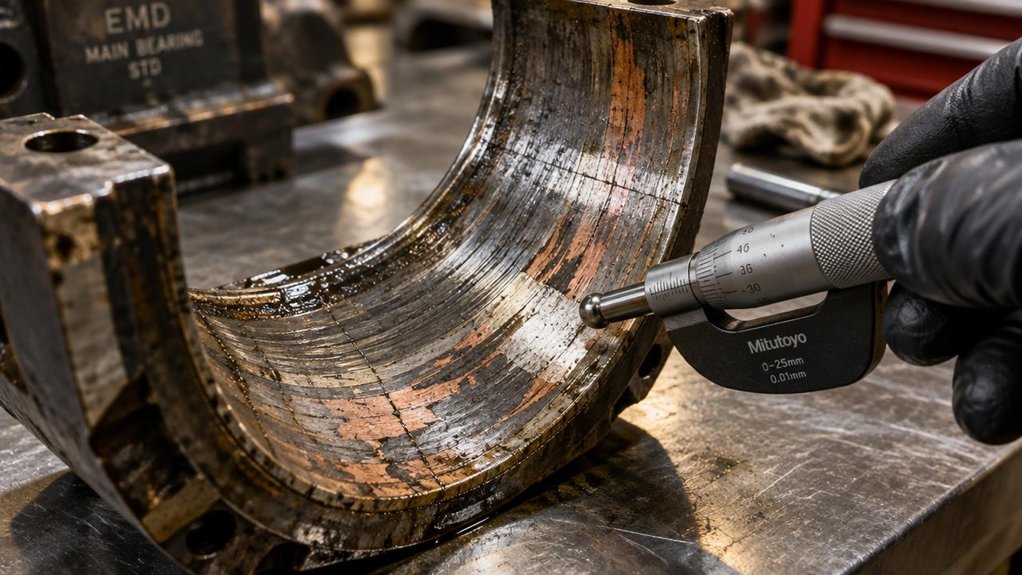
When oil analysis flags a problem in an EMD locomotive or marine engine, physical inspection confirms it. Start by removing the main bearing cap and lower shell. Keep each shell matched to its journal position. Inspect the running surface for scoring, embedded debris, wiped overlay, fatigue cracking, and heat discoloration. Exposed copper or bronze underlayer means the overlay is gone.
Next, measure shell wall thickness with a ball micrometer. Take readings at the crown and at points 90 degrees apart. Compare these readings against the wear limits in the EMD maintenance manual. Check the crankshaft journal with an outside micrometer for diameter, taper, and out-of-round. For in-place clearance checks, use Plastigage or a feeler method as the manual specifies.
Ultrasonic inspection reveals lining-to-backing debonding that you cannot see. Run it on any shell showing localized distress. Record every measurement by journal position. Nonconformance detection depends on trend data. Compare results against previous overhaul records before you approve any shell for reuse.
When Should Worn EMD Main Bearing Bushings Be Replaced?
Your inspection records should drive the replacement decision for EMD locomotive main bearings. Compare each measurement against the EMD maintenance manual limits and your shop’s rebuild criteria. Do not judge a bearing by how it looks. A bearing within tolerance today can cross the limit before the next scheduled inspection. This risk grows when your records show steady wear progression.
Replace the bearings when you find:
- Oil clearance exceeding the maximum limit published in the EMD maintenance instructions
- Overlay wipe, scoring, embedded debris, or exposed copper-lead base material across the load zone
- Cracking, fatigue spalling, or loss of crush that lets the shell shift in its bore
Don’t wait for a trend to confirm what your measurements already show. Use vibration analysis and oil sampling between locomotive overhauls. These tools catch rising wear metals or abnormal signatures early. When one main bearing fails, you’ll typically replace the full set and inspect the crankshaft journals. Debris and misalignment rarely damage just one position.
How Can You Prevent EMD Main Bearing Bushing Failure?
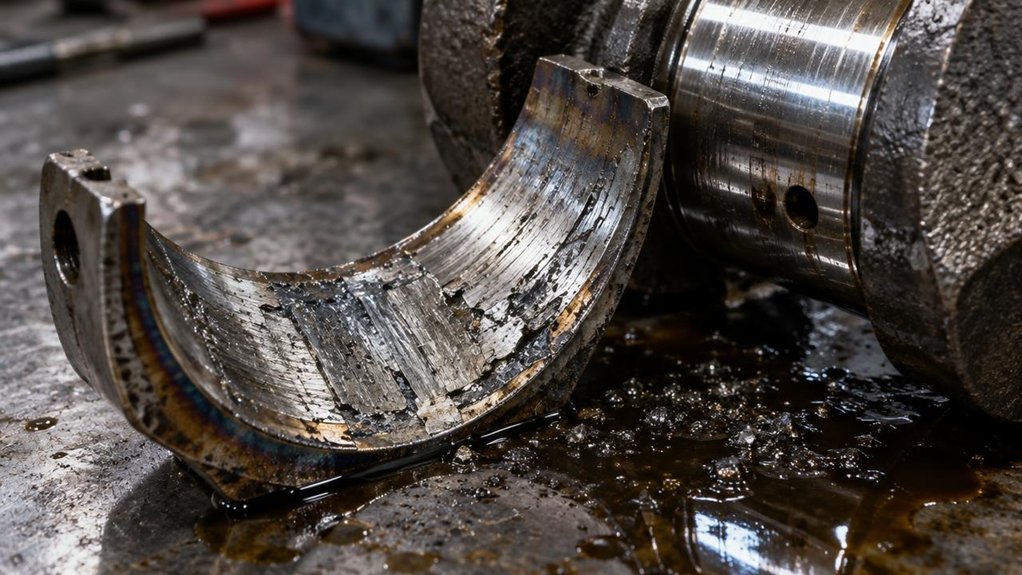
Most main bearing failures start with contamination, oil starvation, or installation errors. Control these three factors, and you will prevent most failures in EMD locomotive and marine engines.
Control contamination, oil starvation, and installation errors, and you will prevent most main bearing failures in EMD engines.
Start with oil contamination. Pull oil samples at every scheduled interval and send them for spectrographic analysis. Rising iron, lead, or tin readings tell you the bearings are wearing. Coolant or fuel dilution points to leaking cylinder liners, seals, or injectors. Change filters on schedule and keep fill equipment sealed.
Scheduled lubrication checks protect against oil starvation. Check oil pressure at idle and at full load. Inspect the main lube oil pump and the pressure relief valve. Never skip prelubing after the engine sits idle or after internal work.
During installation, measure crankshaft journals and bore alignment before fitting new bushings. Verify clearances with plastigage or a micrometer. Torque cap bolts to EMD specifications in the correct sequence. Confirm that oil holes line up with the block passages. Log every reading and track the trends over time.
Frequently Asked Questions
What Materials Are EMD Main Bearing Bushings Typically Made From?
EMD main bearing shells in 567, 645, and 710 locomotive and marine engines use a three-layer design. A steel back gives the shell its strength and secure fit. A leaded-bronze, or copper-lead, lining is bonded to the steel. An electroplated lead-tin overlay forms the running surface. Many shells also carry a thin tin flash to aid break-in.
You’ll know the overlay is gone when wear inspection reveals exposed bronze. Pair that inspection with regular oil analysis. Rising copper levels mean wear has reached the lining. Lead and tin readings point to overlay wear. Don’t wait for further damage. Replace the shells before any steel shows through.
Are EMD Main Bearing Bushings Interchangeable Between 645 and 710 Engines?
Not reliably, and that assumption can wreck your crankshaft. Some 645 and 710 main bearings share dimensions. However, part numbers, crankshaft journals, and block revisions often differ between the two engine series. Always verify against EMD specifications before swapping bearings in a locomotive or marine engine. During bushing inspection, measure bearing bore tolerances and check oil wear patterns. You should also confirm crush height before reassembly. Then follow the correct installation procedure for your specific engine model. Skipping these steps risks spun bearings, crankshaft damage, and costly downtime.
How Much Does Replacing EMD Main Bearing Bushings Typically Cost?
You’ll typically spend $8,000 to $25,000 replacing EMD main bearing bushings in-frame on a locomotive. A full 16-cylinder set runs roughly $3,000 to $8,000 in parts. Labor typically takes 40 to 80 hours for removal, inspection, and torque-up. Don’t defer the job, though. If a bushing wipes, it can score the crankshaft. Your failure cost can then climb past $100,000. That figure includes crank regrinding or replacement, block line-boring, and lost locomotive availability.
Are Aftermarket EMD Main Bearing Bushings as Reliable as OEM Parts?
Quality aftermarket EMD main bearings can match OEM reliability in locomotive service. However, quality varies widely between suppliers. Before buying, verify material specs, overlay thickness, and supplier certifications. Sourcing from a trusted supplier like Mikura International helps reduce this risk. Compare failure modes carefully when evaluating cheaper parts. Low-cost bearings often show premature overlay fatigue, poor crush height, and wiping. Never assume equivalence based on part numbers alone. Shorten your inspection intervals during the first few service cycles. Pull lube oil samples regularly to detect early bearing distress. Track wear patterns on each main bearing at every inspection. If results hold steady, you have found a dependable alternative for your locomotive fleet.
How Long Does a Locomotive Stay Out of Service During Bushing Replacement?
You’ll typically lose a locomotive for three to seven days. Picture your SD70ACE’s 710 engine showing high oil-filter debris. Your crew opens the crankcase, rolls out the main bearings, and measures the crank journals. This inspection usually wraps up within 48 hours. If the journals check good, new bearings go in and the unit returns by day four. Scored journals change everything. Regrinding or replacing the crankshaft can keep the locomotive sidelined for weeks. Inspection turnaround time drives most of this downtime. Plan for the maintenance scheduling impact before teardown begins. Stage replacement bearings, bushings, and measuring gauges in advance. Sourcing quality locomotive parts from Mikura International helps keep that staging step on schedule.