

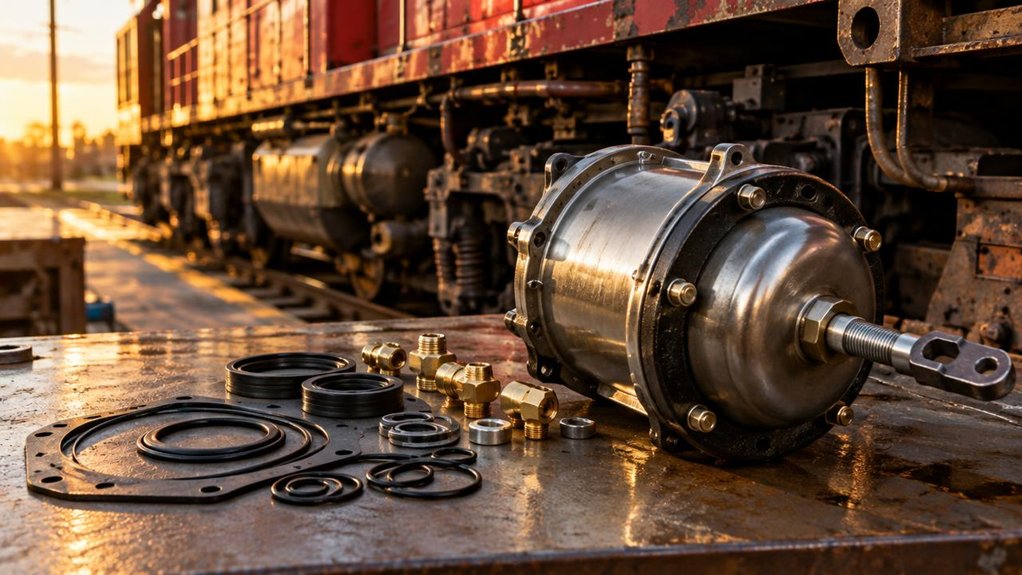
The Most Common Problem: Brake Leakage and Unplanned Downtime
Locomotive operators often face air brake leaks, slow brake response, and unplanned removals.
Worn or mismatched seals cause pressure loss during critical operations.
Pressure loss reduces braking force, extends train stopping distances, and raises safety risks across the fleet.
Mismatched kits also lead to repeat failures and costly yard delays.
Choosing the right seal kit prevents these problems before they start.
Common warning signs include:
- Gradual brake cylinder pressure drop during extended standby periods
- Slow brake release times affecting train handling
- Air leakage during brake applications
- Dirt or moisture entering the cylinder past worn rod wipers
- Oil or air seepage at cylinder head gasket surfaces
- Repeated seal replacements within a short service interval
- Extended out-of-service time while waiting for correct parts
Symptom-to-solution reference:
| Symptom | Likely Seal Cause | Recommended Action |
|---|---|---|
| Gradual pressure drop | Worn piston cup seal | Replace cup seal and verify bore dimensions |
| Slow brake release | Swollen or hardened elastomer | Install a kit rated for your operating temperature range |
| Contamination in cylinder | Failed rod wiper | Replace rod wiper and inspect rod surface finish |
| Air or oil seepage at head | Degraded gasket | Replace gasket and check groove profile |
| Repeat failures within months | Mismatched kit | Confirm bore, stroke, and model stamp before installation |
Why Professional Air Brake Seal Kits Protect Your Locomotive
You protect your locomotive’s braking performance when you match the seal kit to your cylinder’s bore, stroke, and model stamp.
Choose OEM-matched dimensions, verified groove profiles, and elastomers rated for your operating temperature range.
Verify quality through AAR or equivalent certification, batch traceability, and clean, flash-free molding.
Professional kits do not skip parts.
Each kit includes piston cup seals, gaskets, rod wipers, and lubricant.
Mikura International supplies genuine locomotive engine parts from ALCO, EMD, GE, and WABCO.
Our sourcing focuses on parts that meet these specifications.
Keep reading to uncover the inspection steps that stretch service intervals further.
Key Takeaways
- Professional kits are matched to the locomotive cylinder’s bore, stroke, and groove profile, eliminating trimming or fitting.
- Components are manufactured to original equipment dimensions and durometer, restoring factory-level sealing performance.
- Validated elastomers and heat resistance testing help seals withstand constant pressure cycling and temperature swings.
- Complete kits with matched cup seals, gaskets, rod wipers, and lubricant reduce repeat removals and unplanned downtime.
- Traceable AAR-compliant certification and batch numbers provide verified quality and clear records for tracking seal degradation.
Which Brake Cylinder Seal Kit Fits Your Locomotive?
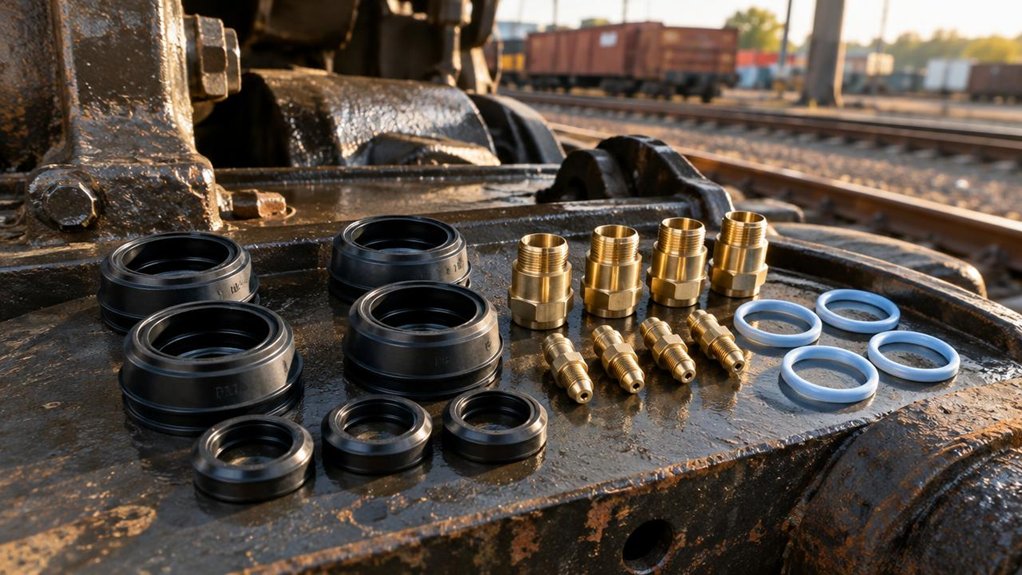
Which Brake Cylinder Seal Kit Fits Your Locomotive?
How do you determine which seal kit matches your brake cylinder? Start with compatibility identification. Locate the cylinder’s model stamp, bore diameter, and piston stroke. Cross-reference these figures against the manufacturer’s parts catalog. You will find the part number on the cylinder body or its nameplate.
Begin with compatibility identification. Locate the model stamp, bore diameter, and piston stroke, then cross-reference them against the parts catalog.
Next, verify the kit’s dimensional specifications against your measured values. Confirm that the groove profile, ring cross-section, and gasket material match the original equipment. Never substitute a seal based solely on visual resemblance. Even minor dimensional deviations can cause leakage and erratic brake response.
Finally, evaluate pressure rating considerations. Your locomotive’s operating pressure, typically 90 psi in standard systems, must fall within the kit’s rated limit. Allow a safety margin for peak pressure surges. Check that the elastomer’s temperature range suits your operating environment. Do not rely on the cylinder’s original rating if the kit’s specifications differ. Verify this before installation.
For help matching your cylinder to the right kit, contact the Mikura International technical team.
What Each Locomotive Brake Cylinder Seal Kit Includes
Every Mikura International locomotive brake cylinder seal kit replaces the components that wear or leak inside the cylinder. You rarely need to source parts separately.
You will find piston cup seals, the gasket set, rod wipers, and the lubricant packet. Each component is matched to your locomotive cylinder’s bore and stroke specifications.
Brake kit components are machined to original equipment dimensions, so you will not spend time trimming or fitting. Check the packing list against your work order before you begin disassembly.
Seal material quality determines service life, so verify the compound before installation. Mikura International kits use nitrile or fluorocarbon elastomers designed for locomotive service. These compounds handle continuous exposure to compressed air and petroleum-based lubricants. They also withstand temperature swings from subzero to 250°F.
Inspect each seal for flash, cracks, and dimensional consistency. Reject any component that fails these checks, because a single defective ring compromises the entire assembly. Store unused components in a sealed container away from direct sunlight and ozone.
How to Spot a Quality Locomotive Seal Kit?
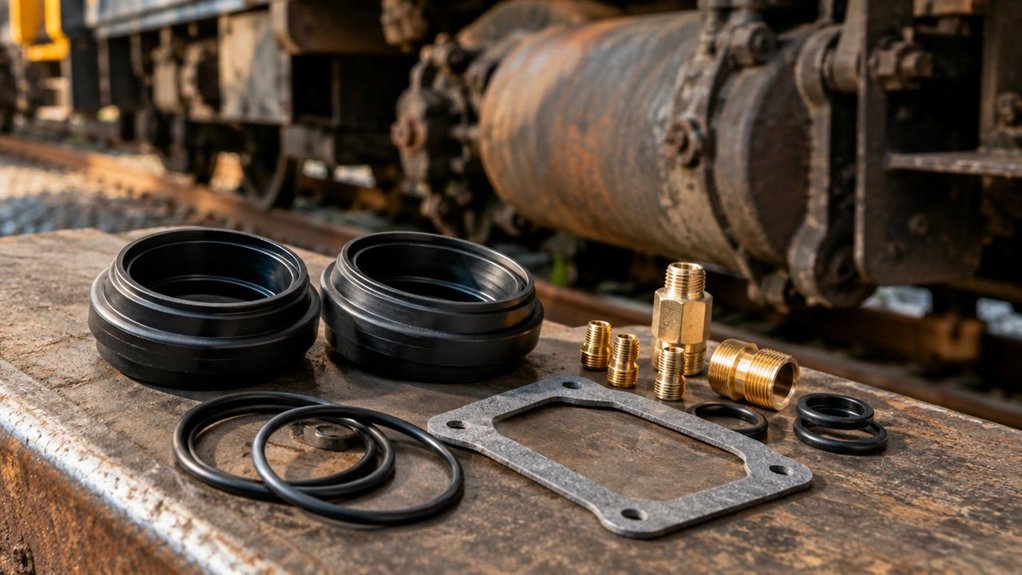
Where does a quality locomotive seal kit separate itself from a substandard one? The answer lies in documentation, materials, and fit.
Start by verifying the manufacturer’s certification to AAR or equivalent standards.
Then examine each component: cup seals, piston packings, gaskets, and O-rings. Confirm each carries a part number matching your brake cylinder model.
Inspect kit compatibility before ordering. Cross-reference the locomotive’s make, model, and cylinder diameter against the kit’s specification sheet.
Mismatched dimensions cause leakage and premature wear. Do not accept “close enough.”
Next, check material quality. Look for NBR or fluorocarbon elastomers rated for your operating temperature range. Confirm that the packaging states the compound.
Verify the elastomer’s durometer hardness against the original equipment specification. Softer compounds extrude under sustained brake pressure.
Smooth, uniform molding signals disciplined production. Reject any kit with flash, voids, or uneven cross-sections.
Why Professional WABCO Kits Outlast Generic Seals
Locomotive brake cylinder seals endure constant pressure cycling, temperature swings, and contamination. You cannot treat them as interchangeable commodities. Professional WABCO kits deliver a durability overhaul, not a cosmetic refit. Mikura International supplies kits engineered for locomotive brake service. Each kit matches OEM compatibility down to durometer and groove tolerances. The seal seats correctly and holds under full brake pressure. Generic seals often miss those specifications.
The difference shows clearly in service life:
| Factor | Outcome |
|---|---|
| Compound | Certified OEM elastomer resists swelling |
| Dimensions | Matches original drawings exactly |
| Heat resistance | Verified across full operating temperature range |
| Pressure cycling | Validated through endurance testing |
| Service interval | Extended, with fewer removals |
Locomotive operators avoid premature leakage, repeat removals, and unplanned downtime. Documented testing protects braking performance where it matters most. Long-term fleet reliability depends on verified performance, not the lowest unit price.
Keep Your Brake Cylinder Seals Running Longer
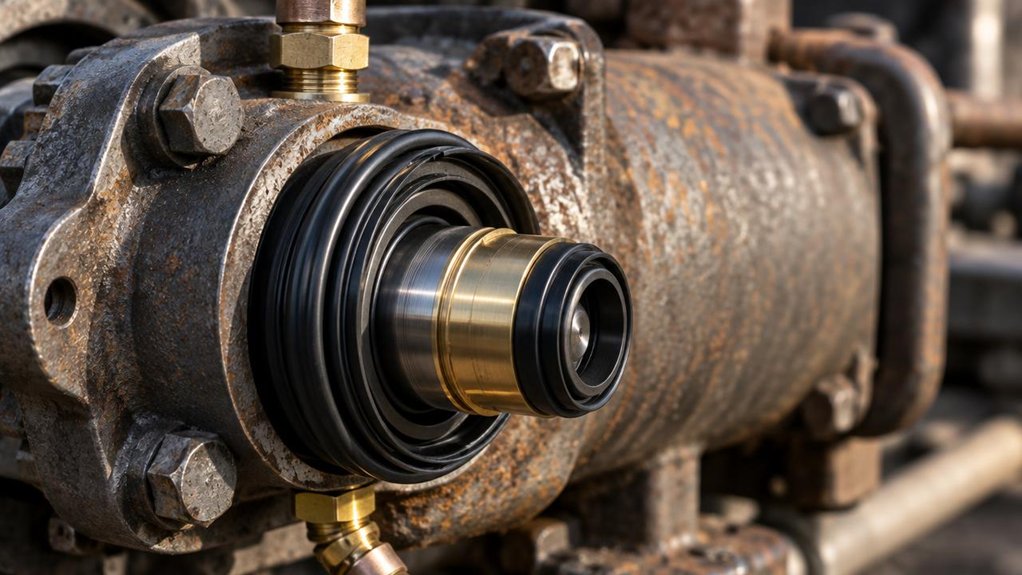
Once a locomotive brake cylinder seal is installed correctly, its life depends on the surrounding system. Protect that investment by verifying the basics during every service interval. Follow strict installation practices: clean the cylinder bore, lubricate with manufacturer-approved grease, and seat the seal without twisting it. Check that the groove is free of burrs and debris before fitting anything into place.
Confirm seal material compatibility before every overhaul or rebuild. Mismatched elastomers swell, harden, or extrude when exposed to incompatible lubricants or contaminants. Match each compound to your locomotive’s fluids and operating temperatures, including the extreme heat of long mainline runs.
Schedule inspections based on operating mileage or service hours rather than waiting for failure. Record each seal replacement, note cylinder wear, and trend the data to spot degradation early. This approach reduces emergency repairs and keeps brake performance consistent across the fleet. Your maintenance logs become your most reliable diagnostic tool on the shop floor.
Frequently Asked Questions
Do These Seal Kits Comply With FRA and AAR Braking Regulations?
Compliance is not automatic, so verify it before purchase. Confirm that brake seal testing records demonstrate performance within locomotive air brake specifications. Check that installation timeframes align with your maintenance schedule and FRA inspection requirements. You remain ultimately responsible for final compliance. Keep all of these records readily available for FRA inspectors during routine audits.
How Long Does a Typical Brake Cylinder Seal Replacement Take?
A typical brake cylinder seal replacement takes two to four hours per cylinder. A full locomotive set can span one shift.
Start by isolating the air supply. Then bleed the reservoirs completely.
Remove the cylinder head with care. Protect the bore and piston surfaces during removal.
Schedule inspection timing during planned maintenance windows. This minimizes installation downtime.
Verify piston travel before reassembly. Confirm seal seating before returning the locomotive to service.
Corrosion or damaged bores will extend that timeline. Plan extra hours when these conditions appear.
Mikura International supplies locomotive-grade brake cylinder seal kits for planned overhauls.
Do I Need Special Tools to Install These Seal Kits?
Yes, locomotive engine seal kits require specialized tools. A standard toolbox will not be enough for this job.
Before you start, verify tool compatibility with your engine model. Mismatched seal pullers and torque wrenches can scratch cylinder bores and damage new seals.
Gather the following tools before beginning. You will need a calibrated torque wrench, snap-ring pliers, a seal installation sleeve, and lint-free cloths.
Check every specification against the locomotive engine manufacturer’s manual. Torque values and clearances vary between engine models.
Complete installation training before attempting the job. Proper technique prevents costly leaks and extends seal life.
Can I Order Bulk Seal Kits for an Entire Locomotive Fleet?
Yes, you can order bulk seal kits for an entire locomotive fleet through Mikura International. We offer several fleet procurement options to suit your operation. These include blanket purchase agreements, scheduled quarterly deliveries, and volume-tiered quotes. Request bulk pricing tied to your total annual quantity to maximize your savings. Verify part numbers against each locomotive’s brake equipment model before ordering. This step prevents fitment errors across mixed fleet configurations. Confirm lead times, shelf-life dates, and packaging quantities before you finalize your purchase order. Our team can help you align these details with your fleet maintenance schedule.