

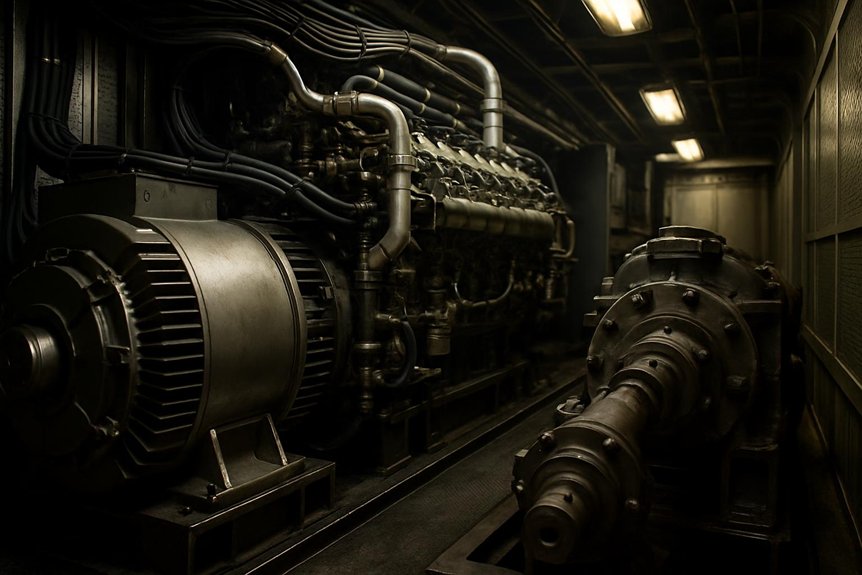
On EMD F125 locomotives, you manage hotel loads through a dedicated diesel-alternator HEP system that supplies regulated 480-volt AC independently of traction power. This preserves passenger comfort during idling, shutdowns, and propulsion faults, but adds weight, capital cost, packaging demands, and separate maintenance. A PTO-driven system shares the prime mover, reducing equipment and acquisition cost, yet couples hotel power to engine operation, increasing fuel penalties, mechanical inspection complexity, and fault exposure. Further analysis clarifies lifecycle and fleet-selection tradeoffs.
How Is HEP Generated and Managed on the EMD F125 Locomotives, and What Are the Tradeoffs Between Dedicated HEP Sets and PTO-Driven Solutions?
Head-end power generation relies on distinct mechanical architectures. Dedicated diesel generators provide independent electrical output for passenger cars. This ensures consistent voltage regardless of locomotive traction demands. Power take-off systems draw energy directly from the main engine. Such integration reduces overall fuel consumption during stationary operations. However, it introduces complex thermal management challenges for engineers.
Procurement specialists must weigh initial capital costs against operational efficiency. Dedicated sets offer superior redundancy for critical passenger services. They isolate hotel loads from primary propulsion failures effectively. Conversely, PTO-driven solutions minimize maintenance points and weight. The choice depends heavily on specific route requirements. Mountainous routes benefit from the torque availability of main engines. Flat terrain operations may favor the simplicity of dedicated units.
Reliability metrics drive the final decision for rail operators. Both systems require rigorous monitoring for optimal performance. Modern control systems manage load sharing seamlessly today. Engineers prioritize system uptime above all other factors. Passenger comfort dictates strict power quality standards always. Voltage fluctuations must remain within tight tolerances continuously. Harmonic distortion impacts sensitive onboard electronic equipment negatively. Proper filtering is essential for both architectural approaches. Maintenance schedules differ significantly between the two options.
Dedicated units allow for isolated servicing without downtime. PTO systems require coordinated shutdowns for comprehensive inspections. Cost-benefit analyses reveal long-term savings vary by usage. High-mileage corridors often justify the complexity of PTO. Low-frequency services benefit from the robustness of dedicated sets. Ultimately, the decision balances technical capability with economic reality.
Key Takeaways
- The EMD F125 uses a dedicated diesel-generator set to supply stable 480-volt AC HEP independently of the traction engine.
- HEP capacity must cover lighting, HVAC, galley equipment, battery charging, controls, peak demand, continuous loads, and starting surges.
- Dedicated HEP supports passenger service during idling, shutdown, or propulsion faults, but generator failure can remove hotel power without standby capacity.
- PTO-driven HEP reduces equipment duplication, but couples hotel power to engine speed, traction loads, torsional vibration, and prime-mover failures.
- Reliable HEP management requires voltage, frequency, phase-balance, harmonic, cooling, protection, and transfer-system verification under all operating conditions.
Fundamentals of Locomotive Hotel Load Systems
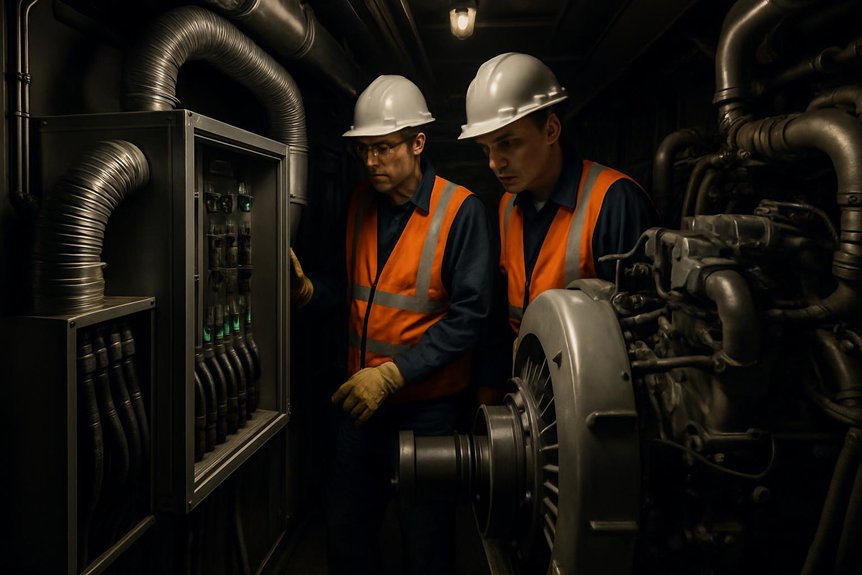
You define railroad head-end power requirements by matching passenger loads, voltage stability, frequency, and redundancy targets.
Next, you compare dedicated generator architectures, which isolate locomotive auxiliary power from traction demands.
You then assess PTO-driven HEP, integrating generation with the prime mover while adding thermal and control-system dependencies.
Defining railroad head-end power requirements
For passenger rail, railroad head-end power must deliver stable 480V AC or 600V DC to onboard hotel loads. You must size this supply for lighting, HVAC, galley equipment, battery charging, and control electronics. These loads operate separately from traction power, so passenger comfort can’t depend on locomotive speed or tractive effort.
First, define peak demand, continuous demand, and starting surges across the consist. Then evaluate voltage regulation, frequency stability, phase balance, and allowable harmonic distortion. Your design should preserve service quality during acceleration, coasting, idle periods, and station stops.
Additionally, specify protection against overloads, short circuits, ground faults, and transient disturbances. Locomotive auxiliary power controls should monitor load changes and communicate alarms to maintenance teams. Finally, verify connector ratings, cable capacity, cooling requirements, and compatibility with passenger-car distribution equipment before selecting equipment.
Overview of dedicated generator architectures
When specified correctly, a dedicated locomotive generator uses an independent diesel engine coupled directly to an alternator. You receive railroad head-end power without depending on the traction prime mover. This architecture supports hotel loads while the locomotive idles, shuts down, or experiences propulsion-related faults. A dedicated hep set typically includes fuel supply, cooling, exhaust, starting, controls, protection, and power-conditioning equipment.
You can isolate these subsystems for inspection, preserving locomotive availability and passenger-service continuity. Independent regulation also helps maintain voltage and frequency during changing coach loads. However, you must allocate space, weight, mounting structure, and additional service intervals. The installation consequently affects packaging and axle-load calculations. Compared with pto-driven hep, this design adds a complete engine-generator system, but it preserves functional separation. Proper redundancy and monitoring strengthen reliability for demanding passenger operations.
Mechanics of PTO-driven HEP solutions
A PTO-driven HEP system uses a shaft connected to the main diesel engine’s crankshaft. You transfer rotational power to an alternator, which produces railroad head-end power while the prime mover runs. This architecture reduces separate engines, mounts, fuel systems, and some maintenance points. However, you must manage thermal loading, torsional vibration, and traction-load interactions carefully. Your controls regulate voltage, frequency, excitation, filtering, and load transitions. Harmonic distortion requires dedicated mitigation to protect passenger equipment.
| Mechanism | Engineering implication |
|---|---|
| Crankshaft shafting | Shares prime-mover torque |
| Direct alternator drive | Requires engine operation |
| Integrated cooling | Increases thermal coordination |
| Power electronics | Controls voltage quality |
| Common controls | Adds software complexity |
During station stops, PTO operation can improve fuel utilization, but idling remains necessary. Consequently, failures affecting the prime mover can remove both traction and hotel power. You should evaluate redundancy, axle loading, retrofit access, and total downtime before selecting this railroad head-end power architecture.
Operational Efficiency and Fuel Consumption
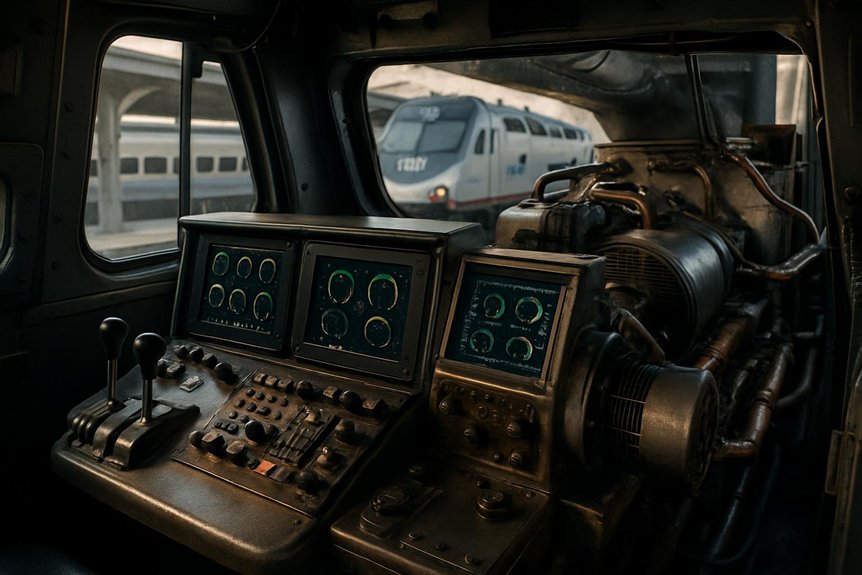
You’ll compare idle fuel burn in dedicated and PTO-driven railroad head-end power configurations.
You’ll then assess load matching, prime-mover optimization, and control strategies across operating conditions.
Finally, you’ll evaluate how each architecture shapes emissions from the EMD F125 locomotive.
Fuel burn rates in idle modes
At idle, a dedicated generator usually burns less fuel than a large prime mover supplying railroad head-end power. You can isolate locomotive auxiliary power demand from the traction engine, avoiding unnecessary main-engine operation. A dedicated HEP set thus sustains passenger services with lower fuel consumption during extended station stops. By contrast, a PTO-driven HEP system draws power from the prime mover, which must remain running.
The engine typically operates at inefficient low-notches while producing modest hotel-load output. Consequently, specific fuel consumption rises even though the locomotive remains stationary. Your route profile matters: frequent stops and long layovers magnify this penalty. A dedicated set can reduce idle fuel burn and associated emissions in those conditions. However, you should evaluate fuel savings alongside installation, service, and packaging requirements before selecting the architecture for your F125 fleet.
Load matching and engine optimization
When hotel loads vary, dedicated sets can match generator capacity closely, improving railroad head-end power efficiency. You can operate these auxiliary engines near their efficient design point, even when traction demand changes. By contrast, a PTO-driven HEP system must coordinate the main prime mover’s speed, torque, and traction output. That requirement can force inefficient operating points when hotel demand is modest or fluctuating.
| Architecture | Load-matching consequence |
|---|---|
| Dedicated HEP set | Closely follows hotel demand |
| PTO-driven HEP | Shares the main engine’s operating point |
| Variable loads | Dedicated control limits wasted capacity |
| High traction demand | PTO availability may improve |
| Control strategy | Monitoring prevents unstable transitions |
Your control system should prioritize stable voltage while adjusting generator output. During sustained high traction, PTO operation may use available engine capacity effectively. However, low hotel loads can leave the prime mover oversized for auxiliary demand. Consequently, you’ll compare route profiles, duty cycles, and load records before selecting an architecture.
Emissions impact of HEP generation methods
Load matching also shapes the emissions profile of railroad head-end power. You’ll reduce fuel use when HEP production follows passenger-load demand. However, idling the F125’s large prime mover can produce more NOx and particulate matter per kilowatt-hour than an optimized auxiliary generator. That difference directly affects station air quality, regulatory exposure, and lifecycle cost.
- Dedicated HEP sets: You can operate smaller engines near efficient load points, reducing emissions during stops and low hotel-load periods.
- PTO-driven HEP: You’ll avoid a separate engine, but lightly loaded main-engine operation may worsen emissions intensity.
- Control optimization: You can coordinate load sharing, shutdowns, and filtering to limit fuel burn and passenger-service interruptions.
Your procurement model should compare route profiles, stop duration, hotel-load variability, and emissions requirements. Regulatory pressure increasingly favors cleaner HEP sources. Mikura International can help you evaluate auxiliary-power architectures against measured operating data, maintenance constraints, and future compliance targets.
Maintenance Reliability and Lifecycle Costs
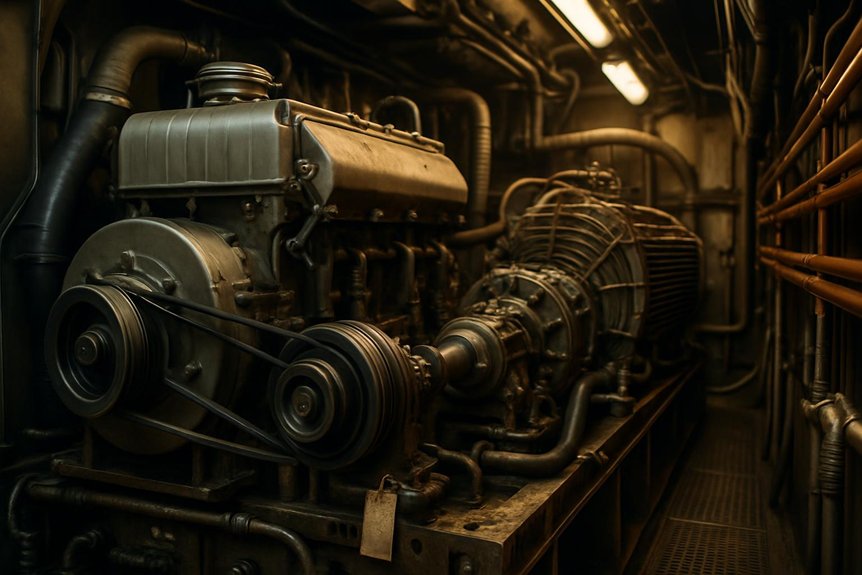
You’ll assess dedicated HEP set service intervals against the EMD F125’s operating cycles and maintenance access. You’ll also evaluate PTO-driven HEP linkages, including alignment, lubrication, thermal stress, and inspection requirements. Finally, you’ll compare failure modes and redundancy strategies to quantify reliability, downtime exposure, and lifecycle cost.
Service intervals for dedicated HEP set units
A dedicated HEP set follows its own service intervals for oil changes, filter replacements, inspections, and testing. You’ll manage these tasks separately from traction-engine maintenance, increasing the locomotive’s total maintenance burden. However, this separation creates valuable operational flexibility because technicians can service the unit without removing traction power from availability.
- Oil and filter control: You’ll protect engine performance by tracking lubricant condition, filter loading, and contamination trends.
- Inspection discipline: Your team should verify generator output, cooling performance, wiring integrity, and protective-device operation at scheduled intervals.
- Reliability planning: You’ll reduce surprise failures by aligning inspections with operating hours, duty cycles, and recorded fault history.
Modular repairs can shorten corrective downtime because technicians isolate the dedicated unit. Meanwhile, planned intervals support predictable labor, parts demand, and lifecycle budgeting. For passenger service, consistent scheduling helps preserve railroad head-end power availability and onboard comfort.
Complexity of PTO-driven HEP mechanical links
When the main engine drives railroad head-end power, clutches, shafts, and bearings add mechanical interfaces. You must inspect each interface for alignment, lubrication, wear, and thermal growth. These links transmit torque through changing engine speeds and passenger-load demands. As a result, your maintenance team needs specialized procedures beyond routine prime-mover servicing. Access constraints can extend inspection time, especially within crowded locomotive packaging.
During major overhauls, you’ll coordinate PTO inspections with engine removal, drivetrain measurements, and control-system verification. That coordination can increase labor hours and shop scheduling pressure. Replacement parts also require careful dimensional control, because small alignment errors accelerate bearing or coupling wear. Over the lifecycle, these requirements may offset PTO benefits in weight and fuel use. You should thereupon model labor, planned downtime, tooling, and overhaul intervals before selecting PTO-driven HEP for an EMD F125 fleet.
Failure modes and redundancy strategies
Because railroad head-end power supports passenger safety and comfort, redundancy must match each architecture’s failure modes. When you assess the EMD F125, separate hotel-load failures from propulsion risks. A dedicated HEP set isolates passenger power from the main engine, but one failed generator can remove hotel power without standby capacity. PTO-driven HEP reduces equipment count and weight, yet shaft, clutch, or converter failures can affect main-engine operation. You should evaluate three safeguards:
- Install standby generation or automatic transfer capability for uninterrupted passenger service.
- Monitor bearings, couplings, converters, voltage, frequency, and harmonic distortion continuously.
- Coordinate shutdown procedures, spares, and recovery plans with maintenance control.
Dedicated sets simplify fault isolation and scheduled servicing. PTO systems demand integrated diagnostics and thermal protection. Your lifecycle model must price downtime, inspections, redundancy hardware, and passenger-comfort penalties—not merely purchase cost.
Engineering Trade-offs and Design Constraints
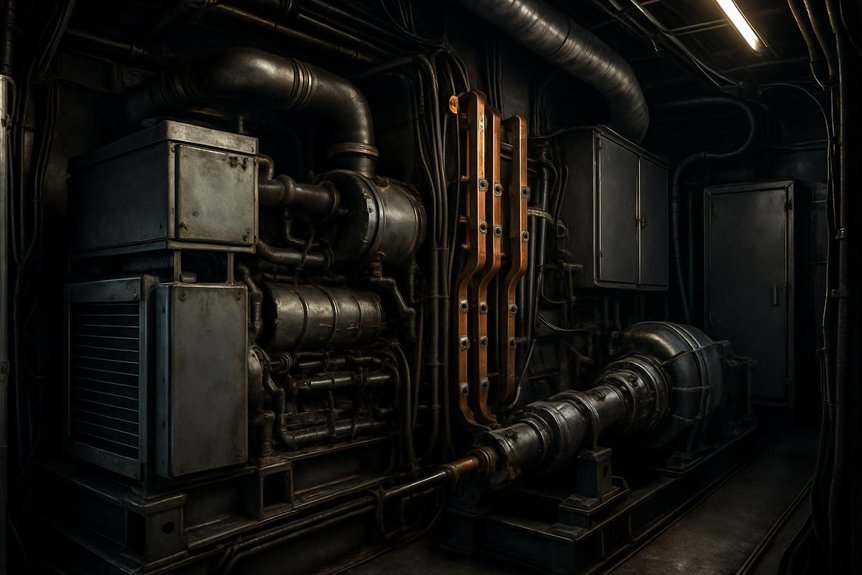
You must balance railroad head-end power equipment weight against axle-loading limits and available locomotive space. You’ll also manage confined-space heat rejection without compromising propulsion or passenger-service reliability. Meanwhile, you need harmonic filtering and voltage regulation to protect sensitive onboard systems.
Weight distribution and axle loading limits
Weight distribution directly affects railroad head-end power integration, adhesion, and axle-load compliance. You must evaluate each EMD F125 installation as a complete locomotive system. A dedicated HEP set adds mass high or toward one end, potentially shifting bogie reactions. That shift can reduce available adhesion or exceed route-specific axle limits.
PTO-driven HEP usually weighs less, but you’ll need robust shaft supports and precise alignment. Structural reinforcement can relocate loads and complicate certification.
- Axle loading: Verify static and dynamic loads against infrastructure limits.
- Adhesion: Protect tractive effort when passenger demand and gradients coincide.
- Serviceability: Prevent component placement from obstructing inspections or access.
You should model fuel, equipment, and passenger-car loads together. Mikura International can help you validate interfaces before procurement. This disciplined approach reduces approval risk, wheel-load imbalance, and costly redesigns across aging fleets.
Thermal management in confined spaces
Thermal management is a decisive engineering constraint in railroad head-end power installations. You must remove heat reliably within restricted locomotive compartments, where airflow, radiator area, and service access remain limited. A dedicated HEP set uses its own cooling loop, radiator, pump, and controls. This architecture isolates hotel-load heat from the propulsion engine’s cooling circuit. However, it adds equipment, ducting, coolant, and maintenance interfaces inside confined spaces.
A PTO-driven HEP system shares the main engine’s radiator and cooling infrastructure. That arrangement can reduce component count and installation weight, but it increases the prime mover’s thermal burden. During hot-weather operation, sustained passenger loads may challenge available cooling capacity. You should thus assess radiator margins, airflow paths, coolant temperatures, and derating thresholds. Compartment layout also affects inspection time and failure recovery.
Electrical quality and harmonic filtering needs
When passengers rely on stable service, railroad head-end power must protect sensitive electronics from voltage spikes and harmonics. On an EMD F125, you should evaluate waveform quality as a system constraint, not an accessory.
- Dedicated HEP sets typically deliver cleaner, regulated output, simplifying filters and protecting displays, chargers, and control networks.
- PTO-driven HEP draws power from the main alternator, but advanced inverters must condition variable voltage and frequency.
- Filtering controls risk through reactors, capacitors, active filters, shielding, and continuous harmonic monitoring.
Your design must coordinate generator controls, inverter switching, grounding, and passenger-car loads. Poor coordination can create resonance, nuisance trips, overheating, or uncomfortable lighting fluctuations. Conversely, excessive filtering adds weight, losses, maintenance, and enclosure demands. Validate total harmonic distortion across traction transitions, idle operation, and maximum hotel load. This testing supports reliability, passenger comfort, and defensible procurement decisions.
Procurement Strategy and Future Trends
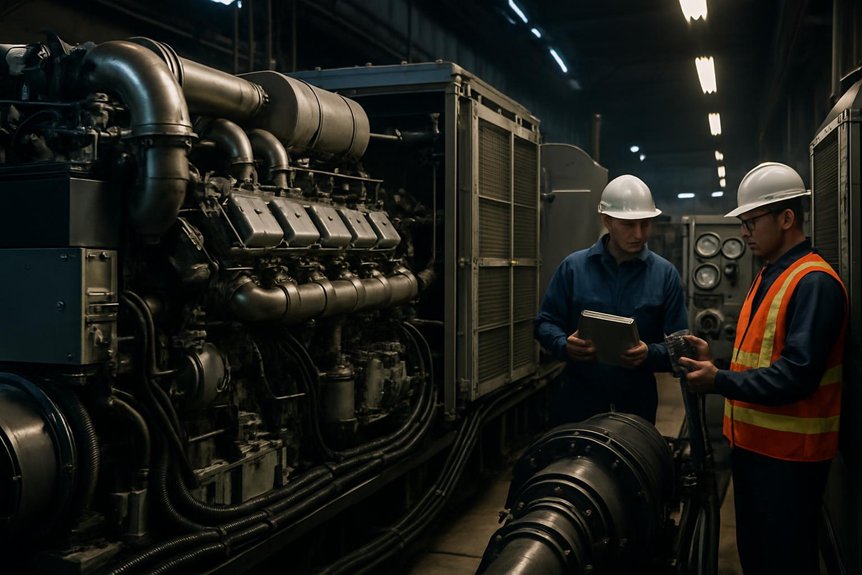
You’ll compare capital expenditure with operational savings when selecting railroad head-end power for EMD F125 fleets. Hybrid energy storage can reduce peak loads, emissions, and generator cycling, but it adds controls and integration requirements. Your decision should align HEP architecture with route duty cycles, maintenance capability, reliability targets, and passenger power-quality standards.
Capital expenditure versus operational savings
Although dedicated railroad head-end power systems require higher capital expenditure, they can deliver predictable lifecycle costs. You’ll fund an additional engine, generator, controls, and installation, increasing the EMD F125’s acquisition price. However, independent operation can reduce traction-engine wear, simplify scheduled servicing, and preserve passenger power during propulsion faults.
PTO-driven HEP lowers initial procurement cost because you share the prime mover. Yet you’ll accept greater integration complexity, coordinated shutdowns, and potentially higher fuel and maintenance expenses over the locomotive’s service life. Evaluate each option through three cost pressures:
- Capital: Can your fleet budget absorb a dedicated HEP set?
- Operations: Will route hours and hotel-load demand justify PTO efficiency?
- Risk: Can you finance downtime when shared equipment fails?
Use duty-cycle modeling, failure data, and maintenance labor rates to validate total ownership cost. This approach supports defensible procurement decisions.
Integration with hybrid energy storage systems
Hybrid energy storage can buffer railroad head-end power loads, letting the prime mover or dedicated generator shut down during low-demand periods. You can reduce fuel consumption and emissions substantially during station stops and hotel-load transients. Batteries absorb short-duration peaks, then release energy when passenger demand rises. As a result, your control system must coordinate battery state-of-charge, generator dispatch, traction auxiliaries, and trainline voltage. Power converters regulate voltage and frequency while limiting harmonic distortion for sensitive passenger equipment.
Thermal management remains essential because repeated cycling produces heat within cells, inverters, and cooling circuits. You’ll also need protection logic for isolation faults, thermal runaway, overcurrent, and degraded battery capacity. Hybridization can preserve redundancy by retaining a generator or PTO path as backup. Procurement should therefore specify lifecycle testing, software interfaces, fire protection, and service support. Mikura International can help you evaluate integration risks across aging locomotive electrical architectures and future upgrades.
Selecting the right HEP solution for your fleet
Battery buffering can reduce peak demand, but fleet selection still depends on route duty cycles and operating constraints. You should evaluate dwell times, traction demand, ambient conditions, and regulatory requirements together. High-utilization freight-passenger routes may favor PTO-driven HEP, because the prime mover shares fuel and reduces equipment weight. However, dedicated HEP sets can protect passenger service when propulsion faults occur, strengthening redundancy and simplifying isolated maintenance.
- Reliability: Choose dedicated sets where passenger comfort, voltage stability, and recovery time dominate risk.
- Efficiency: Select PTO when sustained utilization offsets thermal, control, and integration complexity.
- Future readiness: Specify battery buffering, harmonic filtering, diagnostics, and upgradeable controls.
Your procurement model should compare capital cost, fuel consumption, overhaul intervals, emissions, axle loading, and software support. Require measured power quality and failure-mode data. For older locomotives, verify structural, cooling, and control-system compatibility before approving retrofit work.
Frequently Asked Questions
What Voltage and Frequency Does the EMD F125 Supply to Passenger Coaches?
You’ll find the EMD F125 supplies passenger coaches with 480 volts AC at 60 hertz through its railroad head-end power system. Think of this output as the train’s electrical heartbeat, supporting lighting, heating, ventilation, air conditioning, kitchen equipment, and onboard controls. You should verify coach compatibility, phase configuration, maximum load, and protection settings against operating documentation. Proper regulation and filtering help maintain passenger comfort and protect sensitive electronics throughout service.
How Does HEP Power Quality Affect Onboard Signaling and Passenger Information Systems?
HEP power quality directly affects onboard signaling and passenger information systems. You need stable voltage and frequency because fluctuations can reset displays, interrupt announcements, or disrupt trainline communications. Excessive harmonic distortion may corrupt data networks, audio amplifiers, and signaling interfaces. Hence, your maintenance team should monitor transients, insulation faults, grounding, and total harmonic distortion. Proper filtering, shielding, surge protection, and redundant converters help preserve reliable operation, passenger comfort, and safety-critical communications.
Which Safety Interlocks Protect Passengers During HEP Connection and Disconnection?
You protect passengers with interlocks that verify zero trainline voltage before coupling or uncoupling HEP cables. Ground-fault relays, phase-sequence checks, circuit breakers, and connector pilot contacts prevent energized separation. Door and receptacle switches confirm secure connections, while control logic blocks traction changes during transfers. For example, during a station stop, your system isolates the locomotive, confirms discharge, then permits uncoupling. These safeguards reduce arcing, shock exposure, and passenger-car equipment damage.
How Are HEP Faults Isolated Without Interrupting Locomotive Traction Power?
You isolate railroad head-end power faults through dedicated breakers, contactors, and protection relays, while traction systems remain energized. Differential, overcurrent, ground-fault, and undervoltage detection identify defective feeders or loads. The control system trips only the affected HEP section, records diagnostics, and prevents automatic re-energization until conditions normalize. Dedicated auxiliary converters or generator sets further separate hotel loads electrically. This architecture preserves locomotive movement, but passengers may lose lighting or climate control temporarily.
What Inspection Records Should Procurement Teams Request for an F125 HEP System?
Request complete F125 HEP inspection records: operating hours, load profiles, fault logs, insulation-resistance tests, and voltage-quality measurements. Ask for generator, inverter, transformer, cooling-system, and wiring inspection reports, including corrective actions and technician sign-offs. Require protection-relay tests, harmonic-distortion results, emergency-shutdown verification, and software revision histories. Like reading a locomotive’s maintenance diary, compare trends rather than isolated results. You’ll also need component replacement records, warranty claims, and unresolved defects before procurement approval.
You may also like to read – Sizing and Energy Management of a Hybrid Locomotive Based on Flywheel and Accumulators