

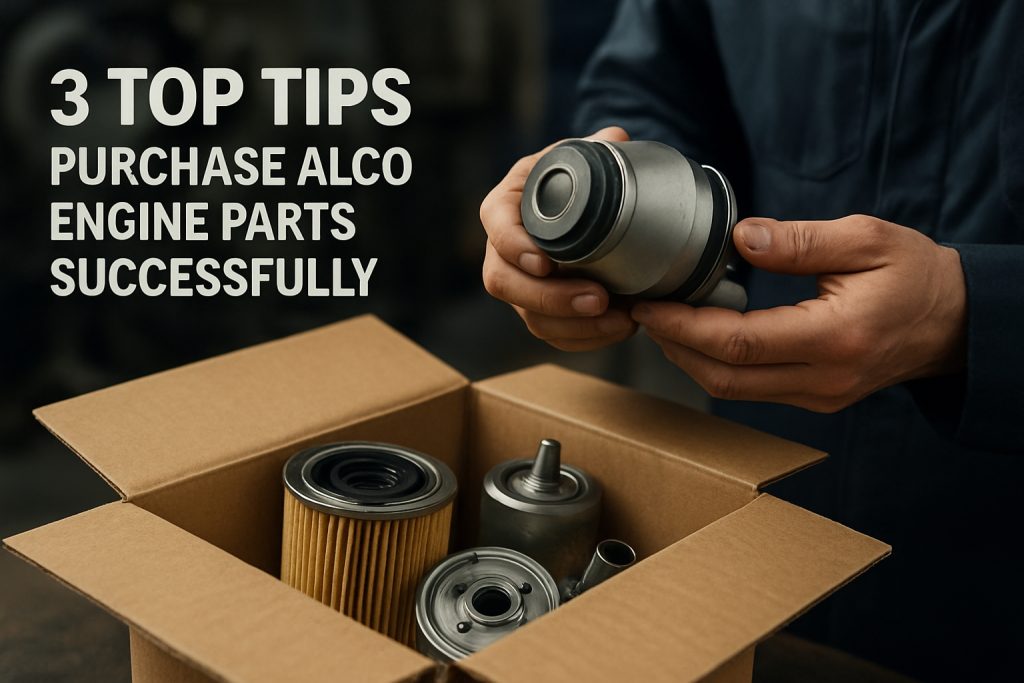
3 Top Tips for Purchasing ALCO Engine Parts for Locomotives
Locomotive spare parts sourcing can be challenging. The main hurdle is obtaining reliable, compatible parts within a reasonable timeframe. You need a supplier who understands ALCO and its classic lines. Mikura International provides a streamlined path to genuine ALCO parts with dependable service.
Use these practical steps to ensure you receive authentic ALCO parts that fit your locomotives and minimize downtime.
Pain Point addressed: Finding reliable ALCO parts quickly
End users often worry about compatibility, lead times, and counterfeits. Our approach removes guesswork and delays. You will work with a dedicated team that knows the ALCO lineage and the exact models in your fleet.
- Know your model and part type before contacting suppliers. Gather the locomotive’s serial number, build year, and the specific component such as axle assembly, traction motor, or brake valve.
- Verify authenticity by requesting a certificate of conformity or a Mikura authentication code that links to ALCO part drawings.
- Target the correct family for your model range, such as ALCO Classic or ALCO Comfort Classic parts.
- Confirm stock and pricing ask for current availability, lead times, and per-unit pricing with bulk discount options.
- Rely on catalogs and service history prefer vendors with established ALCO parts catalogs and documented service records for each part.
- Review warranty and returns check coverage on critical components and any restocking fees for returns of used parts.
- Assess lead times for wheels, bearings, and motor assemblies with explicit ETA and contingency options.
- Secure proper packaging opt for skid or palletized shipping to protect fragile or bearing surfaces during transit.
- Plan maintenance windows align part receipt with a defined maintenance day to minimize downtime.
- Document provenance record all part numbers, serials, and batch codes for future sourcing and audits.
Types of ALCO Parts for Locomotives
Locomotive maintenance hinges on reliable mechanical and electrical components that keep trains running safely and on schedule. Mikura International offers a broad selection of replacement parts for ALCO locomotives and related subsystems, with emphasis on parts that reduce downtime during overhauls.
Key part categories include:
- Engine and control components essential for ALCO locomotives, such as fuel system parts, starter motors, and governor assemblies
- Maintenance parts for drivetrains and gearing, including clutch packs, differential bearings, and oil seals with OEM specifications
- Diagnostic and circuit board replacements for control systems, featuring programmable logic controllers and display panels tested to industry standards
- Mechanical assemblies such as linkages and actuators, with pre-assembly fits to minimize on-site labor
- Spare parts for wheels, bearings, and suspension systems, including noise-dampening bushings and wheel flange repair kits
Wheel and Drive Components for ALCO Locomotives
Wheel and tire components are essential for safe operation. We supply wheels, tires, and caster-like mobility components tailored to ALCO configurations. Our catalog covers parts compatible with the ALCO Classic family and related models. For example, a maintenance depot replacing worn casters can select a mixed set of moderate-duty wheels for service carts and heavy-duty wheels for utility equipment, ensuring consistent braking and load distribution across units.
Practical tips:
- Specification accuracy: Specify wheel diameter, axle spacing, and loading class when ordering to prevent mismatches that can cause vibration or premature wear.
- Brand integrity: Choose genuine ALCO wheel hubs and locks to maintain performance and simplify warranty claims.
- Maintenance cadence: Inspect spoke covers and wear indicators during routine monthly maintenance, and replace worn components within 2 weeks of detection.
- Retrofit checks: Confirm compatibility with Invacare or Gendron components only if retrofit documentation exists for your fleet, and verify bolt patterns before mounting. Additionally, consider identifying reliable suppliers for high-quality, compatible parts to ensure your equipment runs smoothly.
Hospital Bed Parts and ALCO Related Equipment Analogy
Authentic parts sourcing in any domain follows the same rigor: verify compatibility, provenance, and traceability. While hospital beds and locomotives serve different applications, the underlying discipline of sourcing genuine components remains consistent.
From a procurement perspective, treat ALCO locomotives as your primary platform and hospital bed components as a parallel reference for quality controls. Use the same vendor qualification standards, documentation expectations, and inspection routines to ensure every part meets fitment and performance requirements.
Mikura International provides a vetted network for ALCO parts with traceable lot data, documented catalogs, and clear warranty terms. The emphasis is on exact model compatibility and auditable provenance to minimize downtime during maintenance cycles.
Maintenance Tips for ALCO Parts in Locomotives
Maintenance extends part life and reduces downtime by preventing unexpected failures. Real-world teams use these actions to keep equipment running smoothly.
- Keep a minimum stock of critical wear parts such as belts, seals, and fuses in a dedicated bin, labeled with part numbers and revision dates.
- Implement a monthly inspection routine for engine, control, and drivetrain components, and attach a standardized checklist to each asset’s maintenance record.
- Always follow OEM lubrication specifications and use approved fasteners to preserve warranty coverage and maintain compatibility.
- Maintain a centralized repair log capturing part numbers, batch codes, installation dates, and outcomes to improve traceability and forecasting.
- Conduct post-replacement diagnostics with calibrated tools to verify system integrity and confirm fault codes are cleared.
Comparison Table: ALCO Parts vs Alternatives
| Category | ALCO Authorized Parts | Non-ALCO Alternatives |
|---|---|---|
| Compatibility | Guaranteed for ALCO locomotives | Variable fit; risk of incompatibility |
| Warranty | Full vendor warranty | Limited or no warranty |
| Lead Time | Optimized through Mikura’s network | Longer and unpredictable |
| Support | Direct access to technical specialists | Limited support post-purchase |
What Mikura International Brings to Your ALCO Parts Sourcing
Mikura International combines decades of locomotive parts experience with a disciplined sourcing network. Since 1990, we have delivered ALCO Classic and ALCO Comfort Classic parts with consistent performance, focusing on replacement components, wheels, and related accessories for ALCO locomotives.
Key capabilities include:
- Access to ALCO branded parts across Classic and related series
- Broad catalog coverage for wheels, bearings, and control components
- Dedicated account managers to streamline quotes and shipping
- Transparent sourcing and complete documentation for every shipment
Expert Insights and Quick Actions
Use these steps to initiate ALCO parts sourcing with confidence.
- Identify the exact ALCO model and part number
- Request availability and current lead times from Mikura
- Obtain a formal quote with part numbers and warranty terms
- Confirm packaging and shipping to protect parts in transit
- Place the order and retain tracking details for follow-up
Example: when replacing wheels on an ALCO 700 series locomotive, reference the wheel catalog to confirm bolt pattern and diameter, then validate with your account manager to ensure compatibility with existing axles.
Note: vendors typically provide reliable on-time performance for ALCO Classic parts, and if a part is backordered, request a comparable alternative with equivalent performance and document the updated lead times in the purchase order.
Why choosing the right ALCO engine parts matters
You face downtime, high repair costs, and fit issues when parts don’t match. Mismatched components slow your operations. Genuine ALCO parts ensure compatible performance and longer service life.
With the right parts, maintenance becomes predictable. Reliability rises, and risk drops. This matters for spare parts sourcing managers with tight schedules and budgets.
Why Mikura International is your trusted partner
Mikura International maintains a robust vendor network for ALCO branded equipment. We specialize in replacement parts, wheelchairs accessories, and hospital bed components tailored to ALCO Classic lines.
Choose Mikura for honest pricing, genuine ALCO parts, and reliable delivery across the medical and locomotive sectors.
Expert Insight
“Reliability in locating genuine ALCO parts comes from a robust supplier network, certified QMS partners, and proactive inventory strategies that minimize downtime and preserve locomotive uptime.” , Industry Analyst
1. Verify Originality: How to Identify Genuine ALCO Engine Parts
Genuine ALCO parts deliver optimal performance and reliability for locomotive or marine engines. Use these practical steps to confirm authenticity before purchase.
Signs of authentic ALCO parts
Look for official ALCO branding plus clear part numbers and a consistent finish. Real items show precise machining and uniform coatings, not rough or mismatched surfaces. Packaging should display full part codes, batch data, and a manufacturing date or serial reference. This aids traceability if a post purchase issue arises.
- Consistent coloring and finish across all surfaces.
- Clear, laser cut part numbers that match the catalog.
- Packaging with traceable lot codes and origin details.
- Vendor documentation referencing ALCO catalog sections.
How to read part numbers and catalogs
Cross check ALCO numbers against the official catalog layout. The part number typically encodes family, size, and revision. Use the Mikura International parts catalogue as a cross check alongside the ALCO master list. Ensure descriptions align with engine model needs and application notes.
- Identify the family prefix, then a sequential or revision code.
- Match description to install location and engine type.
- Verify serial ranges for your locomotive or marine model.
Common counterfeit indicators to watch for
Avoid parts with vague labeling, misspelled brand names, or inconsistent fonts. Counterfeits often have looser dimensional tolerances and missing material stamps. Look for genuine ALCO stamps for aluminum or steel grade and inspect for alignment with catalog samples.
- Unusually low price relative to catalog prices.
- Inconsistent stamping or missing ALCO identifiers.
- Nonstandard packaging or missing warranty notes.
| Authentic ALCO Parts | Counterfeit Risk Signals |
|---|---|
| Official part numbers match catalog | Mismatch between description and number |
| Traceable lot codes | No traceability data |
| High quality machining and finish | Rough edges, inconsistent tolerances |
Expert Insight
“Authenticity in restoration hinges on rigorous part authentication, careful sourcing of genuine ALCO components, and an informed balance between original specifications and practical functionality.” , Industry Analyst
2. Source Trusted Suppliers: Finding Reliable ALCO Parts Vendors
Finding a trustworthy supplier is essential to avoid delays and ensure part integrity. A reliable vendor provides consistent quality, transparent terms, and timely delivery for ALCO engine parts used in locomotives and marine engines.
Evaluating vendor reputation and warranties
Assess the vendor’s track record in the locomotive and marine sectors with documented references from current clients. Look for explicit warranty terms and a clear return process, including time limits and required documentation. A reputable supplier should offer part level warranty coverage and accessible after sale support, such as a dedicated technical hotline or online ticketing system.
- Check industry references and project histories with dates and outcomes.
- Confirm warranty duration and coverage scope for each part type, noting exclusions.
- Verify service level commitments for defective parts replacement and turnaround times.
Assessing stock availability and lead times
Stock levels and confirmed lead times directly impact project schedules. Prioritize vendors with real time inventory visibility, integration to your procurement system, and defined backorder policies. The right supplier maintains your maintenance window by signaling risk early.
- Request current stock by part number and engine model, with batch codes.
- Ask for standard lead times and rush options, including minimum order quantities for expedited handling.
- Clarify packaging quantities, lot sizes, and consolidation options to optimize logistics and reduce handling.
Tips for negotiating pricing and terms
Effective negotiation saves cost while protecting delivery reliability. Focus on total landed cost, including freight, duties, and risk of obsolescence, rather than unit price alone. Use objective criteria, such as defect rates and on time delivery, to justify terms and align with procurement policy.
- Secure volume based discounts and long term pricing guarantees linked to forecasted usage.
- Negotiate favorable returns, restocking fees, fault resolution timelines, and credit for non conforming parts.
- Request dual sourcing options to reduce supply risk where possible, with contingency timelines.
| Vendor Evaluation Criteria | What to Confirm |
|---|---|
| Reputation | Track record in locomotive and marine sectors with client references |
| Warranty | Part level coverage and clear RMA process with escalation path |
| Stock visibility | Real time inventory by part number and engine model |
| Lead times | Standard and expedited options with defined backorder handling |
| Pricing terms | Discounts, terms, and total landed cost including freight |
Expert Insight
“Reliable, OEM-quality spare parts and responsive supply chains are the backbone for keeping ALCO-powered fleets in motion, ensuring uptime across global rail, marine, and industrial operations.” , Industry Analyst
3. Ensure Compatibility and Quality: Confirm Fitment and Performance
Compatibility safeguards project schedules and engine reliability. Verifying fitment and performance prevents misordered parts that stall maintenance. Follow structured checks to confirm that each part aligns with the locomotive or marine engine model in service.