

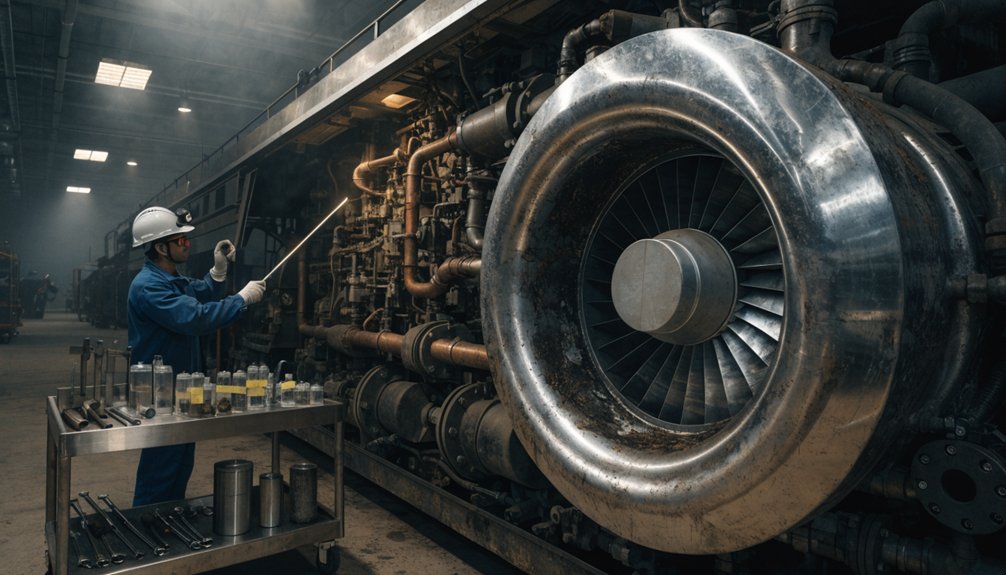
You should inspect EMD 710 turbochargers daily, at planned maintenance intervals, and during major overhauls, adjusting frequency for duty cycle and boost trends. Check oil level, feed and drain lines, exhaust connections, soot, smoke, leaks, mounting security, and baseline boost under load. After cooldown, inspect accessible blades and nozzle areas for damage. During heavy-haul inspections, verify bearing condition, rotor movement, and oil pressure. Log defects, boost changes, and corrective actions; the following guidance explains each step.
Key Takeaways
- Align turbocharger inspections with daily checks, rolling inspections, heavy-haul intervals, and major engine overhauls based on duty cycle and performance trends.
- Perform daily visual checks for oil leaks, soot streaks, smoke, housing damage, loose connections, and abnormal noise or boost readings.
- Verify oil level, oil condition, feed and drain flow, crankcase pressure, and temperature to protect turbocharger journal bearings.
- During heavy-haul inspections, inspect bearings, rotor blades, nozzle rings, compressor wheels, and exhaust connections for wear, damage, rubbing, or restrictions.
- Record mileage, engine hours, oil analysis, boost trends, smoke behavior, defects, and corrective actions to support fleet reliability and return-to-service decisions.
Follow EMD 710 Turbocharger Inspection Intervals
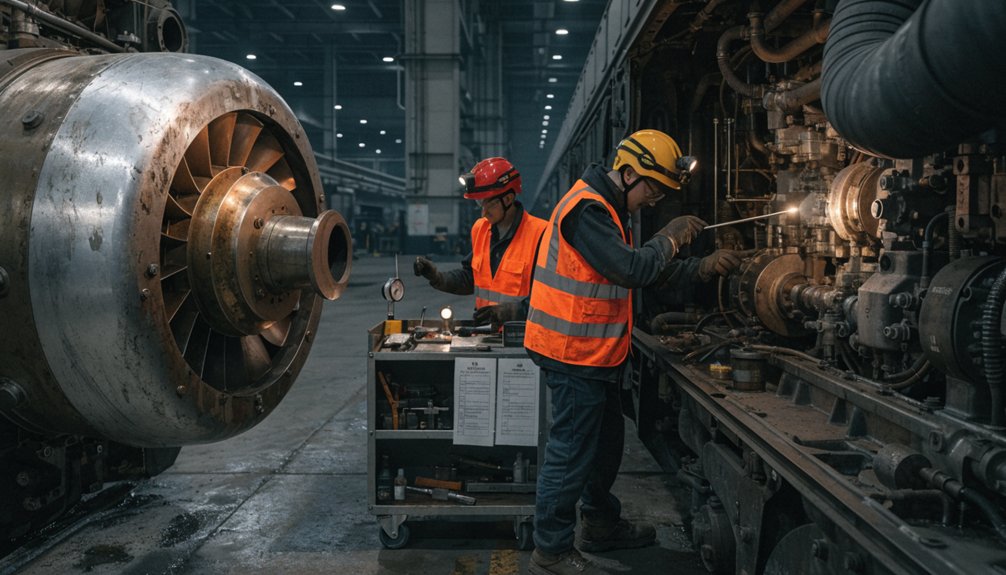
Follow EMD 710 Turbocharger Inspection Intervals through your fleet maintenance plan to protect locomotive power and reliability. Schedule assessments alongside rolling inspections and major engine overhauls. Prioritize boost stability under representative locomotive loads, and record abnormal readings immediately.
Integrate EMD 710 turbocharger inspections with fleet maintenance to protect power, reliability, and boost stability under load.
Investigate sudden pressure drops because leaks, rotor concerns, or airflow restrictions can reduce performance. Escalate sudden pressure rises because blockages or over-boost conditions can threaten engine components. Maintain inspection documentation to establish reliable turbo wear trends across each locomotive class.
Confirm the specified lubricating oil type, condition, and change interval during planned maintenance windows. Clean oil limits journal-bearing damage and reduces excessive rotor friction. Examine blades and nozzle-related components at defined intervals for chips, bends, or erosion. Damaged components reduce airflow efficiency and can accelerate deterioration.
Build interval planning around operating duty, overhaul schedules, and recorded performance deviations. Apply a disciplined Cool down routine by idling before shutdown. This practice supports service-life targets of five to ten years under normal conditions.
Complete Daily EMD 710 Turbocharger Checks
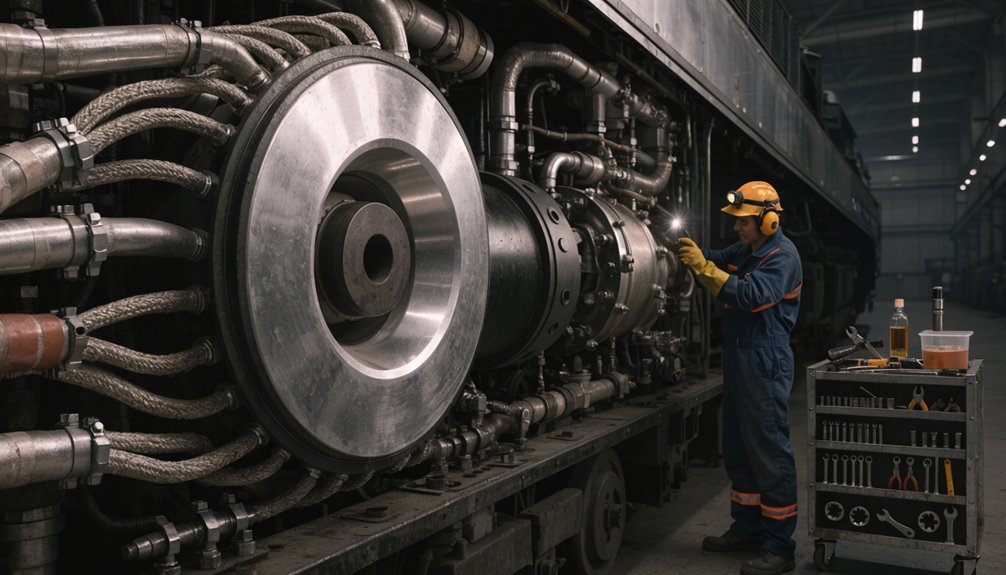
You begin daily EMD 710 turbocharger checks by examining accessible components for leaks, damage, soot streaks, noise, and smoke. Next, verify correct crankcase oil level and condition to protect journal bearings. Finally, inspect exhaust ducting and record boost pressure against established locomotive baselines.
Visual Condition Checks
Daily visual checks of the EMD 710 turbocharger help detect defects before they threaten locomotive availability. You should inspect seal integrity at the bearing housing, scavenge lines, and feed/return connections. Examine housing corrosion, heat discoloration, and staining around nozzle regions. Confirm mounting security, hardware torque indicators, and fastener wear without disturbing secured components.
When safe, observe stack smoke near the turbocharger during operation. Increased black smoke can indicate reduced airflow efficiency or component damage. Record boost pressure trends under load against normal fleet readings. A sudden drop may signal leakage or rotor damage. Conversely, a sudden rise can indicate blockage or over-boost.
After shutdown and cooldown, inspect accessible openings for damaged nozzle-ring areas and chipped, bent, or broken blades. Verify that crews complete the required idle cooldown before shutdown. Don’t touch hot housings or rotating equipment. Document defects immediately for corrective action.
Lubrication System Verification
Before operation, verify clean oil reaches the EMD 710 turbocharger within the prescribed service interval. Confirm oil cleanliness and document any evidence of oil contamination. Dirty oil can quickly damage journal bearings.
Perform a feed line check for secure connections, leaks, restrictions, and adequate inlet flow. Inspect drain flow health at the bearing drain, ensuring oil returns freely without blockage. Compare seepage at feed and drain fittings with previous daily records.
Verify locomotive crankcase oil pressure and temperature remain within approved limits. Use temperature correlation to identify lubrication concerns affecting rotor and bearing operation. Investigate abnormal readings immediately, especially if they accompany changing boost behavior. Isolate the locomotive when lubrication flow is low, blocked, or leaking. Don’t continue operation until qualified personnel correct the condition and confirm proper oil circulation. Record findings, corrective actions, and service-hour status in the daily inspection log.
Exhaust And Boost Inspection
During each heavy-haul inspection, examine the EMD 710 Turbocharger for oil leakage, soot staining, and loose exhaust connections. Review bearing areas, joints, boots, and clamp bands for evidence of exhaust leaks. Confirm clamp integrity before placing the locomotive under load.
Monitor boost stability through typical load changes. Investigate sudden pressure drops, which may indicate leakage, rotor damage, or restrictions. Escalate sudden pressure rises, since blockage or over-boost can threaten turbocharger components.
Inspect turbo shrouds, insulation, and external hardware for cracks or looseness. Examine accessible compressor blades for chips, bends, or imbalance risks. Use thermal imaging after operation to identify abnormal heat patterns. Ensure necessary idle cool-down occurs before shutdown. Verify oil-system service remains current and compliant. Clean, specified oil protects bearings; changing boost readings can help reveal early bearing wear.
Identify Leaks, Vibration, and Damage
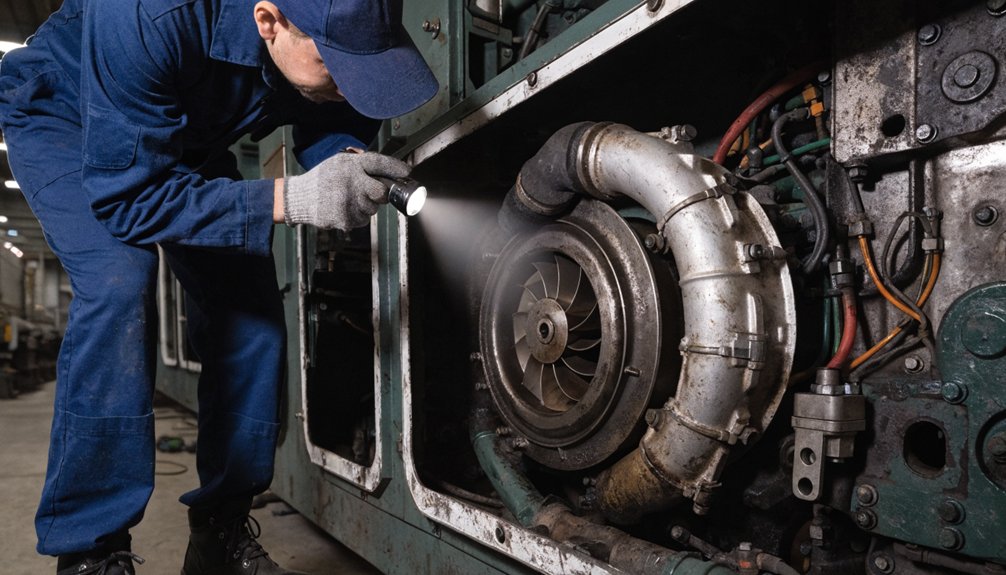
Why does early damage detection matter for EMD 710 Turbochargers? You prevent in-service failures, protect locomotive availability, and reduce safety exposure. Isolate the unit, follow lockout procedures, and inspect only after temperatures fall.
- Check oil feed, return, journal-bearing, and seal surfaces for residue or oil misting.
- Use Thermal imaging to identify overheating, discoloration, coking, and localized hot spots.
- Verify boost pressure under load; investigate abrupt drops, rises, or unstable readings promptly.
- Listen for new harmonics, roughness, or frame-transmitted shaking that indicates alignment wear.
- Examine compressor and nozzle-ring areas for soot, cracks, impacts, chipped blades, and compromised seal integrity.
Record findings with location, severity, and operating conditions. Compare vibration observations against prior locomotive records. Confirm correct idle-before-shutdown practices, because heat soak accelerates surface damage. Review coolant condition near associated cooling circuits for contamination or abnormal loss. Don’t return the locomotive to service when leaks, vibration, or structural damage remains unresolved. Escalate defects through your maintenance process and obtain qualified technical assessment before release.
Inspect Bearings, Wheels, and Oil Systems
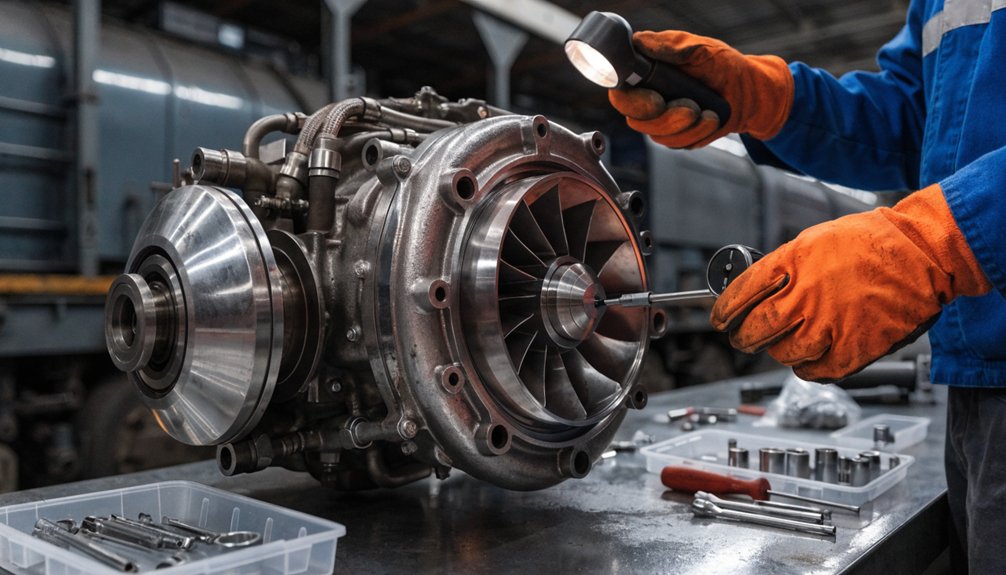
At every heavy-hold interval, inspect EMD 710 Turbochargers for bearing wear, wheel damage, and oil-system defects. Isolate the locomotive, follow lockout procedures, and allow components to cool before inspection. Check journal bearings for abnormal end-play, shaft movement, heat discoloration, and bearing scoring. Examine lubricant samples for oil contamination that can accelerate wear and reduce film strength.
Inspect the compressor wheel and turbine rotor for nicks, bent blades, erosion, or contact marks. Rotate the assembly carefully and confirm it turns smoothly without rubbing. During load testing, compare boost pressure with the established baseline. A sudden pressure drop may indicate rotor damage or a turbo leak. Conversely, an unexpected rise can signal restriction or over-boost conditions.
Verify correct oil type, service intervals, and cleanliness requirements. Inspect oil feed and return lines, fittings, and cooler operation for restrictions or leakage. Ensure unobstructed lubrication flow, since stable oil supply protects bearings and supports reliable rotor operation under heavy-haul duty.
Record Findings and Schedule Repairs
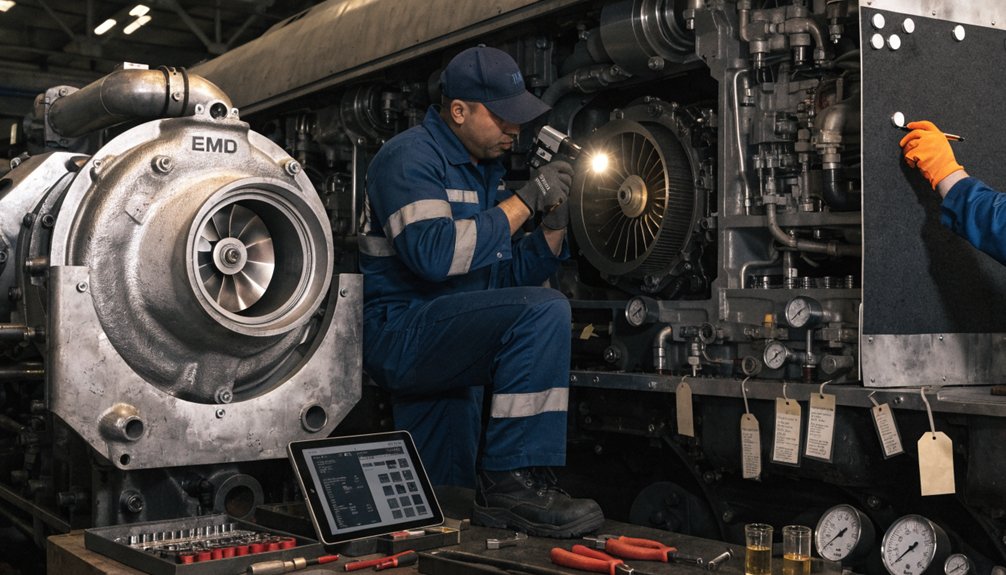
For each scheduled interval, record EMD 710 Turbochargers data in a dedicated inspection log. Capture mileage, engine hours, oil-analysis results, and boost readings. Compare entries to support trend forecasting and prevent unsafe in-service failures.
- Flag sudden boost drops for leaks, rotor damage, or airflow restrictions.
- Document over-boost events, blockage indicators, and black-exhaust observations immediately.
- Record blade, diffuser, nozzle ring, and journal-bearing conditions after disassembly.
- Use Nonconformance logging to assign corrective actions, priorities, and technician signoff.
- Maintain parts traceability for replacements and schedule next inspections from verified results.
Coordinate turbo teardowns with oil-system corrections and injector checks. This approach reduces repeat labor and improves downtime tracking across locomotive maintenance windows. Before returning the locomotive to service, record after-repair boost stability, smoke behavior, and loaded running response. Compare these readings with baseline values. If measurements remain outside limits, hold the unit for further diagnosis. You’ll make repair-versus-deferral decisions using documented wear, fleet history, and operating risk. Schedule work only after confirming clear airflow paths and safe component condition.
Frequently Asked Questions
What Spare EMD 710 Turbocharger Parts Should Heavy-Haul Fleets Stock?
Stock Gasket Seal Kits, Bearing Core Stock, Compressor Seal Sets, and Actuator Spares Inventory for each EMD 710 turbocharger model. Use Install Kit Planning to match fleet quantities, overhaul schedules, and route exposure. Keep turbine-side hardware, oil-line seals, fasteners, and approved replacement sensors available. You’ll reduce locomotive downtime by verifying part numbers, storage conditions, and traceability before release. Don’t substitute unapproved components during field repairs.
How Does Ambient Temperature Affect EMD 710 Turbocharger Inspection Planning?
Ambient variability acts like a hidden furnace, changing how you plan EMD 710 turbocharger inspections. You should shorten inspection scheduling during extreme heat or cold. Monitor intake temperature trends, bearing condition, oil quality, and compressor clearances. High temperatures increase thermal stress and accelerate lubricant degradation. Cold conditions can restrict oil flow and raise seasonal risk. You’ll protect heavy-haul availability by documenting temperature exposure and triggering condition-based inspections before damage escalates.
Which Technician Qualifications Are Required for Turbocharger Overhaul Work?
You need certified training on EMD 710 turbocharger systems and documented overhaul credentials. You should demonstrate diagnostic aptitude for vibration, boost, and bearing-condition assessment. Technicians must possess balancing experience with rotating assemblies and approved balancing equipment. You must follow safety compliance procedures for lockout, lifting, contamination control, and high-speed component handling. Verify practical competency through supervised overhauls, inspection records, and recurrent qualification reviews. Mikura International supports qualified locomotive maintenance programs.
When Should Fleets Replace a Turbocharger Instead of Rebuilding It?
Replace the turbocharger when it becomes a ticking time bomb for locomotive reliability. You should base the Overhaul Decision on severe Inspection Findings, including cracked housings, damaged wheels, or bearing seizure. Compare rebuild costs against replacement using a documented Cost Comparison. Use Performance Monitoring to confirm recurring boost loss, vibration, or oil consumption. Track Failure Mode Trends across your fleet. Don’t rebuild units that can’t meet OEM dimensional limits or safety requirements.
How Can Oil Analysis Support EMD 710 Turbocharger Reliability?
You can improve EMD 710 turbocharger reliability through scheduled oil sampling and laboratory review. Track oil condition, lubricant chemistry, and coolant contamination to identify degradation before bearing damage occurs. Use wear particle analysis to detect abnormal metal generation from rotating components. Compare Vibration trends with oil results to confirm developing faults. You’ll then schedule corrective maintenance, control failure risk, and protect locomotive availability during heavy-haul service.