

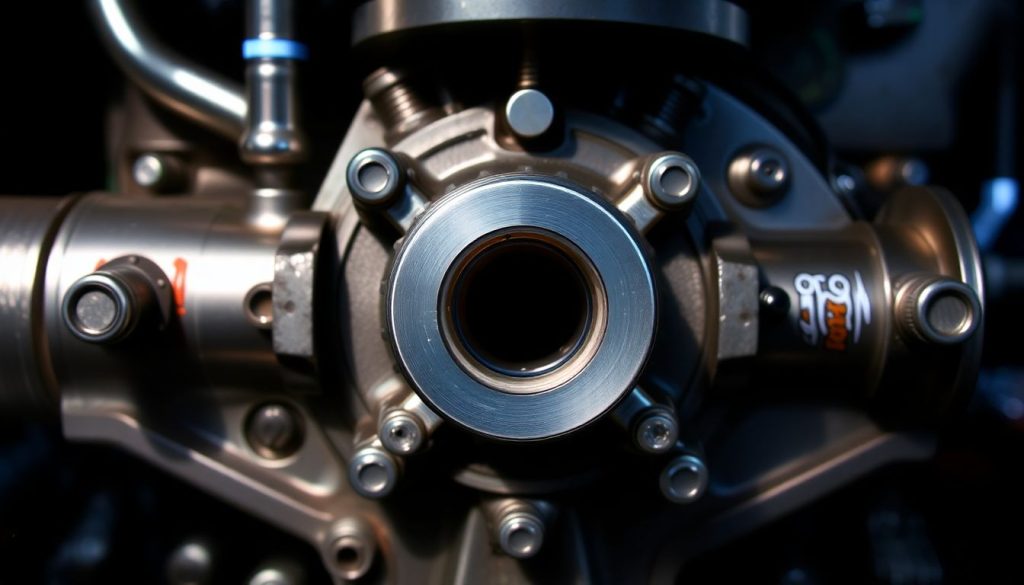
Torque procedures and fastener practices during routine turbo hardware rework on EMD 710 locomotives
You face tight tolerances and critical reliability when reworking turbo hardware on EMD 710 locomotives. Proper torque and fastener care protect power, efficiency, and uptime. This section outlines precise steps, safeguards, and practical tips you can apply in sourcing spare parts from Mikura International. What Torque Values Apply to EMD 710 Turbocharger Mounting Bolts?
Introduction
You face tight tolerances and critical reliability when reworking turbo hardware on EMD 710 locomotives. This guide outlines torque procedures that prevent leaks, misalignment, and gasket failures during routine rework.
Key tasks you will master include defining scope, establishing a robust torque sequence, selecting appropriate lubricants, inspecting fasteners, and performing verification steps. These practices ensure proper seal and fit consistently.
- Define the scope of turbo hardware rework on EMD 710 engines.
- Clarify torque sequencing, lubricant use, and fastener inspection requirements.
- Specify verification steps to ensure proper seal and fit.
- Provide practical tips to reduce rework and downtime.
- Highlight safety and reliability considerations for locomotives.
The turbocharger in EMD 710 engines remains a core reliability component. Proper torque control preserves seal integrity and engine performance across V8, V12, and V16 configurations. Misapplied torque can lead to leaks, gasket damage, and accelerated wear in turbo housings and manifolds.
Mikura International provides specialized, supply chain ready parts and technical guidance for turbo hardware rework. We focus on locomotive applications, aligning with industry standards and tight tolerance requirements to minimize downtime.
| Aspect | Key Considerations |
|---|---|
| Scope | Executive rework of turbo assemblies on EMD 710 family engines |
| Torque discipline | Sequence, stage torque, verification |
| Reliability focus | Seal integrity, gasket stability, vibration resistance |
Related Innovation
| Patent · 2025-08-21 US20250264068A1Operating Modes for Two-Cycle Uniflow-Scavenged Diesel EngineMethods of operating a two-cycle uniflow-scavenged engine, especially at lower loads. The exhaust valves of one or more of the engine’s cylinders may undergo exhaust valve deactivation (EVD), that is, a cylinder’s exhaust valve is activated with a frequency that is less frequent than every engine cycle. | View Patent |
2. Surface Preparation and Fastener Condition Monitoring
Surface prep and fastener condition are crucial for reliable turbo rework on the EMD 710 diesel engine. Poor cleanliness or damaged bolts can ruin seals and load balance. This section provides focused checks to ensure repeatable torque results without duplicating earlier guidance.
Deck and flange surface cleanliness requirements
Ensure mating surfaces are free of oil, grease, carbon, and debris before reassembly. Contaminants compromise gasket seating and seal performance. Use lint-free wipes and approved solvents.
- Inspect deck and flange faces for flatness and burrs; address glazing or chatter marks to prevent uneven seating.
- Remove rust scale with non-abrasive methods to avoid embedding particles into the mating surface.
- Dry surfaces completely before bolt installation to ensure accurate torque readings.
Fastener inspection criteria (stretch, elongation, corrosion)
Assess fasteners for load-bearing capability prior to reuse. Damaged bolts are a common source of turbo assembly failures.
- Measure elongation against manufacturer specs; replace if out of tolerance.
- Inspect threaded portions for cross-threading, galling, or corrosion.
- Discard bolts with coating damage or significant sidewall wear.
Use of thread lubricants vs dry torque scenarios
Lubrication changes friction and torque readings. Apply lubricant only as specified for the selected torque method and fastener type.
- Dry torque is used when lubrication is not approved or surfaces are clean and dry.
- Lubricated torque requires the approved lubricant type and amount; document lubrication for traceability.
- Establish a consistent lubrication protocol to achieve repeatable results across sessions. Use a calibrated torque wrench and follow the recommended torque patterns when securing liners.
For guidance on approved lubricants and torque sequences specific to EMD 710 turbo hardware, reference Mikura International technical bulletins.
3. Bolt Tightening Sequences and Patterning for Turbo Assemblies
Recommended tightening sequence for turbine housings and manifolds
Apply a cross or spiral pattern to distribute clamping force evenly around the joint.
Begin at the flange center and progress outward in a controlled spiral or star pattern.
Ensure all bolt heads engage to the same seating depth on the flange.
- Adopt a star or spiral sequence to minimize bowing and distortion.
- Maintain bolt heads flush with the flange during initial seating.
- Avoid skipping bolts to ensure uniform compression across the joint.
Stage by stage torque application
Implement three progressive stages to establish a stable seal. Do not skip stages.
- Initial snug
- Intermediate
- Final
Adhere to the sequence in each stage to maintain uniform clamp load across the joint. For the fastener torque sequence and specified values, consult reliable resources.
Torque verification methods and acceptance criteria
Use a calibrated instrument and document every result for traceability.
Inspect for uniform contact across mating surfaces after torquing.
- Perform angle or torque verification to confirm pattern integrity.
- Record readings for each bolt and compare to target values.
- Retorque any bolt showing drift within the acceptance window.
4. Torque Tools, Calibration, and Best Practices
Choose torque tools that deliver repeatable results for EMD 710 turbo hardware. Precise control and traceability minimize rework and leaks.
Preferred torque wrench types for turbo hardware
Select calibrated wrenches suited to the small to mid-range fasteners used on EMD 710 turbo assemblies. Ensure clear verification at setpoints is possible.
- Digital click wrenches provide direct torque readouts and data capture for records.
- Click-type wrenches offer tactile confirmation with consistent accuracy across cycles.
- Angle-enabled wrenches help verify pattern integrity during final stage tightening.
Calibration frequency and traceability
Adhere to a disciplined calibration regime so readings reflect true load. Maintain and reference a traceable calibration history.
- Calibrate at shift start or after tool replacement to ensure accuracy.
- Use an accredited lab or in-house standard with a certificate for every calibration event.
- Log calibration date, next due date, and tool serial number on the tool tag.
Breaker bar use and torque wrench considerations during removal
Breaker bars help manage bolt removal without exceeding tool capability. Use them judiciously to protect threads.
- Use breaker bars only to loosen and avoid applying torque beyond the tool’s rated capacity.
- Avoid sudden impacts that can nick threads or bend fasteners during removal.
- Maintain the established removal sequence to prevent binding and stress concentrations.
5. Fastener Materials, Coatings, and Compatibility
Select fasteners that withstand high temperature, vibration, and exhaust gas exposure. Correct material choice reduces seal failures and loosening risks during turbo rework on EMD 710 engines.
6. Rework Procedures: Step-by-Step Torque Managed Workflow
Disassembly precautions and bolt management
Plan disassembly to preserve bolt order and torque history. Tag assemblies and keep bolts with their components. Inspect threads as components come off.
- Document bolt position and length before removal.
- Use organized trays to prevent cross mating of fasteners.
- Inspect threads for galling or rust, clean as needed.
Reassembly with torque control at each stage
Apply torque in staged increments using the approved sequence. Confirm each stage before moving on. Keep mating faces clean.
- Start with snug torque to seat components evenly.
- Proceed to intermediate torque increments per pattern.
- Finish with final torque value and confirm pattern integrity.
Post reassembly verification and leak and fit checks
Run functional checks and seal verification after torquing. Record readings and look for leaks or misalignment. Address any variance quickly.
- Run a leak test on all joints within the turbo housing.
- Check clearances and misalignment with a calibrated gauge.
- Retorque any bolts showing drift within acceptance.
7. Troubleshooting and Common Pitfalls in Turbo Rework
Symptoms of under or over torquing
Detect issues early to avoid damage. Look for uneven joint gaps and creeping leaks. Monitor torque progression for anomalies and note any stall or slower-than-expected readings during tightening.
- Under torquing shows gaps at mating faces and early leaks under load.
- Over torquing causes thread galling and bolt head flattening.
- Mixed results indicate inconsistent torque readings across identical fasteners.
Impact of improper torque on seal integrity and performance
Torque errors compromise seals and cooling paths, reducing efficiency and increasing hot spot risk in service.
- Insufficient clamp load allows seal extrusion and leaks under vibration.
- Excessive load risks bolt failure and turbine interface distortion.
- Uneven torque degrades gasket seating and fuel air control in the turbo path.
Corrective actions and retorquing protocols
Apply disciplined steps to restore integrity and document results.
- Retorque according to the approved pattern after a heat cycle or cooldown.
- Inspect threads and replace damaged fasteners before reassembly.
- Recheck joint clearances with calibrated gauges and confirm proper seal seating.
- Record torque values and sequence outcomes for traceability.
FAQ
What torque method is preferred for EMD 710 turbo bolts?
Use a calibrated torque wrench with a linear scale and follow the stage by stage pattern for turbine housings and manifolds. Verify readings against the documented torque sequence after each stage and ensure threads and mating surfaces are clean for accurate measurements.
- Prefer direct torque measurement over relying on feel alone.
- Use a torque angle method only if the maintenance plan specifically approves it.
- Record each stage value for traceability and audits.
How should thread lubricants influence torque readings?
Lubricants reduce friction and can elevate readings if misapplied. Apply only when the specification calls for it. When used, expect lower friction and adjust target values accordingly. Avoid excess lubrication near seals to prevent contamination.
- Document lubricant type and the application point.
- Avoid mixing lubricants across different fastener types.
- Re-check torque after cooldown if seating conditions change due to lubrication.
What are signs that bolt engagement is insufficient or excessive?
Look for abnormal gaps, misalignment, or creeping leaks. Insufficient engagement manifests as uneven joint faces, while excessive engagement can cause thread galling or bolt head deformation. Compare observations to the approved pattern and tolerances.
| Sign | Action | Notes |
|---|---|---|
| Uneven joint | Retorque per pattern | Check seating and debris |
| Visible galling | Replace fastener | Inspect thread condition |
| Leak at joint | Verify seating and re-torque | Assess gasket integrity |
Conclusion
Key takeaways for safe and reliable turbo hardware rework
You must maintain precise torque control during routine EMD 710 turbo work. Keep fasteners and mating surfaces clean to preserve seals and alignment. Adhere to the documented sequence to minimize distortion and ensure repeatable results.
Use calibrated tools and verify readings after each stage. Plan every step and record results for traceability, audits, and future maintenance.
- Adopt stage-by-stage torque application for all turbo components.
- Maintain clean threads and apply lubrication only as specified.
- Verify joint alignment with calibrated gauges during reassembly.
- Record all torque values and sequence data for maintenance history.
- Replace any damaged fasteners before final assembly.
Quality assurances and supplier support from Mikura International
Mikura International provides documented torque guidance and verified fastener kits tailored to EMD 710 turbo systems. Expect traceable lot numbers, validated coatings, and compatible anti-seize formulations. Our guidance emphasizes compatibility and long service life for turbo assemblies.
| Assurance Area | What Mikura Delivers | Benefit |
|---|---|---|
| Tool calibration | Certified torque wrenches and periodic calibration | Consistent readings across maintenance cycles |
| Fastener quality | High-grade bolts with compatible coatings | Reduced galling and extended life |
| Technical documentation | Patterned torque sequences and acceptance criteria | Clear guidance for audits and compliance |