

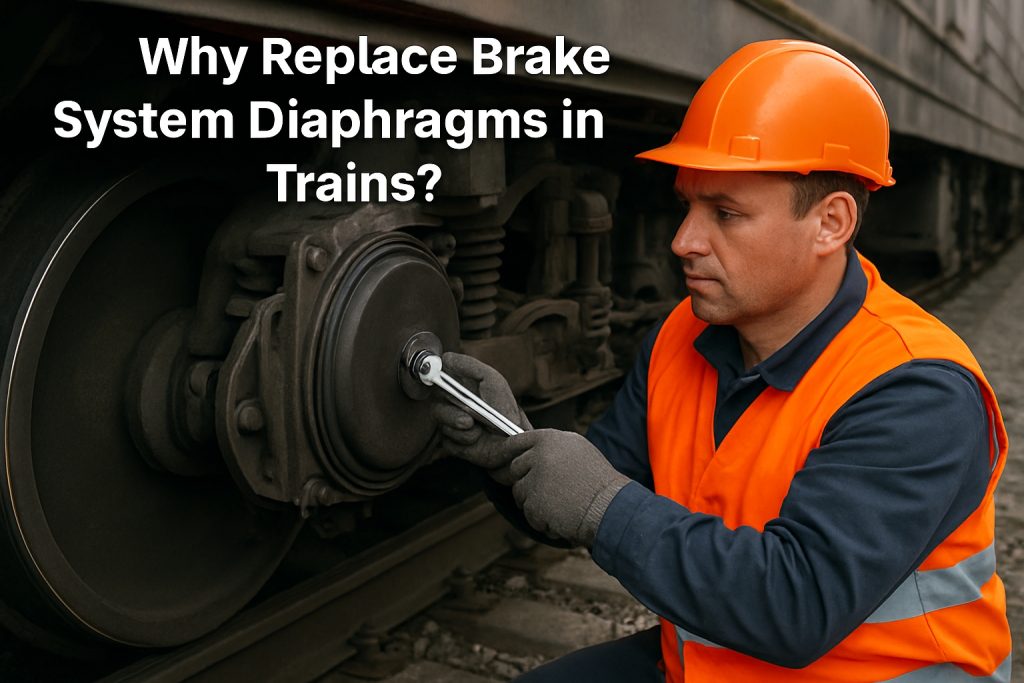
Locomotive brake reliability underpins safety and on-time operations. Diaphragm condition directly affects braking force, modulation, and overall train control. Degraded diaphragms can extend stopping distances and elevate risk during critical maneuvers in Australian rail networks.
Context and relevance for heavy-duty locomotive brake systems
Diaphragms regulate braking pressure in locomotive service. Worn or damaged diaphragms distort force distribution, reducing control. Timely replacement maintains braking consistency and minimizes downtime.
- Consistent braking torque enhances safety under heavy loads.
- Predictable response helps prevent wheel slip during adhesion loss.
- Fewer in-service failures reduce maintenance headcount and costs.
- Standardized parts simplify sourcing for spares managers.
- ISO-certified supply chains ensure traceability and quality.
Mikura International’s role in diaphragm replacement components
At Mikura International, we provide reliable diaphragm replacements tailored for locomotive braking systems, prioritising rapid response, sourcing integrity, and on-time delivery to support critical maintenance windows.
- Dedicated focus on heavy-duty diaphragm components for WABCO-based systems.
- Ethical sourcing with traceability from ISO-certified processes.
- Global service reach with local speed for Australia-based spare parts teams.
1. Safety-Driven Failure Modes of Brake Diaphragms
Common diaphragm wear and rupture scenarios
Diaphragms degrade from cyclic pressure loading and exposure to environmental contaminants. Edge cracking and delamination are typical signals that the seal surface is compromised. Sudden ruptures tend to occur under peak braking demands in older installations where fatigue has accumulated.
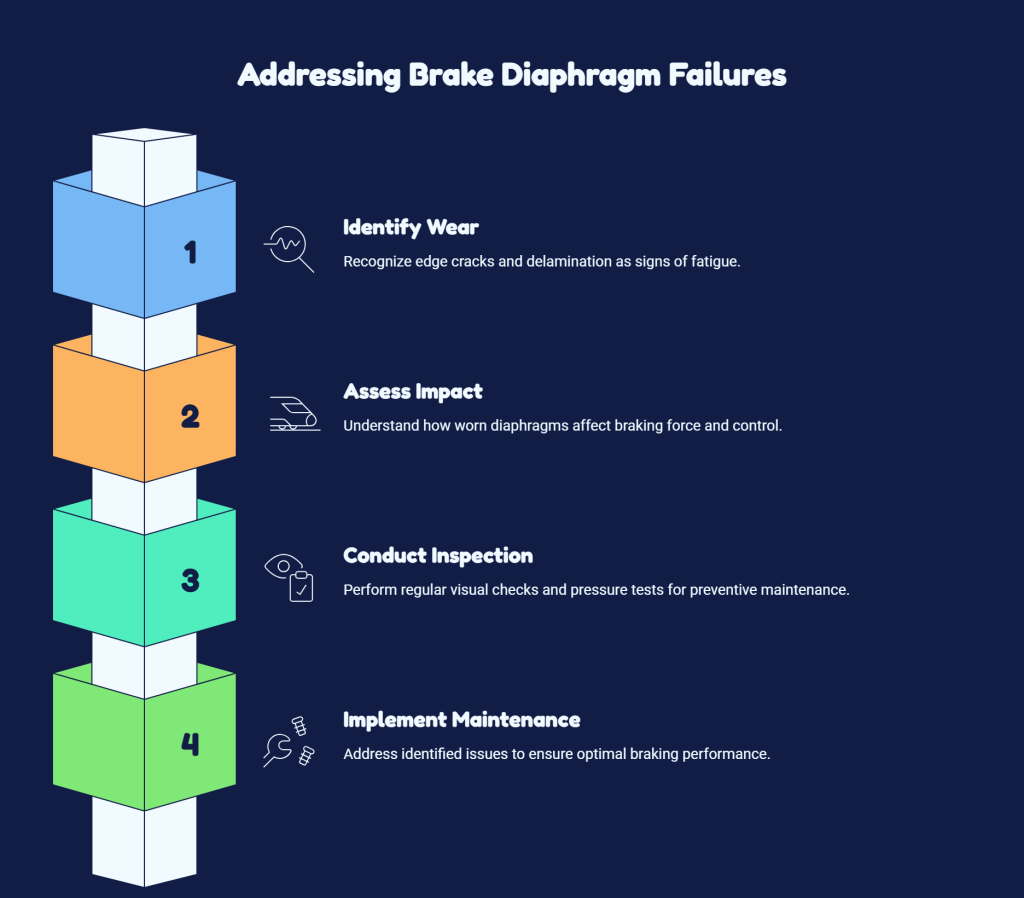
- Edge cracks indicate fatigue and require timely inspection.
- Delamination reduces effective contact area for sealing.
- Grooving from debris or misalignment accelerates wear progression.
Impact on braking force and train control
Worn diaphragms reduce braking torque and impair modulation. This can cause uneven pad loading and increase wheel slip risk. Inconsistent brake application challenges crew control during critical decelerations.
Inspection indicators and preventive signs
Key cues include uneven pressure readings and audible hiss during tests. Regular visual checks for fissures, hard spots, and deformation support proactive maintenance planning.
- Pressure uniformity across channels
- Visible cracks or bulges upon inspection
- Changes in braking response times during tests
2. Performance Benefits of New Diaphragms
Restored braking efficiency and consistency
New diaphragms restore nominal contact pressure and uniform force transmission across brake circuits, yielding predictable wheel deceleration under heavy haul conditions.
- Uniform seal contact reduces lag during high load stops.
- Consistent pedal feel supports driver confidence in critical maneuvers.
- Eliminates uneven wear patterns that can degrade long term performance.
Improved response times and modulation
Fresh diaphragms respond promptly to pressure changes, enabling finer control of braking force. This improves adhesion management on varying track conditions and reduces abrupt deceleration.
- Faster pressure build and release enhances traction control.
- Smoother modulation supports seamless coast-to-stop transitions.
- Better repeatability across multiple braking cycles.
Reduced risk of brake system imbalance
Replacing diaphragms with new parts minimizes asymmetry between brake channels, promoting balanced pressure distribution during rapid operational changes.
- Lower incidences of uneven braking across bogies.
- Decreased need for corrective adjustments during service.
- Enhanced safety margins in horizon-limited braking scenarios.
| Attribute | Old Diaphragm | New Diaphragm |
|---|---|---|
| Braking efficiency | Variable | Consistent |
| Response time | Slower | Faster |
| System balance | Prone to imbalance | Balanced |
3. Economic Rationale for Replacement
Cost of failures vs. cost of preventative replacement
Preventative replacement reduces the likelihood of on track failures and unscheduled downtime. Worn diaphragms can trigger sudden braking issues that necessitate emergency actions, making budgeting for spares and maintenance more predictable.
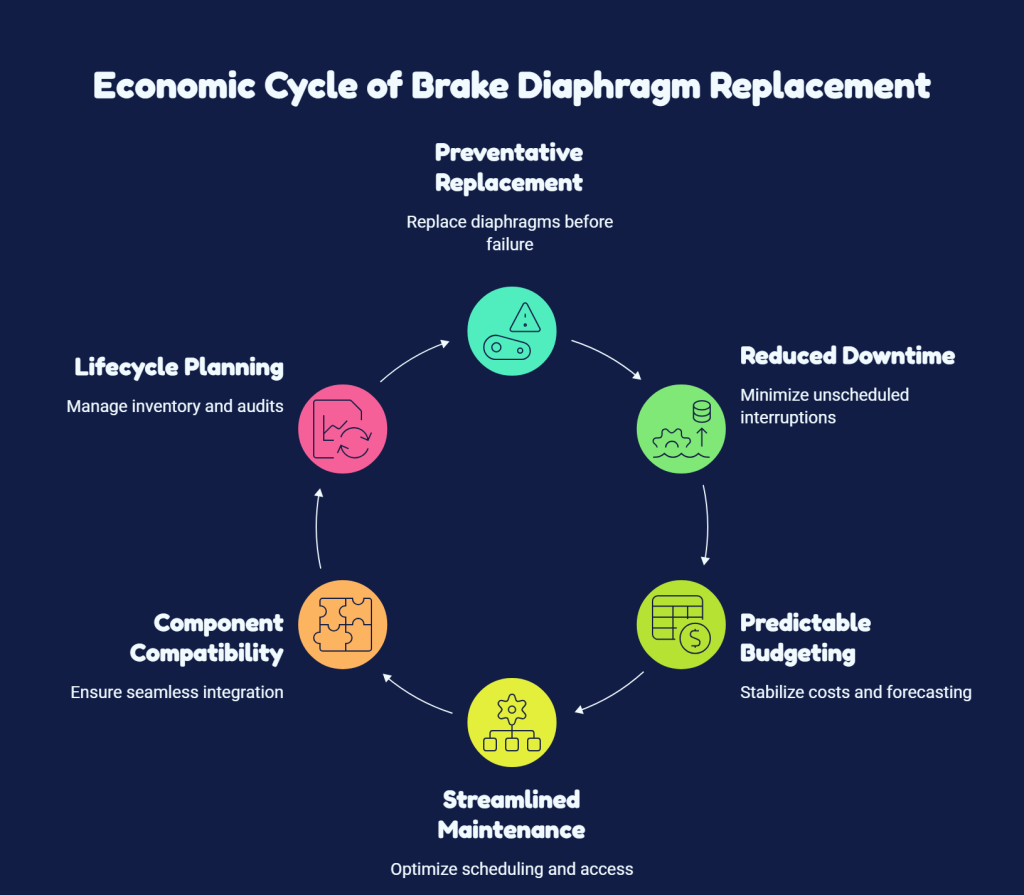
- Save on unplanned detours and penalties
- Avoid rush orders for emergency diaphragm replacements
- Stabilize procurement cycles for budget forecasting
Downtime reduction and maintenance scheduling
New diaphragms streamline maintenance planning and shorten brake system access time. Regular intervals improve fleet readiness for peak operations.
- Shorter service windows during planned downtimes
- Improved on-time performance for yard and port tasks
- Better alignment with track access and crew rosters
Component compatibility and lifecycle considerations
Modern diaphragms are designed for long lifecycles across legacy and current fleets, lowering compatibility risk and part count variability. Lifecycle planning supports steady spares inventories and auditability.
- Standard interfaces simplify stocking
- Improved forecast accuracy for wear-out cycles
- Clear provenance supports audits and compliance
| Economic Factor | Preventative Replacement | Reactive Replacement |
|---|---|---|
| Downtime impact | Low to moderate | High |
| Spare part cost predictability | High predictability | Low predictability |
| Maintenance scheduling ease | Front-loaded planning | Last-minute adjustments |
4. Material Technologies in Modern Diaphragms
Elastomeric vs. composite diaphragm materials
Elastomeric diaphragms employ rubber-like polymers to provide flexible sealing surfaces, while composite diaphragms combine fibers with resin matrices to achieve greater stiffness and more uniform load distribution under high pressure.
- Elastomeric: strong sealing capability with favorable cost profile.
- Composite: higher stiffness, improved heat management.
- Selection should align with expected brake circuit pressures and operating temperatures.
Wear resistance and temperature tolerance
Diaphragms are designed to withstand abrasive dust, exposure to oil mist, and sustained high-load cycles. Temperature tolerance helps prevent softening or creep during extended duty cycles.
- Wear life improves with optimized material formulation.
- Performance remains stable across elevated temperatures.
- Additives enhance resilience against micro-ruptures and environmental factors.
Compatibility with EMD, GE, and ALCO braking systems
Material selection targets reliable interfacing with both legacy and modern actuators, preserving deformation patterns that maintain cross-brand balance.
- Standardized mounting interfaces simplify stocking and maintenance.
- Material specs align with cross-brand pressure tolerances.
- Traceability supports after-sales service and audits.
| Aspect | Elastomeric | Composite |
|---|---|---|
| Sealing performance | Strong | Moderate to strong |
| Temperature range | Lower | Higher |
| Wear life | Good | Excellent |
5. Installation Best Practices for Train Brakes
Pre-installation inspection and tooling
Perform a targeted pre-installation review of the diaphragm housing and mating surfaces for signs of wear or damage. Confirm tool calibration and compatibility with the specific WABCO kit in use.
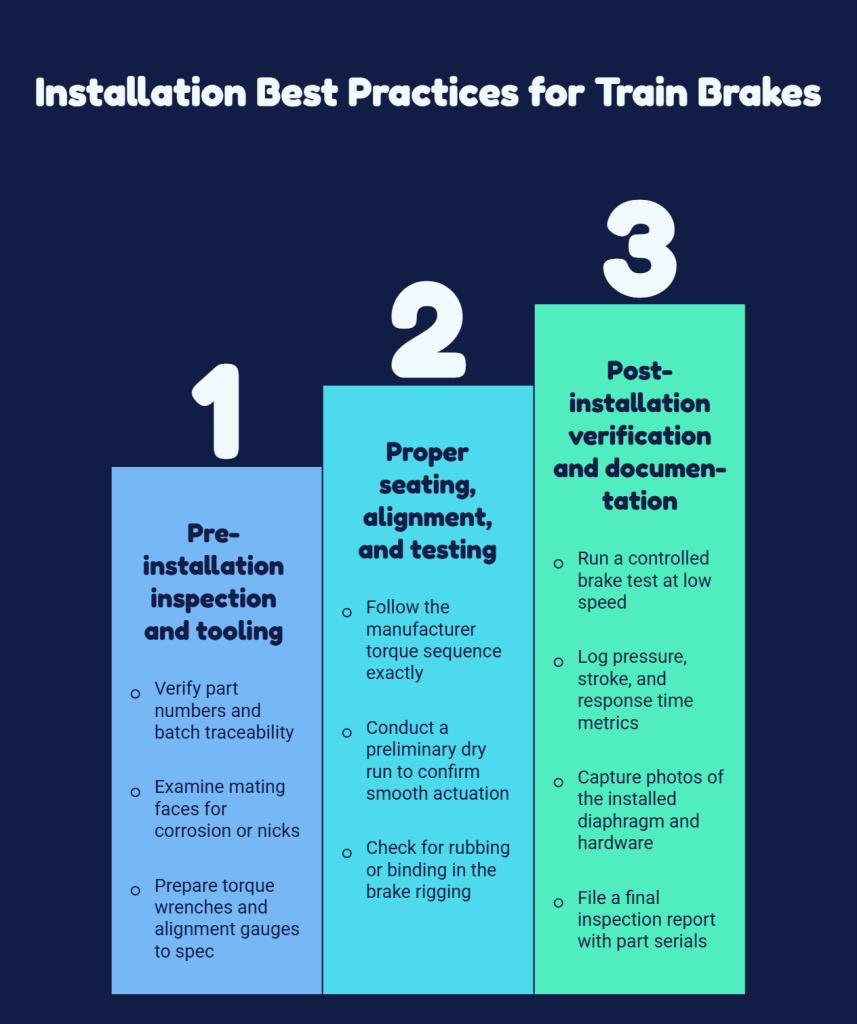
- Verify part numbers and batch traceability
- Examine mating faces for corrosion or nicks
- Prepare torque wrenches and alignment gauges to spec
Proper seating, alignment, and testing procedures
Seat the diaphragm to full contact without introducing misalignment. Align to the actuator shaft and verify seating with light pressure before full compression.
- Follow the manufacturer torque sequence exactly
- Conduct a preliminary dry run to confirm smooth actuation
- Check for rubbing or binding in the brake rigging
Post-installation verification and documentation
Verify functional performance and log results for traceability. Capture critical metrics and imagery for records.
- Run a controlled brake test at low speed
- Log pressure, stroke, and response time metrics
- Capture photos of the installed diaphragm and hardware
- File a final inspection report with part serials
6. Diagnostics and Testing After Replacement
Pressure and leakage tests
Perform post-installation pressure hold tests to verify seal integrity and sustained pressure. Record stabilization time and readings to support traceability.
- Isolate the circuit and apply nominal operating pressure
- Monitor for any pressure drift or transient fluctuations
- Inspect seals and joints for signs of leakage under load
Brake rigging and canalization checks
Verify that brake rigging operates smoothly after diaphragm seating and that canalization routes remain unobstructed within tolerances.
- Assess linkage clearances and pivot points
- Validate sensor signals for proper canal flow
- Confirm freedom from rubbing or binding across the full stroke
Performance run and safety certifications
Execute a controlled performance run to confirm brake force profiles align with baseline data. Ensure compliance with all safety standards and complete certification documentation.
| Test Area | Key Metric | Acceptance |
|---|---|---|
| Pressure stability | Steady within 2% | Pass |
| Actuation timing | Within planned window | Pass |
| Leakage check | No detectable leaks | Pass |
7. Supplier Considerations: Choosing Mikura International Diaphragms
Quality assurance and traceability
Quality starts at the source. Each diaphragm batch undergoes rigorous testing to meet industry standards. We maintain full traceability from material receipt to final delivery.

- Certified material lots with tamper-evident records
- Lot-based inspection reports available on request
- Non-conformance tracking and corrective actions documented
Cost-effective sourcing and lead times
Smart procurement supports predictable maintenance budgeting. Mikura International aligns pricing with demand cycles and maintains stock for critical routes.
- Competitive unit pricing for bulk orders
- Flexible incoterms to suit Australian operations
- Dedicated safety stock to minimize downtime
Support, warranties, and global service reach
Local support complements our global coverage. Comprehensive warranties simplify lifecycle management and after-sales service.
- On-site technical support in major Australian ports
- Warranty terms aligned with diaphragm lifecycle expectations
- Access to a global service network for rapid replacements
| Consideration | Mikura International Advantage |
|---|---|
| Quality control | End-to-end QA with traceable batches |
| Lead times | Optimized stock levels and fast dispatch |
| Support | Local and global service team with clear warranties |
FAQ
What is the primary purpose of replacing WABCO locomotive diaphragms?
The diaphragm acts on brake chamber actuation and pressure transfer. Replacing worn diaphragms maintains predictable braking forces and reduces the likelihood of uneven brake application.
When should diaphragms be replaced?
Replace at signs of wear, cracking, or deformation. Schedule during planned maintenance to minimize downtime.
What inspection indicators signal imminent replacement?
- Visible cracks or blistering on the diaphragm surface
- Uneven seating or reduced actuation sensitivity
- Excessive wear at attachment points
- Pressure drift or leakage in the brake circuit
How does replacement affect braking performance?
New diaphragms restore consistent stroke, improve response, and reduce brake imbalance during rapid deceleration.
What installation checks ensure a reliable fit?
- Pre-installation inspection of seating surfaces
- Correct diaphragm alignment with the chamber
- Post-installation pressure hold tests and a controlled brake run
How should diaphragms be sourced for Australian operations?
Source from a supplier with documented QA, traceability, and regional support like Mikura International. Confirm compatibility with EMD, GE, and ALCO systems.
Can I combine diaphragm replacement with other brake maintenance?
Yes. Align diaphragm replacement with routine brake rigging checks and canalization inspections to optimize downtime and document all actions.
| Question | Answer |
|---|---|
| Primary purpose | Ensure proper actuation and pressure transfer |
| Replacement signals | Wear, cracks, deformation, leakage |
| Performance impact | Restored consistency and response |
Conclusion
Replacing brake system diaphragms on locomotives ensures predictable braking behavior and reduces variability in performance across operating conditions. This supports safer train operations and helps align maintenance with planned schedules.
Key takeaways to guide your next steps:
- Plan diaphragm replacement during scheduled maintenance to minimize unscheduled downtime.
- Prioritise diaphragms with proven wear resistance and high temperature tolerance for harsh rail environments.
- Verify compatibility with EMD, GE, and ALCO brake systems to prevent seating or actuation issues.
- Maintain complete inspection records for traceability and audits.
- Leverage local Australian support for on-site verification and rapid replacements.
| Aspect | Impact |
|---|---|
| Safety | Reduces misapplication risk and improves control accuracy |
| Reliability | Restores stroke consistency and response timing |
| Maintenance | Provides predictable lead times for planning |
For ready access to certified diaphragms and expert guidance, Mikura International supports Australian operations with traceable quality and dependable delivery.