

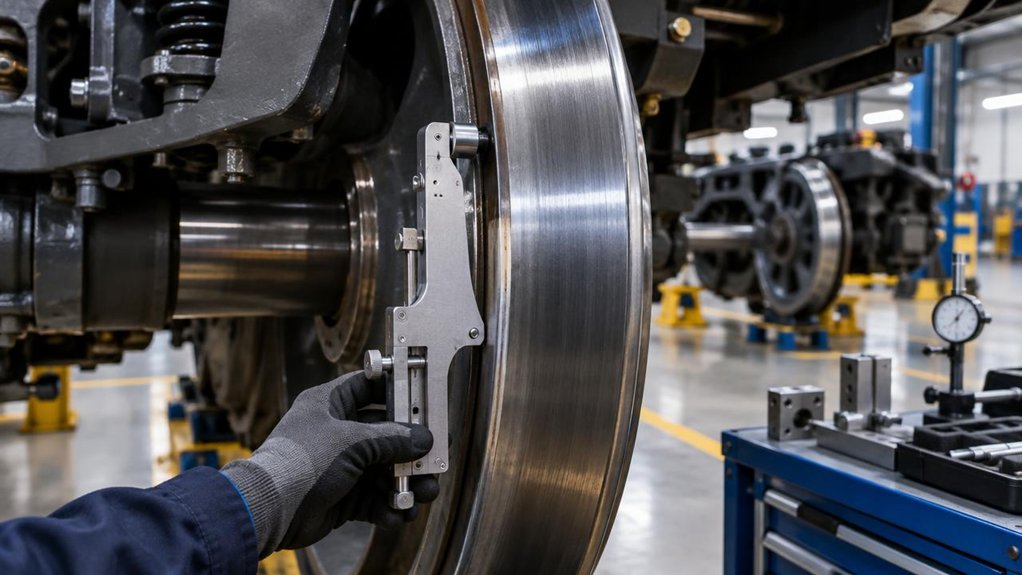
For the EMD F125, measure wheel profiles and track wear at consistent locations, using calibrated gauges and ultrasonic profiling to track flange geometry, tread wear, and hollowing. Set reprofiling triggers below approved limits, accounting for measurement uncertainty, adhesion trends, route, load, and weather. Reprofile only when condition warrants it, then confirm geometry and test adhesion and flange behavior under representative service conditions. Record post-machining baselines and use wear trends to adjust maintenance intervals; the following practices show how to apply this process reliably.
Measure Locomotive F125 Wheel Profiles and Track Wear
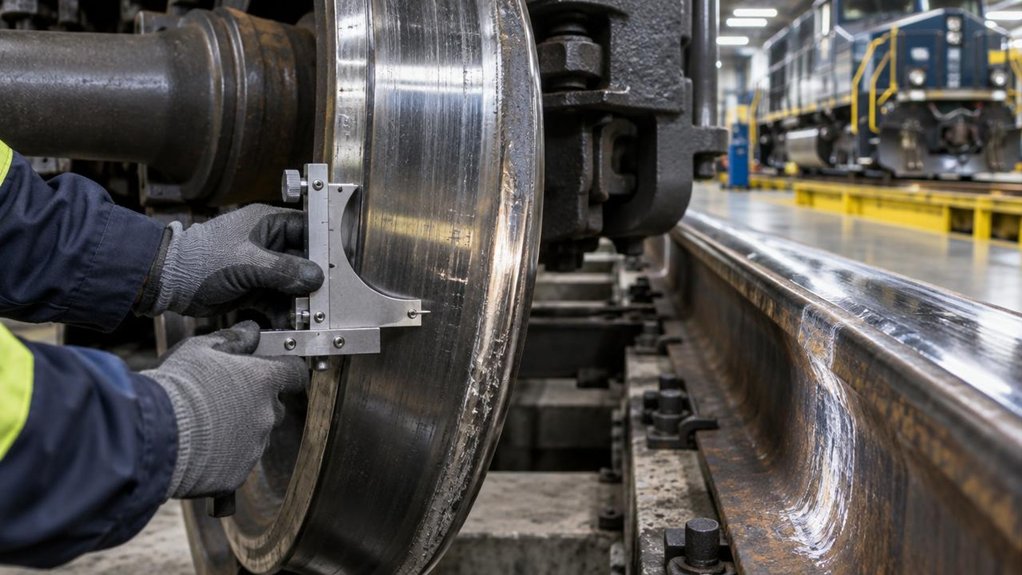
Measure your EMD F125 wheel profiles at consistent intervals, recording flange thickness, tread wear, and hollowing. Assess track wear alongside wheel measurements to identify interacting causes of uneven contact. You’ll use these findings to prioritize maintenance and limit avoidable downtime.
Measure Wheel Profiles
Accurate profile measurements help you detect wheel wear before it affects an EMD F125 Locomotive’s ride, traction, or track interaction. Measure each wheel at consistent intervals and record results against its maintenance history. Select gauge selection criteria suited to the wheel geometry and required tolerances. Establish a datum reference before positioning the instrument, so readings align across inspections. Perform calibration checks before use; instrument drift can obscure small but operationally significant changes.
An Ultrasonic profile system can capture flange height, thickness, and tread contour without relying solely on manual readings. Follow the manufacturer’s procedure, keep contact points clean, and document measurement locations. Compare paired wheels and evaluate changes against approved limits, not isolated readings. Maintain measurement repeatability by using the same setup, method, and trained personnel. When results approach limits, verify them before planning corrective wheel work.
Assess Track Wear
Because wheel and rail wear develop together, assess track condition alongside wheel profiles on the EMD F125 Locomotive. You’ll connect railhead condition with wheel rail interaction to identify causes of flange wear, not just symptoms. Use Risk based inspection to prioritize curves, switches, and high-tonnage routes.
| Track finding | Operational concern |
|---|---|
| Gauge-face wear | Flange contact intensifies |
| Corrugation | Vibration threatens comfort |
| Gauge variation | Derailment margins narrow |
Apply track geometry mapping to locate alignment, gauge, and crosslevel deviations. Pair these records with lateral force monitoring, where available, to flag demanding curves and emerging risks. Compare findings across inspection cycles; isolated readings can mislead, while trends guide timely maintenance. You’ll then coordinate wheel reprofiling with track interventions, reducing avoidable wear and service disruption. When budgets constrain access, rank defects by severity and exposure, documenting uncertainty for procurement and engineering decisions. This evidence-based approach protects crews and preserves fleet availability.
Set Reprofiling Thresholds for Adhesion and Flange Wear
For an EMD F125 Locomotive, set reprofiling thresholds by tracking wheel geometry, flange wear, and adhesion performance against approved limits. Establish Adhesion Baselines from comparable operating conditions, including route, load, weather, and braking demand. This helps you distinguish profile-related slip from changing service conditions.
Define Flange Limits using the applicable maintenance standard and measured flange thickness, height, and angle. Set Wear Thresholds below those limits to allow for measurement uncertainty and inspection intervals. Don’t rely on a single reading; use consistent Profile Sampling methods and calibrated equipment across wheelsets.
Compare measurements over time, then assess them alongside wheel-slip events, traction performance, and maintenance records. Set Reprofiling Triggers when trends approach approved limits or adhesion degrades persistently, not solely when a dimension crosses its maximum. Document thresholds, sampling frequency, and escalation criteria so engineering and procurement teams can plan inspections and parts availability. Review them when routes, duty cycles, or fleet condition change, while preserving traceable records for each locomotive and wheelset.
Reprofile Wheels to Restore the Optimal Profile
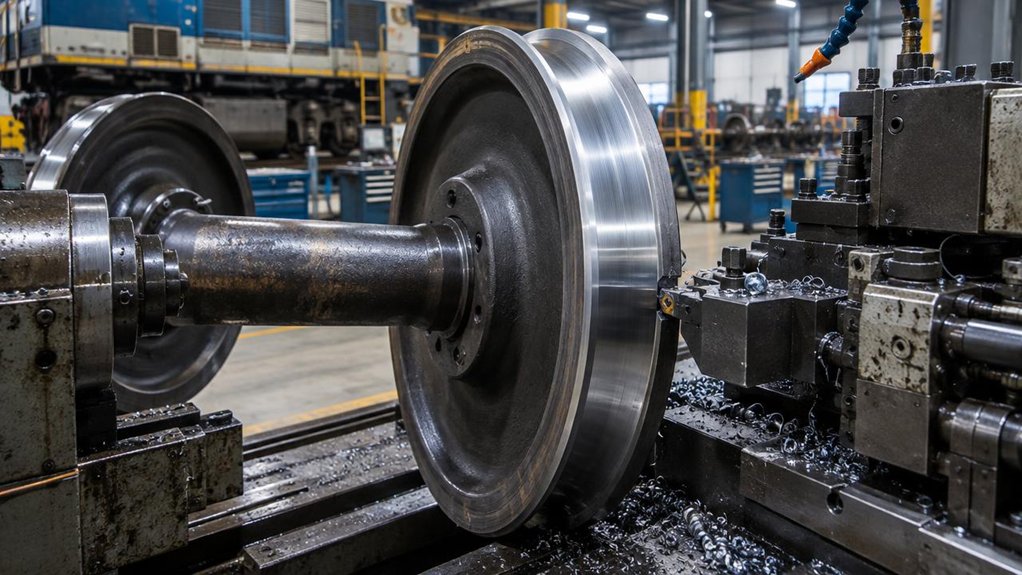
Measure wheel-profile wear against established limits to identify when the EMD F125 Locomotive needs reprofiling. Reprofile within those limits to restore the target tread and flange geometry. This helps you maintain predictable adhesion and reduce avoidable wheel wear.
Measure Profile Wear
Regularly measure wheel profile wear on the EMD F125 Locomotive to identify flange, tread, and hollow-wear changes before they affect tracking or contact stresses. You’ll build comparable records by applying consistent methods at scheduled inspections.
- Use ultrasonic depth checks and radial wear mapping to quantify tread loss and locate uneven wear.
- Apply flange height gauges and profile contour logging to track flange geometry against baseline measurements.
- Conduct tread roughness testing and gauge face measurement to assess surface condition and wheel-rail contact.
- Perform wear debris inspection and hotspot localization; use photo metrology trials and laser scan comparison to validate changes.
Record wheel position, measurement conditions, and results in a traceable log. You’ll spot developing trends sooner, prioritize inspections, and support maintenance planning. Mikura International understands fleet constraints; reliable measurements help you manage risk without unnecessary locomotive downtime. Keep methods consistent across inspection teams and shifts.
Reprofile Within Limits
Once wear records show the profile nearing its service limit, reprofile the EMD F125 Locomotive wheels to restore the specified contour. Confirm Reprofiling tolerances against approved maintenance criteria before machining. Measure gage wear, tread geometry, and remaining rim thickness; excessive material removal can shorten wheel life and alter operating performance.
| Check | Action | Purpose |
|---|---|---|
| Profile | Verify dimensions | Restore contour |
| Rim | Limit removal | Preserve service life |
After cutting, inspect the wheelset for dimensional consistency and balance. Correct wheelset balancing issues before returning the locomotive to service. Document measurements, machining depth, and acceptance results for traceability and future wear comparisons. Complete safety inspections, including checks for cracks, surface defects, and secure assembly. If the wheel falls outside limits, hold it for engineering review rather than assuming further machining will correct the condition. This controlled process supports adhesion and limits flange wear.
Validate Adhesion and Flange Performance After Reprofiling
After reprofiling an EMD F125 Locomotive, verify adhesion and flange performance under representative operating conditions. Use a controlled route, consistent loading, and documented weather conditions to make comparisons meaningful. Your post reprofiling checks should combine instrument readings with crew observations, not rely on impressions alone.
- Run Validated adhesion tests across relevant speeds and tractive effort levels; record wheel speed and locomotive response.
- Complete wheel slip verification during acceleration, noting onset, duration, and recovery under comparable rail conditions.
- Conduct a flange squeal review through curves, identifying location, speed, load, and sound severity.
- Use trackside performance logging to capture wheel behavior, rail conditions, and any abnormal vibration.
Compare results with pre-reprofiling baselines and applicable operating limits. If adhesion falls or flange noise persists, inspect profile geometry, wheelset alignment, and contact conditions before returning the locomotive to unrestricted service. Document findings and corrective actions for engineering review. This evidence helps you distinguish profile-related effects from changing track conditions, supporting safe, reliable operation without assuming reprofiling alone resolves every concern.
Monitor Wheel Profiles and Adjust Maintenance Intervals
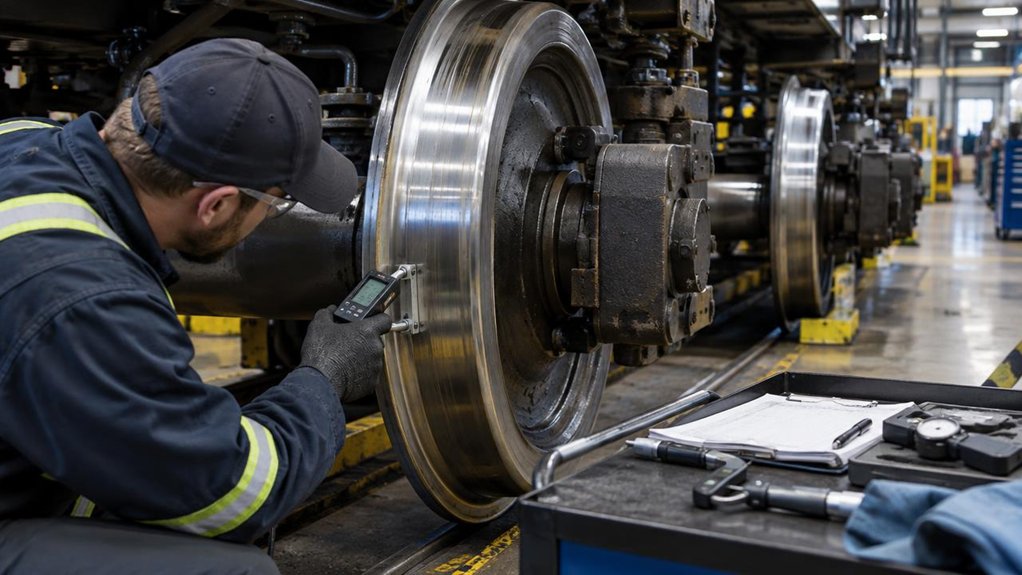
Use post-reprofiling adhesion and flange results to set a profile-monitoring baseline for the EMD F125 Locomotive. Record wheel geometry, route conditions, mileage, and observed slip or flange contact. This baseline helps you distinguish normal wear from changes requiring intervention.
Collect Rolling contact data during representative service, then compare it with periodic profile sampling. Keep measurement locations and methods consistent so you can identify meaningful changes across axles and inspections. Check sensor calibration before each measurement cycle; inaccurate readings can distort wear rates and lead to premature or delayed work.
Use trend forecasting to estimate when profiles may approach your engineering limits. Account for operating duty, curves, traction demands, and seasonal variation rather than relying on fixed mileage alone. Review results with maintenance and operations teams, especially when adhesion declines or flange wear accelerates.
Adjust maintenance scheduling to measured condition and available shop capacity. Document thresholds, decisions, and outcomes. This disciplined feedback loop supports reliable locomotive availability while helping you control reprofiling frequency, labor demand, and wheelset life.
Frequently Asked Questions
How Does Axle-Load Variation Affect EMD F125 Wheel-Profile Selection?
Axle load changes contact stress, traction, and flange forces, so you should match EMD F125 profile selection to measured loading across axles. Higher loads can increase wheel wear rate and flange damage, while uneven loads may reduce adhesion balance during acceleration and braking. Assess axle-load distribution, wheel dimensions, and track condition variability together. Then choose a profile that supports stable contact and acceptable wear, and verify performance through regular inspections and operating data.
Which Wheel-Profile Records Should Procurement Teams Retain for Audits?
Retain Record retention files covering each EMD F125 wheelset’s profile measurements, reprofiling dates, material removal, axle position, and inspection results. Your wheel history logs should identify measurement methods, equipment calibration, responsible personnel, and acceptance limits. Keep traceability documentation linking wheelsets to purchase orders, certificates, and locomotive installation records. Preserve audit trails for approvals, deviations, corrective actions, and replacements. These records provide compliance evidence, support maintenance decisions, and help you verify supplier and fleet requirements during audits.
How Can Seasonal Rail Conditions Influence Wheel-Profile Management Plans?
Seasonal conditions shift wheel-profile priorities, so adjust inspections and reprofiling intervals accordingly. Like a changing tide, Temperature cycling alters steel behavior, while adhesion variability and track moisture affect traction and braking. Monitor seasonal corrugation through measured vibration and profile data; don’t rely on visual checks alone. In winter, schedule winter grinding only when inspection confirms it’s needed. You’ll protect flange geometry, maintain reliable adhesion, and avoid unnecessary material removal across your locomotive fleet.
What Safety Precautions Apply During Onboard Wheel-Profile Inspections?
Before inspecting an EMD F125 locomotive wheel profile, protect yourself, isolate hazards, and control movement. Wear inspection PPE use appropriate to site rules, including eye protection, gloves, and high-visibility clothing. Apply secure isolation: confirm the locomotive’s status, secure it against movement, and follow lockout procedures. Perform brake system checks before access. Remove or contain wheel debris to prevent slips and measurement errors. Maintain derailment risk awareness, and never enter pinch zones or work beneath unsupported equipment.
How Should Wheel-Profile Specifications Be Coordinated Across an F125 Fleet?
Keep every F125 on the same page: establish a controlled baseline wheel profile, then validate it against route conditions. Fleet standardization reduces inconsistent wear and simplifies procurement. Use cross region testing to check adhesion, flange wear, and track compatibility before approving changes. Maintain spec versioning control so shops apply the correct revision. Apply data driven tuning to measured results, and confirm interoperability alignment with maintenance systems and inspection tools. Review exceptions regularly.