

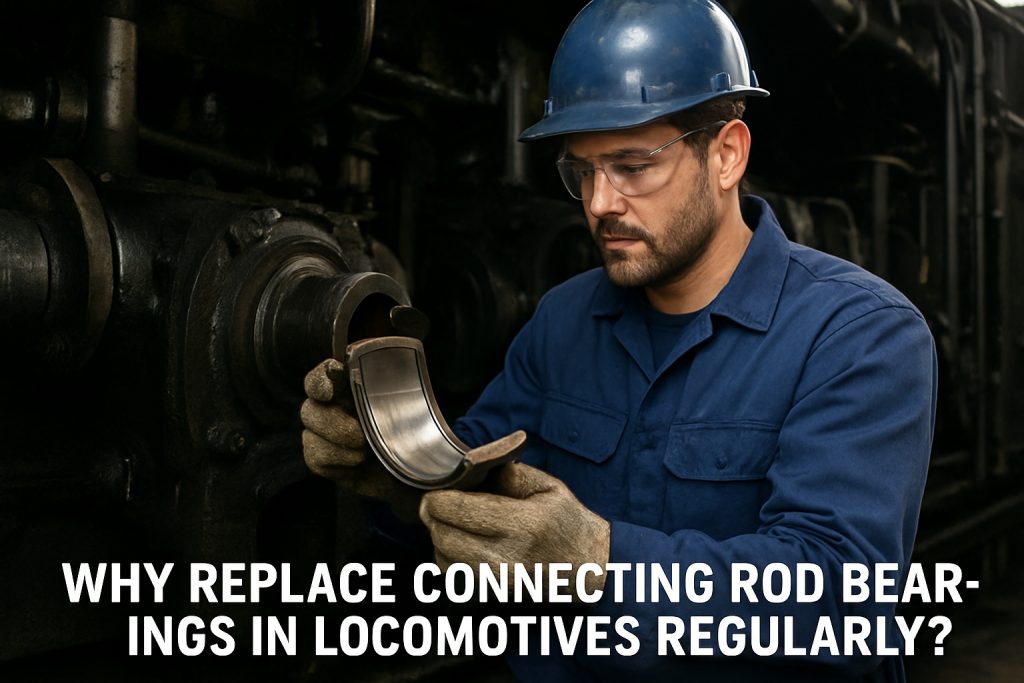
Regular bearing replacement protects engine health and uptime, supporting predictable maintenance windows in Australia.
Connecting rod bearings wear from heat, pressure, and friction. Wear changes clearance, impacting oil flow and lubrication efficiency, which can lead to knocking, reduced power, and unexpected outages.
In EMD locomotives, bearing wear is common due to heavy duty cycles. Proactive replacement minimizes unplanned downtime and costly repairs by preserving bearing geometry and oil film integrity.
Regular replacement also maintains fuel efficiency. Worn bearings elevate friction and parasitic losses, lowering locomotive performance during long hauls and steep climbs.
With Mikura International you gain access to genuine EMD Locomotive Connecting Rod Bearing parts and reliable on‑time delivery to support tight maintenance windows in Australia.
Key benefits of regular replacement:
- Consistent engine clearance and oil film integrity.
- Reduced risk of bearing seizure or main journal damage.
- Lower maintenance cost over life cycle.
- Improved reliability for critical running days and shunting tasks.
Below are practical steps to plan bearing replacement effectively.
- Inspect bearings at planned overhauls. Look for scoring, pitting, or excessive play.
- Check oil quality and filtration. Contaminants accelerate bearing wear.
- Confirm correct bearing type and fitment from Mikura International. Use torque specs from OEM manuals.
- Verify crankcase clearance and oil clearance targets after installation.
- Schedule downtime to align with maintenance windows in your Australian operations.
- Document part numbers and batch data for traceability and future sourcing.
- Validate engine performance after fitment with test run data and monitoring.
We at Mikura International provide technical support, genuine EMD Locomotive Connecting Rod Bearing options, and guaranteed on-time delivery for Australia customers.
Overview of locomotive engine reliability and maintenance
Locomotive reliability hinges on disciplined maintenance and timely component exchanges. Mikura International emphasizes predictable service windows, steady performance, and clear maintenance planning. Regular checks support durable operations and reduce surprise outages.
Role of connecting rod bearings in engine performance
Connecting rod bearings govern crankshaft motion and oil-film integrity. Worn bearings enlarge clearances, raise friction, and can elevate vibration and transient power loss. Timely bearing replacement helps preserve compression stability and engine smoothness.
Mikura International and commitment to dependable components
At Mikura International, we deliver reliable locomotive components with precision and speed. Our ISO-aligned standards and global sourcing network support on-time delivery for ALCO, EMD, GE, and WABCO engines. We back our EMD Locomotive Connecting Rod Bearing offerings with proven performance.
Expert Insight
“Locomotive reliability hinges on proactive maintenance and timely part replacements; for connecting rod bearings, maintaining tight clearances and stable oil pressure through timely replacements preserves compression, reduces vibration, and minimizes downtime.” , Industry Analyst
1. Preventing Bearing Wear Through Scheduled Replacement
Understanding wear mechanisms in EMD Locomotive Connecting Rod Bearings
Wear in EMD Locomotive Connecting Rod Bearings progresses with load cycles and oil film degradation. Surface fatigue reduces shell and journal integrity, widening clearances. Contaminants accelerate abrasive wear and scuffing, diminishing oil retention.
Thermal cycling and seating deficiencies create hot spots. Hot spots elevate friction and hasten wear. Differential cooling stresses can spall bearing material and cause misalignment.
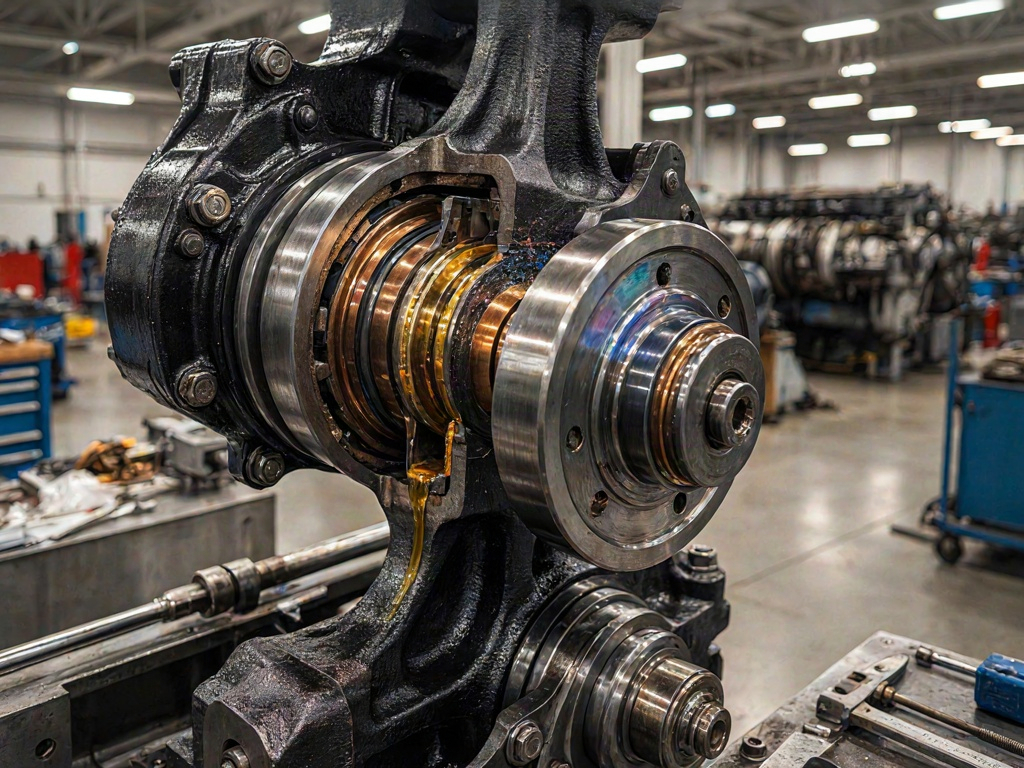
Recommended replacement intervals for heavy-duty diesel engines
- Follow manufacturer-backed inspection intervals based on service hours or miles.
- Use defined hour thresholds with margins for severe duty as per OEM guidance.
- Maintain detailed maintenance records for accurate scheduling and traceability.
Table: comparative interval guidance by operating regime
| Operating regime | Suggested interval (hours) | Notes |
|---|---|---|
| Balanced duty cycle | 2,000-3,000 | Regular service, stable loads |
| Heavy haul/peak loads | 1,000-2,000 | Increased wear potential |
| Idle/low cycles | 3,000-4,000 | Less dynamic stress but oil degradation risk |
2. Reducing Risk of Catastrophic Engine Damage
Consequences of Failed Bearings on Locomotive Operation
Failed bearings disrupt crankshaft motion and oil clearance. This can cause sudden power loss and unplanned downtimes. Loss of lubrication accelerates wear on journals and rods. Severe damage may trigger engine seizure or misalignment.
- Unscheduled maintenance interrupts rail services
- Higher risk of secondary failures in pistons and rods
- Increased repair costs and longer rebuild times
How Early Replacement Mitigates Crankshaft and Piston Damage
Replacing bearing pairs before excessive wear preserves shaft alignment and oil film stability. Early changes reduce friction hotspots and thermal stress. Consistent bearing condition supports predictable engine performance under variable loads.
- Maintains compression integrity across cylinders
- Minimizes crankpin and piston ring wear
- Lower probability of catastrophic crankshaft fracture
| Aspect | Impact of Delaying Replacement | Impact of Timely Replacement |
|---|---|---|
| Oil film integrity | Degrades, increasing metal-to-metal contact | Preserved, reducing wear channels |
| Crankshaft alignment | Drifts under load | Maintained, stabilizing RPM and torque |
| Piston dynamics | Higher stress on rings and lands | Lower stress, smoother combustion |
3. Enhancing Fuel Efficiency and Emissions Compliance
Impact of bearing condition on engine efficiency
Properly conditioned EMD Locomotive Connecting Rod Bearings minimize parasitic losses, reducing friction during high load cycles. This yields steadier torque delivery and helps maintain a consistent oil film that supports efficient cylinder charging.
- Reduced mechanical resistance enhances thermal efficiency.
- Stable clearances promote uniform combustion and power output.
- Lower friction helps keep the engine cooler under heavy loads.
Maintenance and emissions compliance
Regular bearing replacement supports predictable combustion timing and emission control. Maintaining tolerances prevents irregular fuel burn that can raise NOx and particulates. Timely maintenance aligns with OEM guidance and Australian standards for locomotives.
- Consistent lubrication aids stable exhaust gas temperatures.
- Controlled combustion minimizes anomalies that trigger recalls or non-compliance alerts.
- Documented bearing service history assists audits and reporting.
| Parameter | Poor bearing condition | Optimal bearing condition |
|---|---|---|
| Frictional loss | Elevated | Minimized |
| Fuel efficiency | Declines under load | Maintains high efficiency |
| Emissions consistency | Inconsistent | Stable across cycles |
4. Cost Management and Total Cost of Ownership
Short-term vs long-term costs of regular bearing replacement
Regular bearing replacement incurs upfront costs for parts and skilled labor. Plan for periodic stocking and dedicated maintenance windows to minimize disruption. Over the life cycle, scheduled replacements reduce the risk of large, unplanned expenditures.
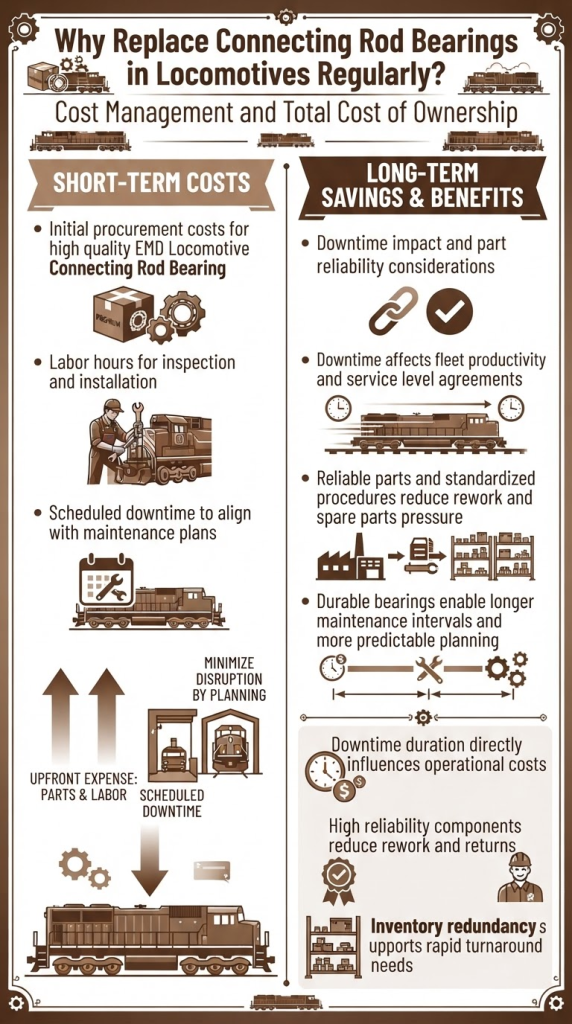
- Initial procurement costs for high quality EMD Locomotive Connecting Rod Bearing
- Labor hours for inspection and installation
- Scheduled downtime to align with maintenance plans
Downtime impact and part reliability considerations
Downtime affects fleet productivity and service level agreements. Reliable parts and standardized procedures reduce rework and spare parts pressure. Durable bearings enable longer maintenance intervals and more predictable planning.
- Downtime duration directly influences operational costs
- High reliability components reduce rework and returns
- Inventory redundancy supports rapid turnaround needs
| Aspect | Short-term cost | Long-term cost |
|---|---|---|
| Parts and materials | Moderate, recurring | Low to moderate, predictable |
| Labor and downtime | Scheduled window costs | Minimized due to fewer failures |
| Risk of unscheduled repair | Low with regular replacement | Significantly reduced over time |
5. Selection of High-Quality Replacement Bearings
Criteria for choosing Mikura International components
Choose Mikura International for proven reliability and regional support. Prioritize bearings that meet OEM tolerances and material standards. Ensure traceable lot labeling and documented quality checks.
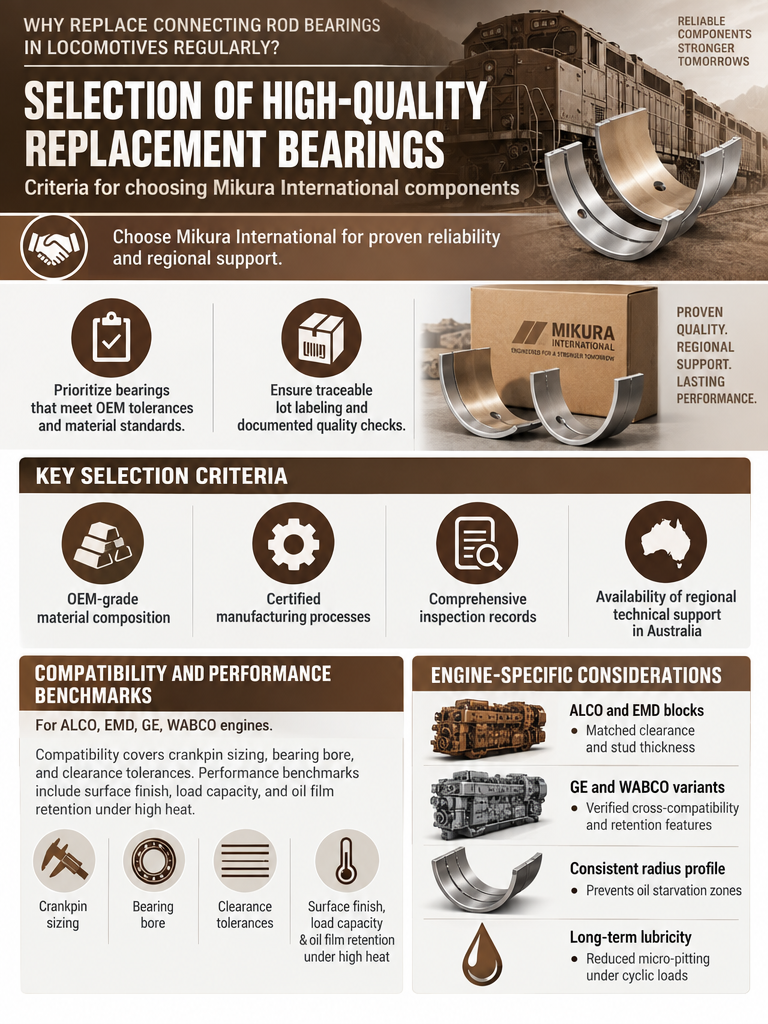
- OEM-grade material composition
- Certified manufacturing processes
- Comprehensive inspection records
- Availability of regional technical support in Australia
Compatibility and performance benchmarks for ALCO, EMD, GE, WABCO engines
Compatibility covers crankpin sizing, bearing bore, and clearance tolerances. Performance benchmarks include surface finish, load capacity, and oil film retention under high heat.
- ALCO and EMD blocks: matched clearance and stud thickness
- GE and WABCO variants: verified cross-compatibility and retention features
- Consistent radius profile to prevent oil starvation zones
- Long-term lubricity and reduced micro-pitting under cyclic loads
| Engine Family | Key Compatibility Notes | Performance Benchmark |
|---|---|---|
| ALCO | Crankpin diameter and bearing bore alignment | Stable clearance under full-load cycles |
| EMD | Oil film retention and surface finish | Low wear rate over service interval |
| GE | Retainer and fitment compatibility | Consistent torque delivery |
| WABCO | Cross-compatibility with shared housings | Predictable lubrication performance |
6. Installation best practices and inspection protocols
Pre-installation checks and tolerances
Prepare a clean work area with proper tooling and a controlled environment. Verify the EMD Locomotive Connecting Rod Bearing part numbers align with the specification. Confirm crankshaft journals and connecting rod housings are within OEM tolerances before fitting.
- Inspect lubrication passages for obstructions
- Verify journal surface finish meets minimum roughness requirements
- Check bearing tangs, chamfers, and oil holes for correct orientation
Post-installation testing and routine inspections
After installation, run functional checks to confirm seating and oil film formation. Execute a controlled engine cycle and monitor clearance indicators and oil pressure trends.
- Record initial oil pressures at idle and rated RPM
- Use a bore scope to inspect bearing seats for micro-movement
- Schedule routine inspections at defined service intervals to detect wear progression
| Activity | Key check | Acceptable condition |
|---|---|---|
| Pre-installation | Journal condition, bearing fit | Within OEM tolerances, clean seating |
| Post-installation | Oil film and clearance | Stable film, no abnormal play |
7. Predictive Maintenance Tools and Data
Using vibration, oil analysis, and thermal data to time replacements
Collect baseline vibration spectra for each EMD locomotive family and monitor for shifts that indicate bearing wear or looseness.
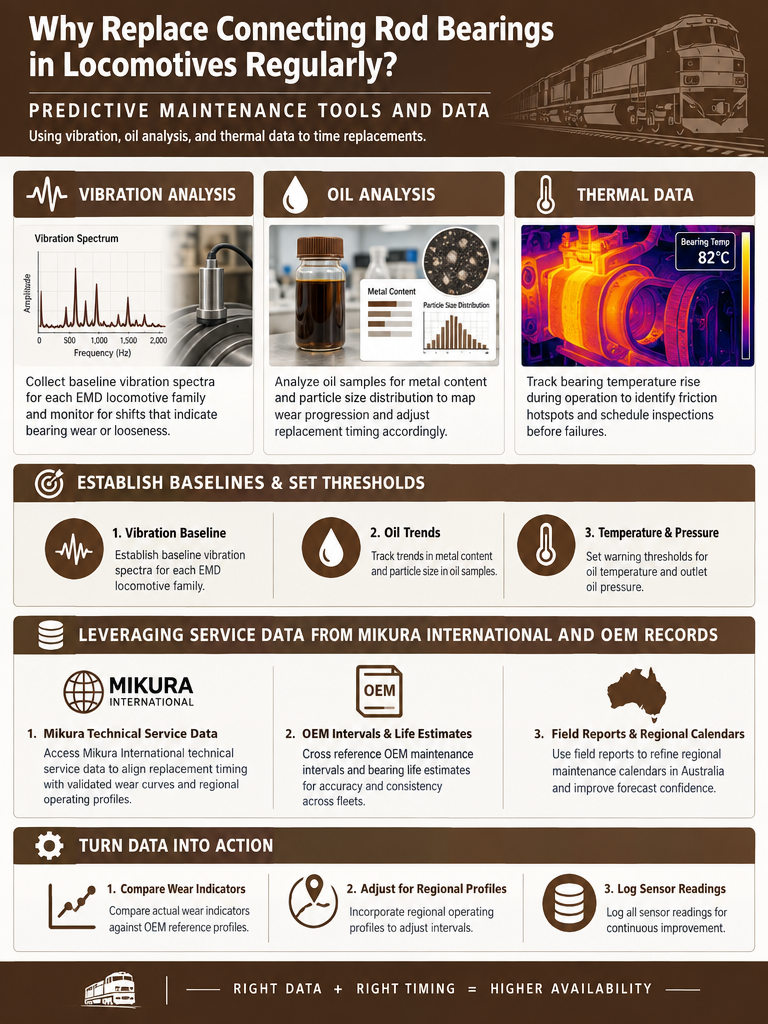
Analyze oil samples for metal content and particle size distribution to map wear progression and adjust replacement timing accordingly.
Track bearing temperature rise during operation to identify friction hotspots and schedule inspections before failures occur.
- Establish baseline vibration spectra for each EMD locomotive family.
- Track trends in metal content and particle size in oil samples.
- Set warning thresholds for oil temperature and outlet oil pressure.
Leveraging service data from Mikura International and OEM records
Access Mikura International technical service data to align replacement timing with validated wear curves and regional operating profiles.
Cross reference OEM maintenance intervals and bearing life estimates for accuracy and consistency across fleets.
Use field reports to refine regional maintenance calendars in Australia and improve forecast confidence.
- Compare actual wear indicators against OEM reference profiles.
- Incorporate regional operating profiles to adjust intervals.
- Log all sensor readings for continuous improvement.
FAQ
What is the purpose of replacing the EMD Locomotive Connecting Rod Bearing regularly?
- Prevent wear progression that can lead to crankshaft misalignment and reduced efficiency.
- Preserve the integrity of the oil film and minimize friction under high load cycles.
How do I determine replacement timing?
- Follow OEM-backed service intervals based on engine family, load profile, and operating hours.
- Correlate observed wear indicators with vibration and oil analysis data to refine timing.
What are signs of bearing wear to watch for?
- Unusual engine noise or mild misfire during heavy operation.
- Rising oil consumption and shifts in oil pressure trends.
Which Mikura International bearings are recommended?
- Bearings certified for cross compatibility with EMD locomotives and related engines.
- Components designed to retain oil film under high temperatures and loads.
What is the impact on downtime and maintenance costs?
- Regular replacements reduce unscheduled outages and extend engine life.
- Plan downtime windows to minimize disruption and align with scheduled maintenance.
Expert Insight
“Regular bearing replacement, guided by engine family, load profile and service hours, protects crankshaft efficiency by preserving oil film and reducing wear during high-load cycles.” , Industry Analyst
Conclusion
Concluding the guide, Mikura International emphasizes dependable replacement bearings as a maintenance discipline that supports sustained locomotive availability in Australia. The focus remains on aligning part selection and service timing with OEM guidance and regional operating patterns.
Key takeaways:
- Scheduled replacements mitigate unexpected outages and help protect crankshaft and bearing assemblies under heavy duty cycles.
- High quality Mikura components sustain oil film integrity and reduce parasitic losses during extended load profiles.
- Evidence-based maintenance planning, supported by vibration and oil analysis, informs precise timing and reduces downtime.
Our team continues to provide precise part matching, regional logistics support, and technical guidance to keep locomotives in productive service, with a clear focus on reliability and traceability.