

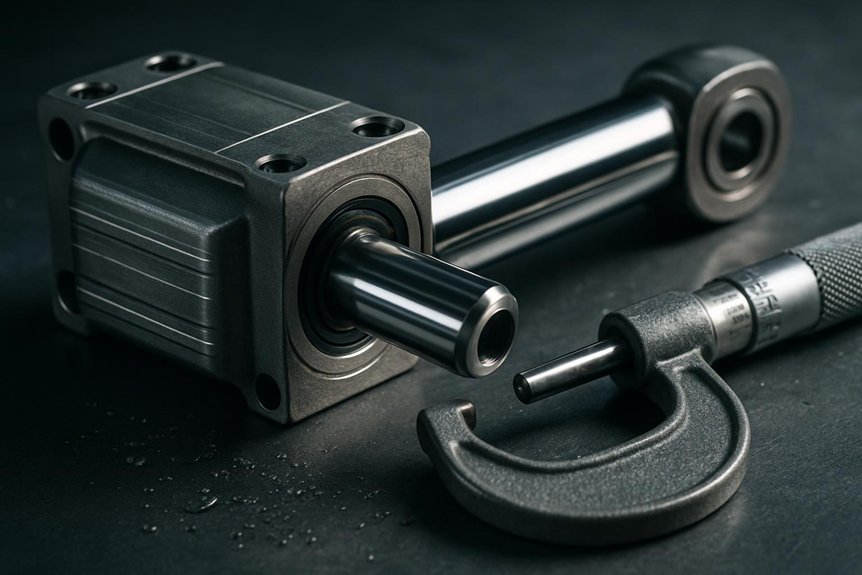
Materials, Manufacturing & Quality Standards in Damper Assembly Production
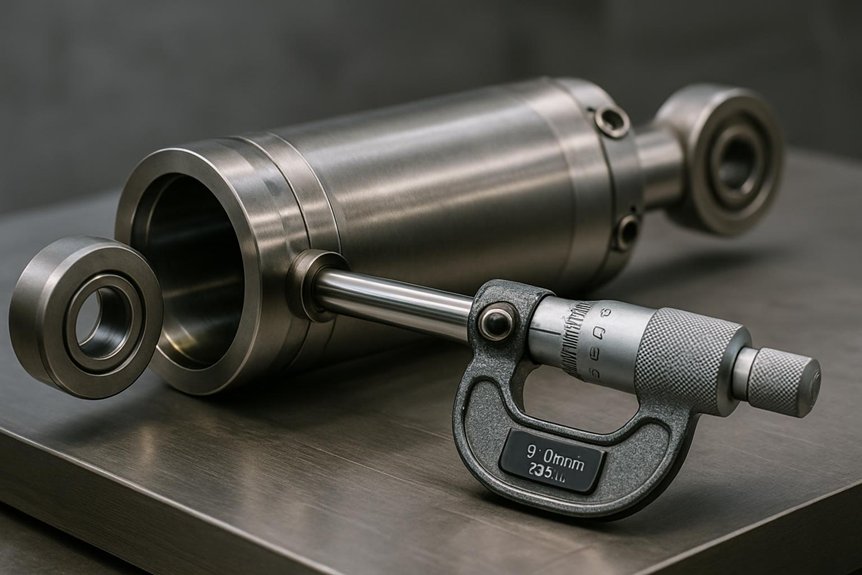
Because locomotive damper assemblies endure extreme vibration and thermal cycling, manufacturers must select materials that meet rigorous mechanical standards. You’ll find that high-grade alloy steels and heat-treated elastomers form the backbone of reliable damper construction. Hydraulic damping design plays a critical role in ensuring consistent performance across varying rail conditions. Precision matters here, so you can’t disregard tight tolerances during machining and assembly.
Dynamic load testing validates whether components withstand repeated stress cycles without degradation. Every batch you produce should undergo environmental qualification to confirm resistance against moisture, dust, and temperature extremes. Corrosion fatigue analysis further ensures long-term structural integrity under harsh operating environments.
Lubricant compatibility checks guarantee that internal seals and hydraulic fluids won’t degrade prematurely. You’ll want to verify these checks during every production run. Quality control teams typically combine these methods to certify assemblies for real-world deployment. Together, these standards help you deliver dampers that perform reliably across diverse locomotive platforms and demanding rail networks worldwide.
Introduction to Damper Assembly Manufacturing
Damper assemblies form a critical link between locomotive stability and passenger safety. You rely on these components to absorb dynamic loads across varying rail conditions. Every assembly must withstand repeated stress cycles without compromising structural integrity. Manufacturers need processes that guarantee consistent performance across thousands of operational hours. Precision engineering determines whether a damper survives its intended cycle life. Tight dimensional tolerance ensures proper fit within bogie and suspension systems. Metrology verification confirms each component meets exact specifications before deployment. You can’t overlook fatigue testing when validating long-term durability under real-world stress.
Precision engineering and rigorous fatigue testing determine whether a damper assembly truly survives its intended cycle life.
Consider these foundational elements when evaluating damper assembly manufacturing:
- Fatigue testing replicates years of rail vibration within controlled lab conditions.
- Cycle life data helps you predict maintenance intervals accurately.
- Dimensional tolerance directly impacts alignment and vibration damping efficiency.
- Metrology verification catches deviations before assemblies reach the field.
- Failure mode analysis identifies weak points before they cause operational disruptions.
Materials Used in Damper Assembly Construction
Damper assembly performance depends on three critical material categories working in harmony. You’ll find steel and alloy components forming the structural backbone, while elastomer seals prevent fluid leakage under extreme pressure. Hydraulic fluid properties complete the equation, ensuring consistent damping force across temperature variations and operational demands.
Metal Components (Steel/Alloy)
Since locomotive dampers endure extreme mechanical stress, manufacturers rely on high-grade steel and alloy compositions for cylinders and pistons. You’ll find chromium-molybdenum steel selected for its fatigue strength under cyclic load conditions. Alloy selection depends on operational temperature ranges and mechanical requirements. Precision machining ensures surface integrity, reducing friction during high-speed operation. Corrosion resistance becomes critical when dampers face moisture, dust, and harsh environmental conditions. Dimensional tolerance requirements guarantee consistent performance across every damper unit produced.
- Chromium-molybdenum alloys deliver exceptional fatigue strength for piston rods.
- Nickel-based coatings enhance corrosion resistance against moisture and chemical contact.
- Precision grinding maintains surface integrity on critical cylinder bore surfaces.
- Careful alloy selection balances weight, strength, and thermal stability requirements.
- Strict dimensional tolerance control ensures seamless, reliable assembly fit.
Sealing and Elastomer Materials
Because locomotive dampers operate under constant thermal cycling, seal materials must resist heat degradation and oil exposure simultaneously. You’ll find nitrile and fluorocarbon compounds dominate this application due to their oxidation resistance. These polymers withstand thermal aging without losing elasticity or structural integrity. Oil permeability becomes critical since damper fluid constantly contacts sealing surfaces. Manufacturers select elastomers with low absorption rates to prevent swelling or degradation. Proper elastomer compression ensures seals maintain contact pressure across temperature fluctuations. You need materials that don’t harden or crack under repeated compression cycles. Seal longevity directly impacts damper reliability and maintenance intervals. Engineers specify compounds tested against extended thermal exposure and oil immersion standards. Choosing certified elastomers reduces leakage risks and extends service life notably.
Hydraulic Fluid Properties
While elastomers seal the system, hydraulic fluid determines actual damping performance. You’ll need fluid with consistent viscosity temperature behavior across extreme operating ranges. Rapid heat cycling makes thermal oxidation resistance critical for reliability. Engineers properly specify pour point control to prevent fluid thickening in cold climates. Viscosity index enhancement resists thinning at high temperatures, ensuring stable damping. You should also require fluid compatibility testing before final approval.
- Select fluids with proven viscosity temperature behavior for consistent damping across seasons.
- Prioritize thermal oxidation resistance to avoid sludge formation during extended service.
- Ensure pour point control supports reliable cold-start performance in harsh climates.
- Apply viscosity index enhancement to maintain damping consistency under thermal stress.
- Conduct thorough fluid compatibility testing to confirm long-term seal and material integrity.
Manufacturing Process Overview
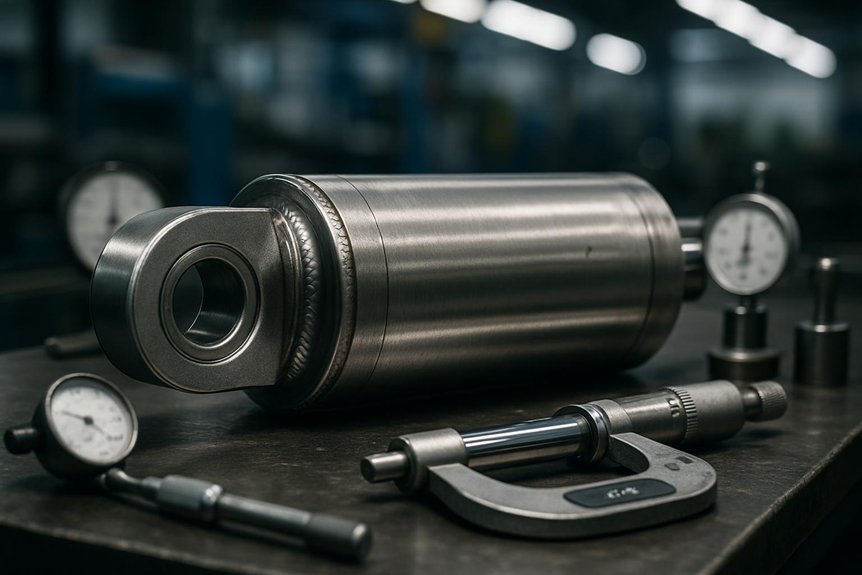
Manufacturing locomotive damper assemblies demands careful control at every production stage. You’ll find that precision machining, surface treatment, and proper sealing each play a vital role in performance. These processes work together to ensure durability under harsh operating conditions.
Precision Machining of Cylinder and Piston
Since damper performance hinges on tight clearances, cylinder and piston machining demands exceptional precision. You’ll rely on CNC systems to achieve micron-level tolerance control across every bore. Skilled operators verify concentricity measurement at multiple stages, ensuring the piston travels true within the cylinder. Surface finish quality directly affects seal integrity and long-term wear resistance.
- Tolerance control keeps bore diameters within microns for consistent damping force.
- Surface finish reduces friction and prevents premature seal degradation.
- Concentricity measurement confirms alignment between piston and cylinder axes.
- Cylinder honing creates a cross-hatch pattern that retains lubrication.
- Piston ring fitting ensures proper compression and leak-free operation.
Engineers depend on these controls to guarantee reliable locomotive damper performance.
Surface Treatment and Coating
Precision machining alone won’t protect damper components from corrosion and environmental stress. You’ll need surface treatments that provide enduring protection against rust and wear. Surface profiling ensures proper adhesion before any coating application begins. Technicians apply corrosion inhibitors to prevent oxidation on exposed metal surfaces. Galvanic protection prevents electrochemical reactions between dissimilar metals within the assembly. Primer selection depends on the base material and expected operating environment. Engineers choose primers that bond well with subsequent protective layers. Coating inspection verifies thickness, uniformity, and adhesion strength before deployment. Procurement specialists should verify certification records for each coated batch. This layered approach extends component life and reduces maintenance costs notably. Rail engineers rely on these treatments to meet stringent durability requirements. It’s essential for long-term performance.
Assembly and Sealing Process
Assembling a damper requires careful ordering of every internal component within tight tolerances. You start with cylinder honing to achieve a smooth, precise bore surface. Piston alignment follows, ensuring smooth stroke movement without friction. Seals get installed next, using calibrated tools for consistent fitment. Torque control governs every fastener, preventing under- or over-tightening. Finally, leak verification confirms that the assembly holds pressure under simulated load.
- Cylinder honing creates a uniform surface for consistent sealing.
- Piston alignment reduces wear and prevents lateral stress effectively.
- Seal installation uses controlled pressure to avoid deformation.
- Torque control maintains structural integrity across all joints.
- Leak verification validates performance before dispatch.
This process guarantees dependable operation across demanding rail conditions. Standards-compliant procedures ensure consistent, repeatable outcomes for every unit produced.
Quality Standards and Certifications
You need damper assemblies that meet strict regulatory benchmarks before deployment. RDSO specifications define the baseline requirements for Indian Railways applications. International standards like ISO and IS further validate material integrity and performance consistency across global markets.
RDSO Specifications
Because Indian Railways operates under stringent safety mandates, RDSO sets the benchmark for damper approval. RDSO approval is required before any damper assembly enters service on Indian rail networks. Their testing protocol covers load cycles, temperature extremes, and vibration resistance. Every batch undergoes conformity assessment against published technical specifications. Design validation confirms your damper meets dimensional and performance criteria specific to locomotive classes.
Consider these critical RDSO compliance areas:
- Approval requires submission of detailed manufacturing drawings and material certificates.
- Documentation control ensures traceability across every production batch you supply.
- Testing protocols include endurance runs simulating years of operational stress.
- Conformity assessment verifies damping force curves against RDSO-approved tolerances.
- Validation reports must accompany each design revision you propose.
Meeting these specifications isn’t optional—it’s mandatory for market access.
International Standards (ISO/IS)
Reliability underpins every damper assembly exported to global rail markets. ISO documentation provides the framework for consistent quality across manufacturing stages. You’ll find material traceability requirements embedded within ISO 9001 and IATF-aligned rail protocols. Manufacturers must maintain verifiable records linking raw materials to finished components. Welding procedures follow ISO 3834 guidelines, ensuring structural integrity in damper housings and mounting brackets. Nondestructive testing methods, including ultrasonic and dye penetrant inspection, confirm internal soundness without compromising components. Dimensional metrology practices validate tolerances specified under ISO GPS standards, guaranteeing interchangeability across damper assemblies. Compliance with these frameworks assures procurement teams of consistent performance. Global buyers rely on ISO-certified processes when sourcing critical locomotive components internationally. Precision, documentation, and verification remain the foundation of trustworthy damper manufacturing.
Importance of Standardization in Manufacturing
Since damper assemblies operate under extreme mechanical stress, standardization becomes mandatory for locomotive fleets. You must every component to meet strict tolerances before entering service. Compliance isn’t just paperwork; it’s the backbone of operational safety. Railway networks depend on consistent quality across every damper unit, regardless of manufacturing location. Engineers must trust that specifications remain identical, batch after batch. This consistency prevents catastrophic failures during high-speed operations.
- Interchangeable Parts let maintenance teams swap components across different locomotive units seamlessly.
- Component Compatibility ensures dampers integrate properly with existing suspension systems without modification.
- Dimensional Consistency guarantees every part fits precisely, eliminating costly on-site adjustments.
- Traceable Documentation provides complete manufacturing history, supporting audits and regulatory inspections.
- Safety Validation confirms each assembly withstands operational stress before deployment on tracks.
Standardized manufacturing protects your fleet’s reliability over decades of service. Procurement specialists gain confidence knowing parts meet globally recognized benchmarks reliably consistently.
Conclusion: Manufacturing Excellence as the Foundation of Reliability
Manufacturing excellence isn’t a checkbox; it’s the standard that keeps locomotives running safely. You can’t compromise on damper assembly quality without risking system-wide failures. Every material choice you make affects vibration fatigue testing outcomes downstream. Rigorous testing protocols validate your design’s durability under real operating conditions. Consistent quality control supports safety compliance verification across every production batch you deliver.
Your commitment to standards directly influences maintenance interval planning for rail operators. Well-manufactured dampers extend service life, reducing unplanned downtime and repair costs. Field reliability metrics consistently confirm that superior manufacturing translates into fewer failures. Tracking these metrics helps you refine processes and materials continuously.
Choosing quality-driven manufacturing also supports lifecycle cost optimization for fleet operators. You reduce long-term expenses when components meet stringent durability benchmarks. Precision engineering isn’t just about performance; it’s about trust. When you prioritize manufacturing excellence, you build locomotives that operators can rely on, mile after mile.
Frequently Asked Questions
How Long Do Damper Assemblies Typically Last Before Replacement?
Like a heartbeat that eventually slows, your damper assemblies won’t last forever. You’ll typically see 8-10 years of service before fatigue lifespan concerns demand replacement. Service intervals depend heavily on environmental stressors your locomotive faces—temperature extremes, vibration, and moisture accelerate wear. Following strict inspection schedules helps you catch degradation early. You’ll extend component life greatly by adhering to proper maintenance practices, including timely lubrication and seal checks recommended by manufacturing standards.
What Causes Premature Failure in Locomotive Damper Assemblies?
You’ll typically see premature failure stem from seal degradation, which lets fluid escape and reduces damping efficiency. Vibration fatigue often cracks mounting brackets after prolonged operational stress. Contamination ingress introduces abrasive particles that accelerate internal wear. Misalignment wear develops when you don’t maintain proper bogie alignment, straining seals unevenly. Environmental corrosion attacks exposed components, especially in humid or coastal rail corridors. You should monitor these factors closely to prevent unexpected downtime and costly repairs.
Can Dampers Be Customized for Specific Locomotive Models?
Yes customized dampers won’t compromise reliability when built to strict engineering protocols. You’ll receive assemblies designed around your locomotive’s exact interface dimensions and load requirement. Fitment verification confirms every mounting point matches your specifications precisely. Installation compatibility checks eliminate costly retrofitting during commissioning. Your maintenance crews won’t encounter unexpected alignment issues on-site. Precision engineering guarantees standards-compliant performance across diverse locomotive platforms, giving you dependable, tailored solutions every single time.
Which Storage Conditions Extend Damper Assembly Shelf Life?
You’ll maximize shelf life by storing damper assemblies in temperature controlled environments, ideally between 15-25°C. Moisture exposure must stay minimal, so you’ll need sealed packaging with desiccants. Vibration isolation prevents seal degradation during storage transit or handling. You should verify chemical compatibility between storage materials and damper seals to avoid unwanted reactions. Corrosion prevention coatings on exposed metal surfaces are essential too. Following these practices ensures your dampers perform reliably when installed.
Do Refurbished Damper Assemblies Meet Original Performance Standards?
Yes, refurbished damper assemblies can meet original performance standards when you follow strict protocols. You’ll need performance verification through duty cycle testing under real operating loads. Technicians assess temperature effects on damping fluid viscosity and material response. Seal integrity gets checked using pressure decay tests to confirm no leakage occurs. Fatigue analysis evaluates stress accumulation across weld joints and mounting points. Only after passing every stage do these units regain certified reliability for locomotive service.