

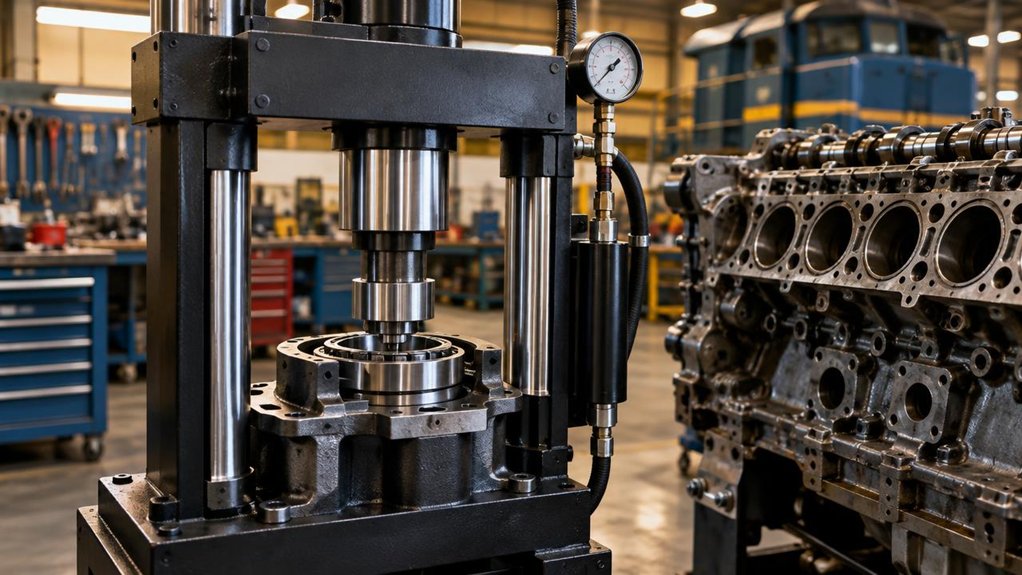
The Most Common Pain Point: Bearing Damage During Installation
Pressing a camshaft bearing into an EMD engine block leaves little room for error. A misaligned press can scratch the bore, block oil galleries, and force costly block repairs.
Generic fixtures rarely match the exact bore diameter, shoulder height, and oil-gallery geometry of EMD blocks. Mikura International supplies genuine EMD locomotive engine parts to help operators avoid these failures.
Common problems that cost locomotive operators time and money:
- Bore scoring caused by off-axis pressing
- Bearing walking or rotating inside the bore
- Oil gallery blockage from misaligned seating
- Pilot diameter mismatch with the bearing
- Damaged shoulder or locating face
- Overdriving the bearing past the specified seating load
- Poor concentricity that leads to early camshaft wear
- Repeated press attempts that weaken the bore
| Pain Point | Root Cause | Corrective Action |
|---|---|---|
| Bore scoring | Off-axis pressing with a generic fixture | Use guided pilots matched to EMD bore specifications |
| Bearing walking | Unverified locating faces | Check locating faces against OEM drawings |
| Oil gallery blockage | Bearing seated out of alignment | Confirm gallery alignment before pressing |
| Pilot mismatch | Incorrect pilot diameter | Measure pilot diameter against specification |
| Concentricity error | No indicator check | Confirm concentricity with a dial indicator |
| Bearing distortion | Overdriving the press | Stop at the specified seating load |
Why Specialized Tools Prevent These Failures
You choose specialized camshaft bearing press tools to match your EMD block’s exact bore diameter, shoulder, and oil-gallery geometry. Generic fixtures miss those dimensions.
They can push the bearing off axis, and that action scores the steel. You avoid this by verifying pilot diameter and locating faces against specification.
Guided pilots keep the bearing square during pressing. A dial indicator confirms concentricity before the job is final.
Do not overdrive the bearing past the specified seating load.
Selection Checklist
- Confirm the tool matches the EMD block’s bore diameter
- Verify the shoulder and locating face dimensions
- Check that the oil-gallery geometry is supported
- Require guided pilots that keep the bearing square
- Confirm the seating load limit against the engine specification
Key Takeaways
- Specialized tools match EMD block bore diameter, depth, and oil-gallery locations, preventing off-axis pressing.
- Rated tools with verified tolerance ranges protect the bore from scoring and permanent steel damage.
- Guided pilots and stepped shoulders keep bearings square throughout the press stroke.
- Calibrated torque and load limits stop installation at the correct seating load, avoiding bore distortion.
- Proper tooling supports controlled heating and lubrication, ensuring reliable bearing seating and locomotive uptime.
Why Generic Press Tools Fail on EMD Camshaft Bearings?
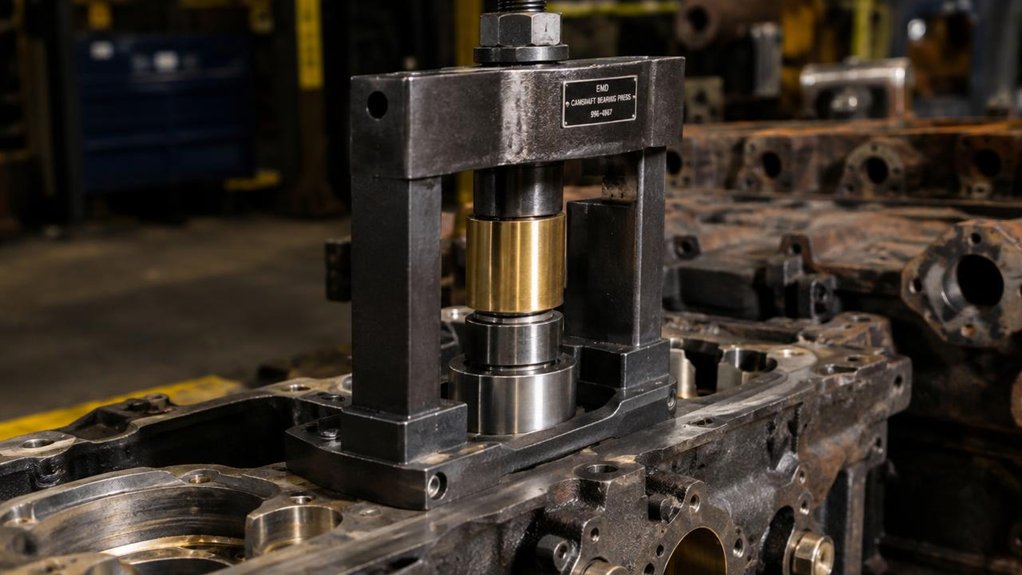
Generic press tools fail on EMD locomotive camshaft bearings because they ignore the block’s bore geometry. Standard fixtures rarely match the bore’s diameter, depth, or oil-gallery locations. Without that match, they push bearings off axis. That misalignment damages the bore and can permanently score the block’s steel.
Generic press tools miss the bore’s diameter, depth, and oil-gallery locations, pushing bearings off axis and scoring the block’s steel.
Start by verifying tooling compatibility before you touch the bearing. Confirm the pilot diameter, stepped shoulder, and locating faces match your locomotive engine’s specification. Do not improvise adapters. They introduce play you cannot measure.
Next, prioritize misalignment prevention. Use a guided pilot that holds the bearing square throughout the stroke. Apply torque control with a calibrated driver. Stop at the specified seating load rather than forcing the bearing home. Overdriving distorts the bore and compromises seating.
Finally, verify load distribution. Check that the bearing sits flush and rotates freely. Confirm that the lubrication holes align with the block’s oil passages. Bore protection matters on every locomotive overhaul.
What Makes a Camshaft Bearing Press Tool Effective?
A press tool is only as effective as its control over alignment, load, and fit. It acts directly on the camshaft bore in a locomotive engine.
You’ll get the best results when you verify the setup before pressing. Start with precision alignment checks. Confirm that the bearing, the bore, and the press ram sit square. Recheck after every adjustment. Do not rely on visual judgment alone. Use dial indicators or laser gauges to confirm concentricity.
Next, you’ll need consistent force control throughout the stroke. Set your hydraulic pressure limits before the job begins. Watch the load curve for sudden spikes. A spike usually signals a misaligned bearing or a burr in the bore. Stop immediately when a spike appears. You’ll protect both the bearing and the camshaft housing by pressing slowly and steadily.
Log each press. Record force readings and alignment values so you can trace any future failure. Keep hands clear of the ram at all times.
Which Press Tool Fits Your EMD Block Specs?
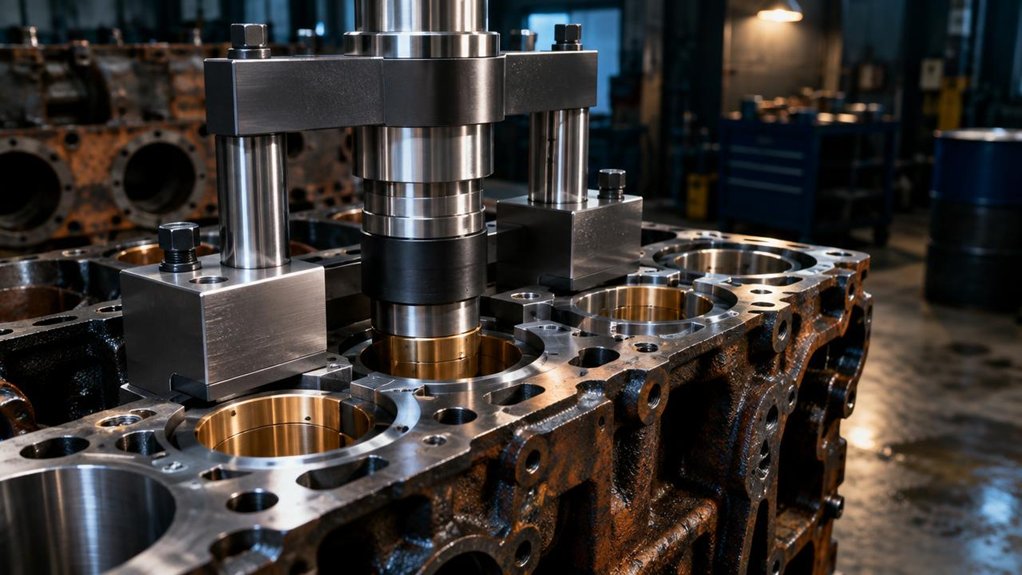
Once you have confirmed alignment, load limits, and fit, match the press tool to the locomotive engine’s block specifications. Start by pulling the EMD block’s bore dimensions from the service manual. Then select a tool rated for that camshaft bearing diameter.
Confirm alignment, load limits, and fit first, then match the press tool to the EMD block’s bore dimensions from the service manual and select one rated for that camshaft bearing diameter.
Compare bore tolerances against the tool’s stated range. Reject any tool that falls outside those limits. Verify the press tool’s rating label before each use. Check clearance before every pull to avoid galling and misseating.
Don’t skip the final check. Mount the tool on the block, then verify press alignment with a dial indicator before applying force. If the ram drifts, stop immediately and recheck your setup.
Wear eye protection, keep hands clear of the pinch zone, and never exceed the rated hydraulic pressure. You are responsible for a clean, square installation that protects both the crew and the engine. Log all measured values in the maintenance record.
How Do You Press Bearings Without Bore Damage?
Press bearings slowly, square, and lubricated, and you’ll keep the bore intact. Rushing the stroke or letting the press ram at an angle scores the bore wall and spins the bearing. Start every press with a clean, deburred housing and a verified tool fit. Check the bore diameter and surface finish before you begin.
Use controlled heating when the interference fit is tight. Warm the marine engine housing evenly to the temperature specified for your engine model. Never use an open flame. Keep the temperature below the limit that alters the bore’s metallurgy. Don’t skip heat-resistant gloves and eye protection.
Position the bearing square to the bore before applying force. Avoid misalignment by seating the pilot first and confirming the bearing enters without binding. If resistance spikes, stop, back out, and recheck alignment rather than forcing it. Verify the press force against the tool’s rated limit before you finish seating.
Do Locomotive-Grade Press Tools Pay Off for EMD Engines?
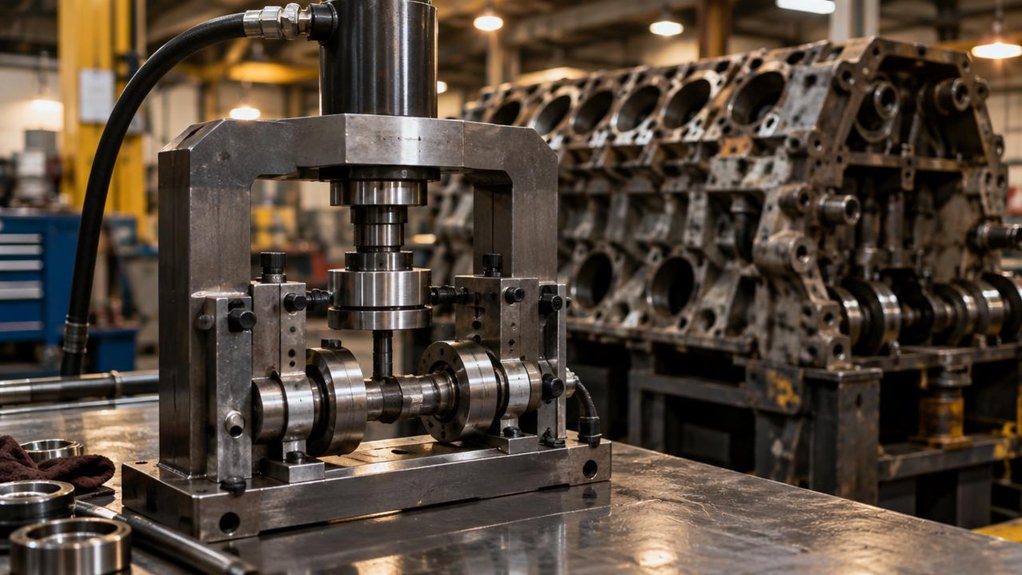
Locomotive-grade press tools usually pay for themselves on EMD engines. They prevent bore rework and reduce downtime. If you’re pressing camshaft bearings in an EMD block, precision matters. Low-quality tooling rarely holds alignment across repeated installs. A single out-of-square bearing can cost you an entire block. Long-life tooling with hardened guide surfaces and precision-machined pilots keeps bores true for years. Mikura International supplies tooling built for these demands.
Consider the math. A bore repair or block replacement can cost far more than the tool itself. A stranded locomotive also burns crew hours and disrupts schedules. Trackside reliability depends on getting the job right the first time. That means choosing tooling rated for the loads these engines demand.
Safety matters on every job. Inspect the press frame, threads, and load-rated components before each use. Keep hands clear of the pressure path at all times. Never exceed the rated tonnage. Verify the bearing is seated square before releasing any pressure. Stop immediately if the bearing binds.
Frequently Asked Questions
What Warranty Coverage Do Specialized Camshaft Bearing Press Tools Typically Include?
Warranty Coverage for Locomotive Camshaft Bearing Press Tools
Most specialized camshaft bearing press tools for locomotive engines carry a twelve-month warranty. The warranty typically covers material and workmanship defects, hydraulic component failures, and frame integrity.
Before operating the press, confirm that torque certification accompanies the unit. Valid calibration records protect your claim if a dispute arises. Keep documentation current throughout the press’s service life. Log maintenance, operator training, and load testing. Misuse, unauthorized modifications, and worn parts typically void coverage.
Can These Press Tools Be Used on Non-EMD Locomotive Engines?
Not automatically. Do not assume compatibility before completing the required checks.
You can use these press tools on non-EMD locomotive engines only after verifying compatibility. Start by comparing the tool against your engine’s bore dimensions and bearing specifications.
Confirm that engine-specific fixtures seat correctly. Check that the press operates within its hydraulic limits. Verify that the tool carries model certification covering your exact locomotive engine model.
Skipping any step can cause bearing misalignment, housing damage, or personal injury. Always consult the equipment documentation first.
How Often Should Press Tools Be Calibrated and Inspected for Accuracy?
Press Tool Calibration and Inspection for Locomotive Maintenance
Follow strict calibration intervals for locomotive press tools. Recalibrate every six months or after 500 press cycles, whichever comes first. Verify accuracy before every shift using certified gauges. Confirm that load readings stay within tolerance. Increase inspection frequency when press tools operate under heavy use. Schedule an annual performance audit for every press tool. Inspect hydraulic seals, alignment fixtures, and guide surfaces after any overload event. Always lock out the locomotive and press equipment before inspection. Document every calibration and inspection result. Accurate records support smooth audits and help maintenance teams track tool performance over time.
What Training Do Technicians Need Before Operating Hydraulic Bearing Press Equipment?
You need documented operator certification before operating any hydraulic bearing press in a locomotive workshop. Your training should cover press controls, pressure limits, and emergency shutdown procedures. Before every job, you will perform a risk assessment. Identify pinch points where hands or fingers can become trapped. Check for hose failure hazards before pressurizing the system. Verify load alignment on axle and wheelset bearings to prevent sudden shifts. You must demonstrate competence under supervision before working independently. Retrain whenever the equipment, pressure settings, or procedures change. Do not skip lockout/tagout training. Stored hydraulic energy can cause serious injury even after power is removed.
Which Safety Standards Govern Press Tool Use in Railroad Maintenance Facilities?
Safety Standards for Press Tool Use in Railroad Maintenance Facilities
Railroad maintenance facilities must satisfy OSHA requirements before operating any press tool on locomotive components. Start with 29 CFR 1910.147 lockout/tagout procedures. Isolate hydraulic power and bleed all residual pressure before servicing the press. Apply 29 CFR 1910.212 machine guarding requirements at every press station. Wear the personal protective equipment specified under 1910.132. Your facility’s railroad safety program should follow FRA oversight. Follow the manufacturer’s load ratings for every fixture and die. Inspect hoses, gauges, and fixtures before every shift. Never exceed rated capacity, even momentarily, during any pressing operation. Mikura International recommends documenting every inspection and training record to stay audit-ready.