

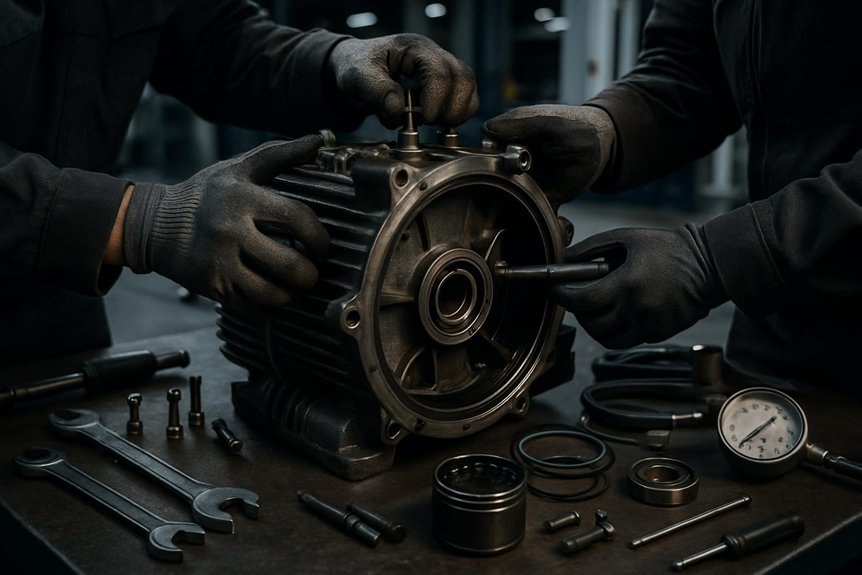
WABCO exhauster maintenance involves isolating the locomotive, venting stored vacuum, preventing contamination, and checking the unit’s ability to build and hold vacuum for safe brake operation. You inspect filters, valves, seals, bearings, clearances, pipework, mounts, and couplings for wear, leaks, overheating, or misalignment. You reassemble with correct lubricants, seals, torque settings, and alignment, then verify vacuum recovery, leakage, vibration, temperature, and current draw before return to service. The key steps are outlined below.
What Does WABCO Exhauster Maintenance Involve?
WABCO exhauster maintenance on locomotives focuses on reliability, braking safety, and air‑vacuum system integrity. It involves systematic inspection of the exhauster, associated pipework, and control valves to ensure dependable vacuum generation for train brake systems and auxiliary functions. Maintenance regimes are usually aligned with mileage or operating hours, plus additional checks after abnormal events such as oil contamination or overheating.
Core tasks include cleaning and inspecting filters, inlet screens, and non‑return valves, then checking clearances in the rotating assembly. Technicians examine bearings, seals, and crankshaft journals for wear, oil leaks, or overheating marks, followed by lubrication and torque checks on critical fasteners. Any out‑of‑tolerance component is repaired or replaced using approved WABCO procedures and calibrated tools.
Functional testing completes exhauster maintenance. Engineers verify vacuum build‑up time, steady‑state vacuum levels, vibration, noise, and temperature. Finally, they confirm proper integration with the locomotive brake control system and document all measurements for trend monitoring.
Key Takeaways
- WABCO exhauster maintenance ensures reliable locomotive vacuum generation for consistent brake operation, safety, and fleet availability.
- Maintenance timing depends on duty severity, running hours, brake use, contamination, overheating, and observed vacuum performance issues.
- Work begins with lockout, vacuum venting, safe access, contamination control, calibrated tools, and visual inspection before disassembly.
- Key tasks include cleaning filters, checking valves and pipework, inspecting seals, bearings, rotor clearances, housings, leaks, vibration, and lubrication.
- Reassembly requires correct seals, lubricants, torque, alignment, bench or locomotive testing, vacuum verification, and full maintenance documentation.
Understanding WABCO Exhauster Maintenance on Locomotives
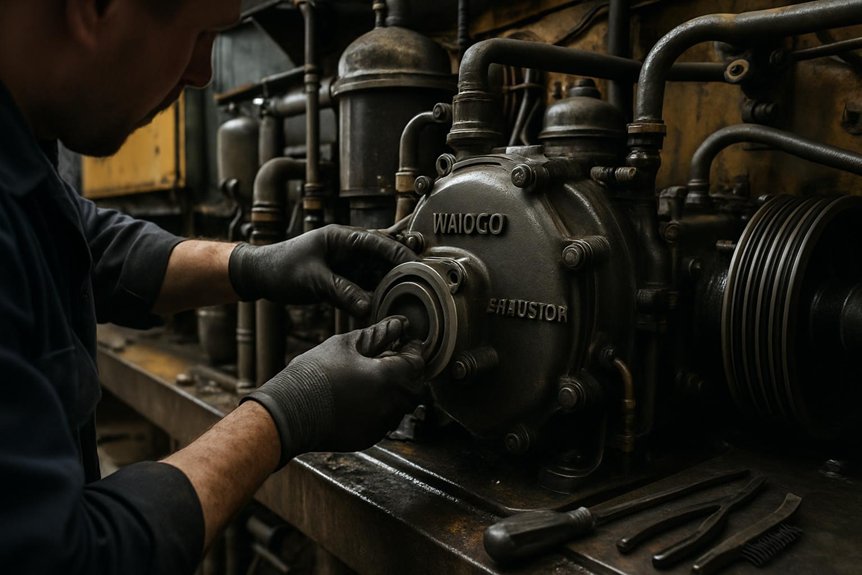
You rely on the WABCO exhauster to generate vacuum for dependable locomotive brake operation. You can’t treat WABCO exhauster maintenance as optional, because weak vacuum affects stopping performance, safety, and uptime. Plan inspections by mileage, operating hours, duty severity, and abnormal events like overheating or oil contamination.
What the WABCO exhauster actually does on a locomotive
When a locomotive operates with vacuum or dual brake regimes, the WABCO exhauster creates the controlled vacuum needed for reliable train brake operation. You rely on the wabco locomotive exhauster to evacuate air from the train pipe, brake cylinders, and connected vacuum equipment within specified limits.
It supports braking functions by working with compressors, reservoirs, and brake control valves:
- It maintains vacuum for service brake release and controlled brake application.
- Supplies vacuum demand for parking brake circuits and selected auxiliary systems.
- It interfaces with reservoirs and controls so pressure and vacuum remain balanced.
During WABCO exhauster maintenance, you confirm this interface stays stable under load. If vacuum generation drifts, brake response can change, so you treat performance checks as safety-critical locomotive work.
Why exhauster maintenance is critical for rail safety and uptime
As vacuum performance degrades, a WABCO exhauster can delay brake release and reduce braking consistency. You may see slow vacuum build-up, unstable train pipe vacuum, or repeated brake drag after release. Each symptom narrows safety margins because the locomotive brake system can’t respond as predictably under load.
Effective wabco exhauster maintenance helps you protect stopping distance, timetable adherence, and fleet availability. If bearings, seals, valves, or internal clearances deteriorate, the exhauster works harder and generates less usable vacuum. That raises heat, vibration, and failure risk during service. You don’t just risk a component outage; you risk delayed departures, restricted operation, and brake performance concerns. By treating exhauster condition as safety-critical, you support reliable brake release, consistent control, and fewer unscheduled locomotive failures.
Typical maintenance intervals and service strategies
Reliable brake performance depends on maintenance timing, not only repair quality. You should plan WABCO exhauster maintenance around duty severity, not calendar dates alone. Running hours, brake application frequency, dust, humidity, and heat all affect wear rates.
- Use light servicing for routine checks, filter cleaning, leak detection, lubrication, and vibration review.
- Schedule intermediate inspections when vacuum build-up slows, noise rises, or oil contamination appears.
- Apply wabco exhauster overhaul procedures at defined hour limits, after overheating, or during fleet rebuilds.
You’ll protect brake system integrity by matching service depth to operating risk. Heavy freight, steep gradients, and stop-start passenger service need tighter intervals. Track findings across locomotives, then adjust cycles using failure trends. Mikura International supports this strategy with compliant parts and practical technical guidance.
Preparations, Safety, and Tooling for WABCO Exhauster Work
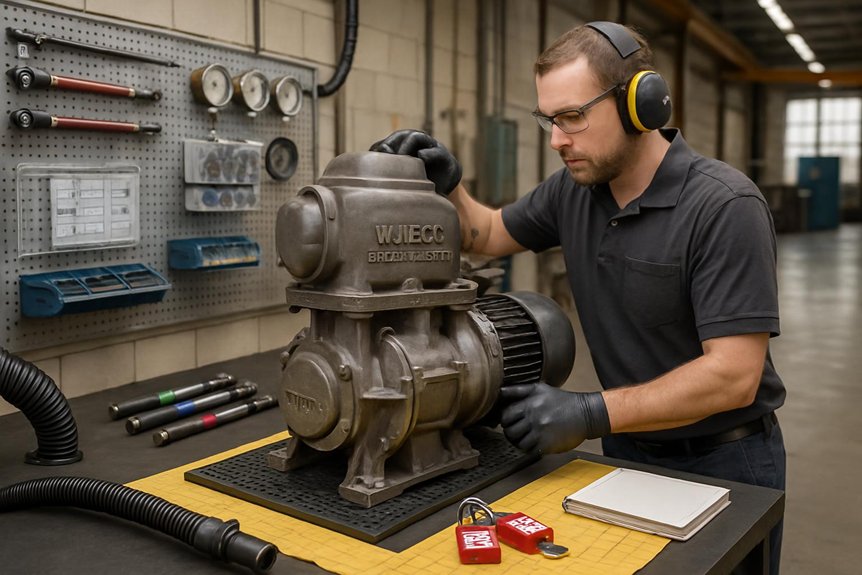
You start WABCO exhauster maintenance by locking out the locomotive, isolating vacuum and electrical energy, and securing safe access. You’ll need calibrated tools, test equipment, WABCO documentation, and accurate maintenance records before any disassembly. You should complete visual checks and preliminary functional tests to confirm faults, protect brake safety, and avoid unnecessary teardown.
Lockout, isolation, and safe access on locomotives
Before any WABCO exhauster maintenance begins, secure the locomotive against movement, isolate electrical supplies, and lock out all relevant brake control circuits. You’re protecting people, equipment, and brake availability during locomotive vacuum brake system maintenance.
- Apply handbrakes, wheel scotches, and depot movement protection before opening any access panels.
- Isolate battery feeds, control relays, and exhauster motor circuits, then fit personal lockout tags.
- Vent vacuum reservoirs, pipework, and exhauster lines slowly, confirming zero stored pressure before loosening joints.
You should also verify safe access around hot surfaces, rotating parts, and underframe obstructions. Don’t rely on cab indications alone; prove isolation locally where possible. Keep tags in place until all guards, covers, and pipe connections are restored, then remove them under your site’s release procedure only.
Special tools, test equipment, and documentation
Once the locomotive is isolated, gather the calibrated tools and documents that make WABCO exhauster maintenance traceable and repeatable. You’ll need torque wrenches for fastener control, dial gauges for runout checks, and feeler gauges for clearances. Use certified vacuum gauges to confirm brake-system vacuum values, and vibration meters to capture rotating-group condition.
Keep the current WABCO manuals, locomotive maintenance instructions, and inspection checklists at the job location. These documents define limits, tightening sequences, test points, and acceptance criteria. Don’t rely on memory or old notes during WABCO locomotive exhauster work.
Before starting, verify calibration dates and record tool serial numbers. That discipline supports audits, warranty reviews, and safer locomotive vacuum brake system maintenance across aging fleets. It also strengthens procurement decisions when parts need replacement later.
Visual and preliminary functional checks before disassembly
After the locomotive is secured and tools are verified, inspect the WABCO exhauster while it remains installed. This early step in WABCO exhauster maintenance helps you find visible faults before disturbing evidence or creating new risks.
Check the unit cold first, then during a controlled run if permitted.
- Inspect housings, pipe joints, seals, and drain points for oil leaks or contamination.
- Check mounting bolts, brackets, guards, and couplings for looseness, fretting, or misalignment.
- Listen for abnormal noise, feel for vibration, and scan for temperature hotspots.
Run a quick vacuum performance check at the locomotive gauges or calibrated test points. Confirm vacuum build-up time and steady vacuum against site limits. If readings drift, stop and record findings before disassembly. That protects brake reliability and supports overhaul decisions.
Step‑by‑Step WABCO Exhauster Service Tasks
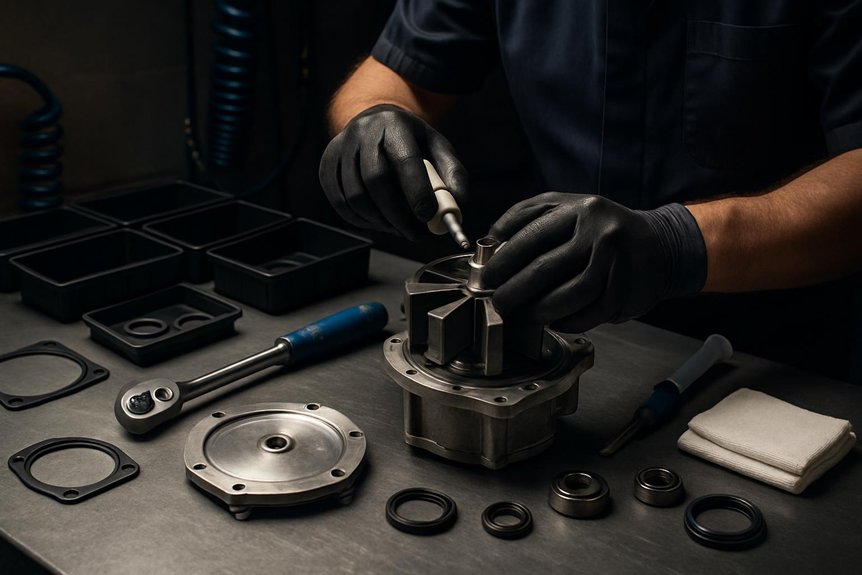
You’ll start WABCO exhauster maintenance with controlled disassembly, thorough cleaning, and clear component identification and inspect the rotor, bearings, and seals for wear, heat damage, leakage, and clearance issues. You’ll then service valves, filters, and pipework to protect locomotive vacuum brake system performance.
Disassembly, cleaning, and component identification
Before dismantling begins, isolate the locomotive, apply brake and electrical lockout, and confirm the exhauster can’t rotate or receive control pressure. You then remove the WABCO locomotive exhauster carefully, supporting its weight and protecting pipe faces from impact.
- Drain oil into a clean container, label it, and note contamination, water, or metallic debris.
- Mark housing, cover, rotor, and pipe orientations before loosening fasteners or lifting assemblies.
- Bag small parts by location, tag shims and dowels, and keep matched components together.
Clean external dirt before opening casings, so grit doesn’t enter working areas. During WABCO exhauster maintenance, use approved solvents, lint-free cloths, and capped ports. You’re not inspecting wear here; you’re preserving traceability for later WABCO exhauster overhaul procedures and reliable locomotive vacuum brake system maintenance records.
Detailed inspection of rotor, bearings, and seals
With the exhauster opened and parts identified, inspect the rotating group before any reassembly decisions. Measure rotor clearances against WABCO exhauster maintenance limits, using calibrated gauges and clean reference faces. Excess clearance reduces vacuum output; tight spots can cause rubbing and overheating.
Check bearing play by hand and with indicators where specified. You’re looking for roughness, looseness, heat discoloration, or lubricant breakdown. Inspect rotor surfaces, journals, and housing contact areas for scoring, pickup, or fretting. Use approved crack-detection methods on stressed sections, because fatigue cracks can propagate under locomotive vibration.
Examine seals for hardening, cuts, lip wear, and incorrect seating. Failed seals can allow oil ingress into the vacuum brake system or vacuum loss. Record every measurement before approving reuse, repair, or replacement.
Valve, filter, and pipework maintenance
Because flow restriction can mimic exhauster wear, start this stage by servicing the inlet filters, check valves, and non-return valves. Isolate the locomotive, apply lockout, and confirm zero stored vacuum before opening any line.
- Remove inlet filters and screens, then clean or replace them if they’re oil-soaked, torn, or blocked.
- Strip check valves and non-return valves, checking springs, seats, and discs for sticking, corrosion, or leakage.
- Inspect vacuum pipes, flanges, and gaskets for scale, dents, loose joints, and hidden leakage paths.
You should also verify pipe alignment before tightening joints. Misalignment can load housings and create repeat failures. Record defects, replaced parts, and test results in your WABCO exhauster maintenance file. Good documentation supports brake reliability, audit readiness, and procurement planning.
Reassembly, Testing, and Lifecycle Management
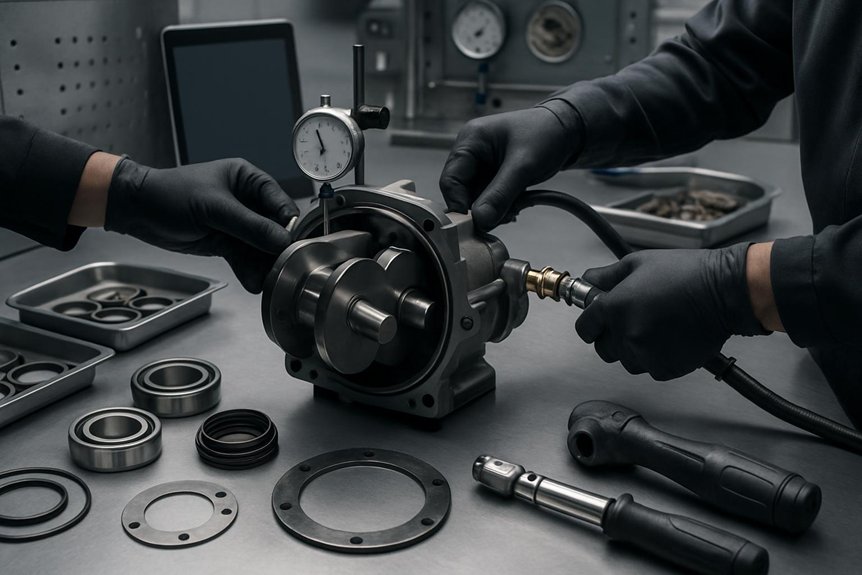
You reassemble the WABCO exhauster to WABCO specifications, then verify torque, alignment, lubrication, and sealing integrity then confirm safe brake performance through bench tests and on-locomotive vacuum checks before release. You also document results, manage approved spares, and support procurement decisions for reliable WABCO exhauster maintenance.
Reassembly, torqueing, and alignment to WABCO specs
After inspection and cleaning, reassembly must follow WABCO exhauster maintenance specifications without shortcuts. You protect brake reliability by controlling lubrication, sealing, torque, and alignment from the first fit-up.
- Apply the specified lubricant to bearings, journals, and moving interfaces. Don’t mix grades or over-lubricate rotating parts.
- Install gaskets and seals dry or dressed only as WABCO guidance allows. Confirm lips, ports, and drain paths face correctly.
- Tighten housing, cover, and mounting bolts in the required sequence with calibrated torque tools.
Before final mounting, check shaft alignment and coupling position against WABCO locomotive exhauster limits. You should confirm the exhauster sits squarely on its locomotive mounting pads, without twist or soft foot. Correct fitment prevents vibration, seal wear, and unsafe vacuum brake system faults.
Bench tests and on‑locomotive performance verification
Before returning the WABCO exhauster to service, verify performance under controlled bench conditions and on the locomotive. On the test stand, you measure vacuum build-up time against WABCO exhauster maintenance limits. Confirm ultimate vacuum, leakage rate, current draw, vibration, and noise under stable load. These readings prove the rotating group, seals, valves, and drive alignment are working safely.
After installation, repeat checks during locomotive trial runs. Isolate the area, follow lockout release steps, and keep personnel clear of rotating equipment. You should confirm vacuum recovery after brake applications, monitor temperature, and listen for abnormal bearing or vane noise. Compare current draw with baseline values to catch drag or misalignment. If results drift, stop testing and investigate before release. This final verification protects brake reliability.
Documentation, spares, and procurement considerations
Every WABCO exhauster maintenance event should produce a clear technical record, not just a service sign-off. You should log measured clearances, vacuum performance, vibration, temperatures, torque values, contamination, and observed failure modes. This data strengthens WABCO exhauster maintenance decisions across your locomotive fleet.
- Record replaced bearings, seals, valves, filters, gaskets, and housings with part numbers and batch details.
- Compare repeat failures against duty cycles, routes, overhaul intervals, and locomotive vacuum brake system maintenance history.
- Use trends to set minimum spares levels and prevent safety-critical stockouts.
Procurement teams can then evaluate OEM parts against approved alternatives with evidence, not guesswork. You’ll protect brake reliability, control lifecycle cost, and support audit requirements. Mikura International helps you align WABCO locomotive exhauster spares with overhaul procedures and operational risk.
Frequently Asked Questions
How Is Exhauster Maintenance Prioritized During Locomotive Fleet Overhaul Planning?
You prioritize WABCO exhauster maintenance by risk, service duty, brake performance data, and fleet availability and then review vacuum build-up times, leaks, overheating, vibration, oil contamination, and prior failures. You schedule overhaul work with brake system inspections to reduce downtime and don’t defer units showing slow recovery or abnormal noise. Use calibrated tools, approved parts, and clear records so you can protect safety, control lifecycle cost, and support procurement decisions.
What Records Best Support WABCO Exhauster Audit Compliance?
Like a black box for reliability, your best audit records include dated WABCO exhauster maintenance sheets, lockout confirmations, inspection findings, calibrated tool references, torque values, parts traceability, and test results. You should record vacuum build-up time, steady vacuum level, vibration, temperature, and brake integration checks. Keep overhaul reports, nonconformance notes, approvals for OEM or qualified parts, and technician sign-offs. These records prove safety compliance, support procurement decisions, and control lifecycle costs.
When Should Procurement Choose Overhaul Kits Instead of Individual Spares?
You should choose overhaul kits when wear affects multiple WABCO exhauster components, downtime windows are tight, or audit traceability matters. Kits reduce missed parts, support matched seals, bearings, gaskets, and valves, and simplify procurement approvals. You’ll control lifecycle cost better during scheduled WABCO exhauster maintenance or overhaul procedures. Use individual spares only for isolated, verified defects where inspection data confirms the rotating group, housing, and pneumatic interfaces remain within limits.
How Do Operating Environments Affect WABCO Exhauster Service Intervals?
Like a telegraph in a digital cab, harsh environments shorten WABCO exhauster maintenance intervals. You’ll inspect sooner when locomotives face dust, heat, humidity, salt air, heavy gradients, or long idle periods. These conditions accelerate bearing wear, seal hardening, oil contamination, corrosion, and valve sticking. You shouldn’t rely only on mileage. Track vacuum build-up time, temperature, vibration, and noise trends. Mikura International helps you align intervals with duty cycle and safety risk.
Can Mikura International Support Sourcing for Obsolete WABCO Exhauster Parts?
Yes. You can rely on Mikura International to support sourcing for obsolete WABCO exhauster parts. We help you identify superseded part numbers, verify drawings, and match components to locomotive vacuum brake requirements. You’ll get practical guidance on OEM, approved replacement, or engineered alternatives. We don’t guess on safety-critical parts. We check fit, material suitability, documentation, and traceability, so your WABCO exhauster maintenance stays compliant and dependable.