

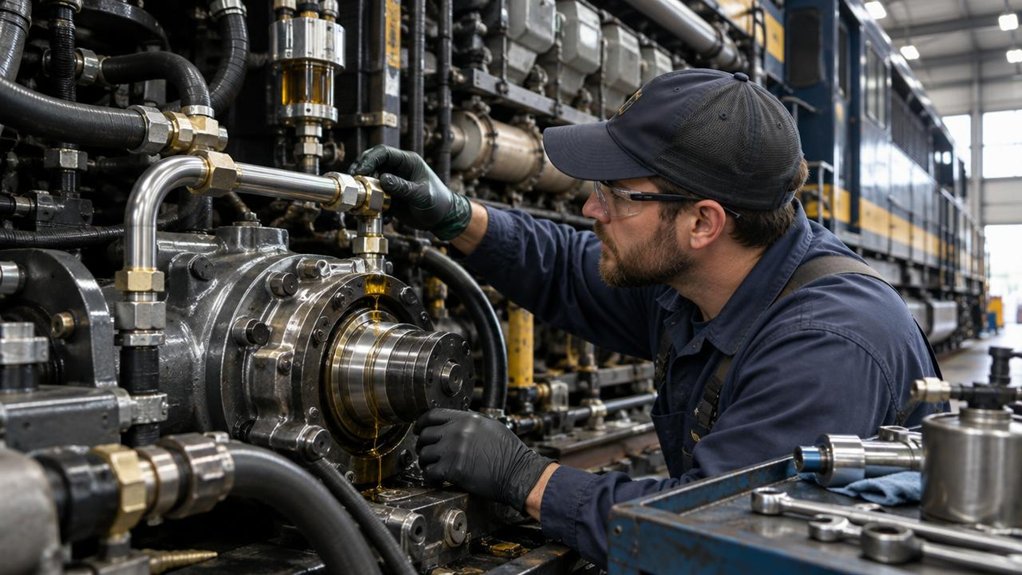
Locomotive bearing lubrication problems can cause overheating, accelerated wear, and unplanned downtime.
Finding the cause early helps protect engine components and supports reliable operation.
Follow the locomotive’s model-specific EMD service manual and current maintenance guidance.
Use only approved procedures and parts suited to the engine and operating conditions.
| Check | What to look for | Action |
|---|---|---|
| Oil supply | Low level or interrupted flow | Verify the supply using the approved procedure |
| Oil pressure | Readings outside specified limits | Stop and investigate before operation |
| Oil condition | Contamination or unexpected changes | Do not operate until the cause is identified |
| Filters | Damage, blockage, or incorrect installation | Inspect and replace as specified |
| Bearings | Abnormal heat, noise, or visible damage | Keep the locomotive out of service pending assessment |
| Leaks | Oil around lines, fittings, or bearing areas | Locate and correct the source before restarting |
Key maintenance precautions:
- Select oil approved for the engine, climate, and operating conditions.
- Do not choose oil by viscosity grade alone.
- Do not mix oil brands unless compatibility is confirmed.
- Secure the locomotive before inspection or cleaning.
- Apply lockout/tagout and allow components to cool.
- Check oil flow, pressure, filters, bearings, and leaks as directed.
- Do not start the engine if damage or contamination is found.
- Use genuine locomotive engine parts supplied by Mikura International when replacements are required.
Key Takeaways
- Select oil approved for the locomotive’s EMD model and operating conditions; verify viscosity, formulation, and additive compatibility in current guidance.
- Secure the locomotive and follow lockout/tagout procedures before inspecting accessible bearings, caps, fasteners, and oil passages.
- Measure bearing oil flow and pressure at designated test points with calibrated gauges; check filters and leaks without bypassing alarms.
- Clean bearings only at the specified maintenance interval, using approved methods and materials while preventing contamination of oil passages.
- Inspect for wear, damage, leaks, and contaminated oil; report out-of-limit findings and do not start the engine if damage is found.
Choose Oil to Match EMD Specifications
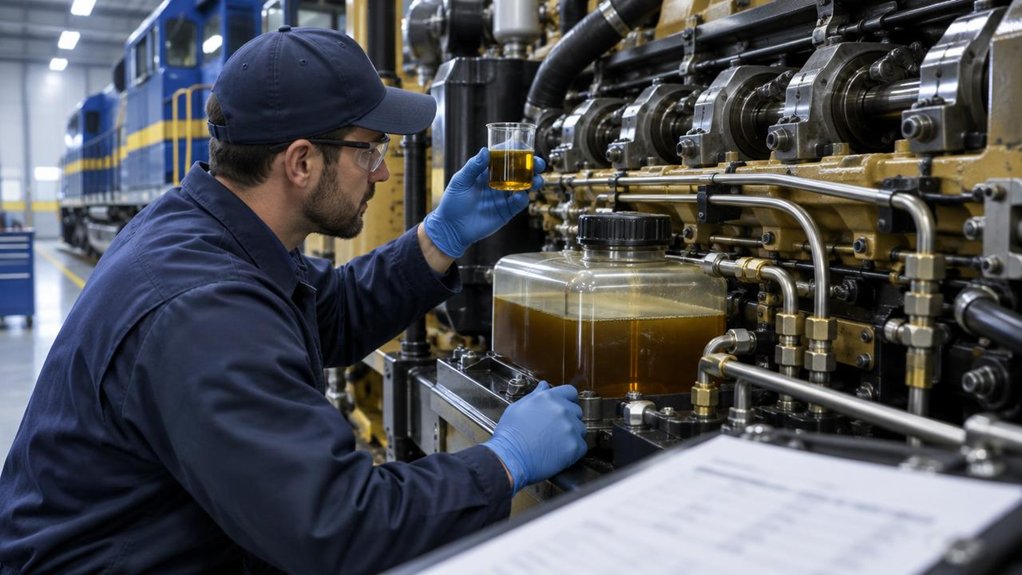
Select engine oil that meets EMD specifications for your locomotive model and operating conditions. Do not rely on viscosity grade alone. Check the engine manual and current EMD service guidance before ordering or filling. The approved formulation helps meet lubrication requirements and protect bearings under your locomotive’s temperatures, loads, and duty cycles.
Check that the oil’s viscosity falls within the approved range for your climate and operating profile. Do not use a heavier or lighter oil without written manufacturer approval. Viscosity affects oil flow during startup and film strength at operating temperature. Also verify additive compatibility when changing brands or topping up. Do not mix oils unless EMD guidance confirms they are compatible.
Keep product labels and delivery records available. Inspect containers for contamination, damage, or incorrect identification. Use clean, dedicated transfer equipment and follow site handling procedures. Before adding oil to the locomotive’s lubrication system, confirm that it meets the required specification.
Check EMD Camshaft Bearings Before Startup
After confirming the oil meets EMD specifications, inspect the locomotive’s camshaft bearings before startup. Secure the locomotive against movement, apply lockout/tagout procedures, and follow the engine service manual. Do not open bearing housings or remove components unless authorized by the procedure.
Inspect accessible bearing surfaces, caps, fasteners, and oil passages for scoring, cracks, looseness, sludge, or metal debris. Check for overheating discoloration and unusual wear. If you find damage or contamination, do not start the engine. Report the condition and arrange qualified repairs.
Review maintenance records and oil-analysis results for trends in wear metals or contaminants. Confirm the specified lubricant is present, and verify bearing lubrication using the approved pre-start procedure. Record observations, corrective actions, and unresolved concerns. Obtain required authorization before releasing the locomotive for startup, and keep personnel clear of moving parts.
Inspect Bearing Oil Flow, Pressure, and Filters
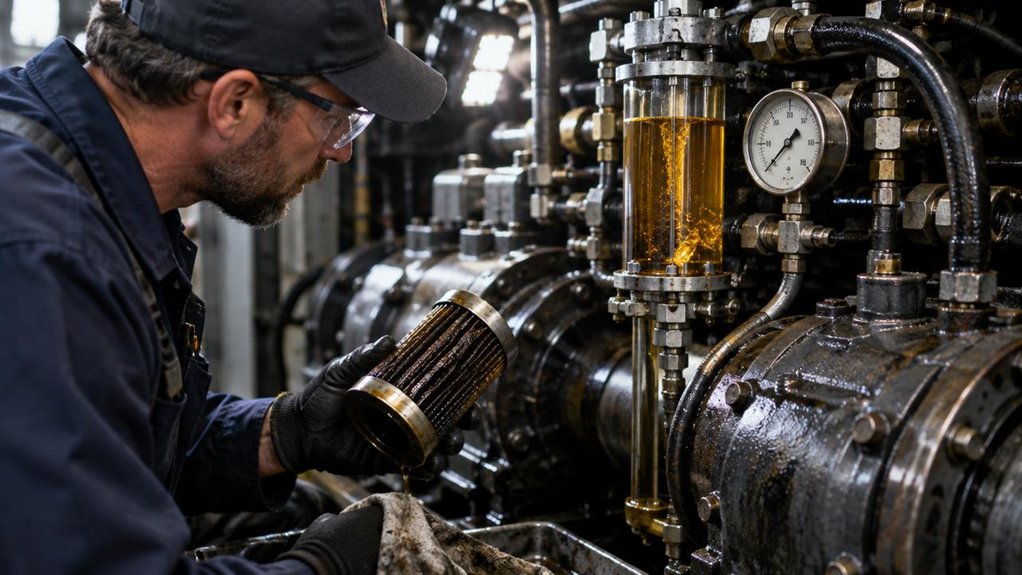
Before startup, check locomotive bearing oil flow and pressure using the approved procedure and specified limits. Secure the locomotive against movement, wear required protective equipment, and use calibrated gauges at designated test points. Isolate the system before connecting instruments. Never loosen pressurized fittings.
| Check | Action |
|---|---|
| Flow and pressure | Compare readings with specified limits. Investigate abnormal values. |
| Filters | Check indicators and inspect housings for leaks or damage. |
During operation, monitor readings as directed. Respond promptly to sudden pressure drops, restricted flow, or rising bearing temperatures. Follow the maintenance procedure, including shutdown requirements.
Inspect filter housings, lines, and connections for seepage, looseness, or contamination. Replace filters only as specified. Confirm correct installation and sealing. Take oil samples using approved methods at designated ports. Label samples and send them for analysis.
Record readings, filter condition, and sample details. Report out-of-range results to qualified maintenance personnel before returning the locomotive to service. Never bypass a filter or defeat an alarm to keep the locomotive running.
Follow the EMD Bearing Cleaning Schedule
Follow the EMD maintenance manual’s bearing-cleaning schedule for the specific locomotive model and operating conditions. Use the specified interval, cleaning method, and approved materials. Do not substitute solvents or extend intervals without authorization.
Before servicing, secure the locomotive against movement and isolate the relevant equipment. Follow site lockout procedures, allow components to cool, and wear the required protective equipment.
Keep dirt, lint, and cleaning fluid out of oil passages and the lubrication system. Use clean, lint-free materials and dedicated tools. Collect waste fluid for proper disposal. Do not direct compressed air into bearing openings, as it can push contaminants deeper or create hazards.
Protect exposed surfaces during cleaning. Restore covers and connections according to the manual. Inspect filters at the specified service point, following the approved procedure and using replacement parts that meet the manual’s requirements.
Record the service date, operating hours, materials used, and any deviations in the maintenance log. If instructions conflict or conditions exceed manual limits, stop work and consult qualified maintenance personnel before returning the locomotive to service.
Check for Bearing Wear, Dirty Oil, and Leaks
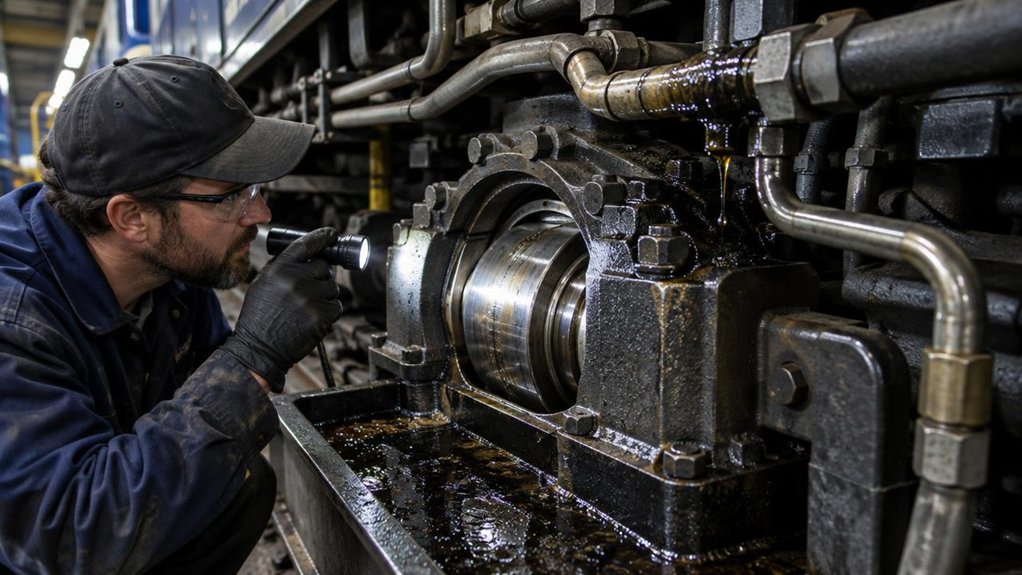
After cleaning, inspect accessible locomotive bearing surfaces and lubrication components for abnormal wear, discoloration, scoring, or oil leaks. Follow isolation and lockout procedures before opening guards or touching components. Hot oil and rotating machinery can cause serious injury.
Check bearing surfaces for pitting, cracks, uneven contact, and metal particles. Compare findings with maintenance limits. Do not return damaged bearings to service if they exceed those limits.
Inspect seals for hardening, cuts, looseness, or seepage. Check joints, hoses, fittings, and drain points for fresh oil. Trace leaks to their source instead of tightening connections blindly.
Collect an oil sample using the approved method. Check for water, sludge, fuel dilution, and metallic debris. Compare results with baseline readings and specified limits. Replace or filter oil only as directed by maintenance procedures.
Document bearing wear, sample results, and leaks. Report out-of-limit conditions promptly. Keep the area clean, contain spills, and verify repairs before restarting the locomotive.
Frequently Asked Questions
How Often Should Locomotive Engine Bearing Lubrication Systems Undergo a Complete Overhaul?
Overhaul a locomotive engine bearing lubrication system according to the manufacturer’s recommendations and the fleet maintenance program. There is no universal overhaul interval. Schedule inspections based on operating hours, condition-monitoring results, and service history. Arrange an earlier overhaul if you find contamination, pressure loss, abnormal bearing wear, or recurring faults. Record all inspections, repairs, and overhauls in the locomotive’s maintenance records.
What Safety Precautions Should Technicians Follow When Servicing a Lubrication System?
Before servicing a locomotive lubrication system, shut down the locomotive and isolate all energy sources using approved lockout procedures. Verify zero energy with suitable instruments. Allow hot components to cool, wear appropriate protective equipment, and keep clear of moving parts. Relieve system pressure according to the manufacturer’s instructions, then confirm gauges read zero before opening lines or filters. Use compatible tools, contain oil spills, and dispose of used oil properly. Before restarting, reinstall all guards and check for leaks.
Which Tools Are Needed to Diagnose Lubrication System Faults?
To diagnose lubrication faults in a locomotive, use calibrated pressure gauges, temperature probes, flow meters, and oil sampling kits. A multimeter can check electrical instrumentation, while a diagnostic scanner helps interpret fault codes. Keep suitable fittings, clean sample containers, and locomotive service data nearby. Verify instrument calibration, isolate equipment as required, and follow site lockout procedures before testing.
How Can Operators Monitor Bearing Lubrication Remotely?
Operators can monitor locomotive bearing lubrication remotely by tracking oil pressure, temperature, flow, and vibration with installed sensors. Transmit readings to a secure dashboard for continuous review. Compare live data with operating limits and historical trends. Set alerts to notify operators and maintenance staff when readings become abnormal. Regularly verify sensor calibration, communication links, and alert delivery. Treat remote readings as diagnostic aids, and follow approved procedures before inspecting equipment or changing operating conditions.
What Should Be Done if a Lubrication System Alarm Activates While the Locomotive Is Running?
If a lubrication system alarm activates while a locomotive is running, follow the applicable emergency and alarm procedures immediately. Notify the engineer, reduce the load, and stop at a safe location as procedures require. Record the alarm indication before resetting it. Inspect for oil leaks, low pressure, abnormal temperatures, or unusual noise. Use approved fault-isolation procedures to identify the cause. Do not resume operation until qualified personnel confirm the lubrication system is safe and authorize movement.